Arhanta Yoga

Yoga Philosophy Course: 25-Hour Online Certificate Program

A yoga philosophy course teaches you the ideas your practice is built on, and this one does it in 25 self-paced hours. Study online with lifetime access, direct teacher support and a certificate at the end.

Last updated: 8 August 2026
Written by the Arhanta Yoga team. Reviewed by Dr. Ram Jain, PhD (Yoga), founder of Arhanta Yoga, ERYT-500 and YACEP.

Student studying the online 25-hour yoga philosophy course with Arhanta Yoga
25 hours Self-paced online study, start anytime
12 lessons Video lessons, 11 quizzes and a final exam
Lifetime Access, including all future course updates
30-day Full refund guarantee, no questions asked

Accredited by Yoga Alliance, the International Yoga Association and the International Yoga Federation, and registered with CRKBO in the Netherlands.

TL;DR: The essentials

  • 25-hour online yoga philosophy course with 12 video lessons, quizzes, assignments and a final exam.
  • Covers the eight limbs, four paths, gunas, karma and reincarnation, chakras, pranayama and meditation.
  • Self-paced with lifetime access, including all future updates; certificate included at no extra charge.
  • Taught by Dr. Ram Jain, PhD (Yoga), with direct email access to him for questions.
  • 30-day full refund guarantee, no questions asked; this course is also fully included in the 200-hour teacher training.

A yoga philosophy course is a structured study of the ideas, texts and concepts behind yoga practice: what yoga actually aims at, how the mind works, and why practices like asana, pranayama and meditation exist at all. This page explains everything inside this 25-hour program, and how to judge any philosophy course you’re considering.

The course at a glance

The Yoga Philosophy Course at a Glance

Every key fact in one table, so you can decide in thirty seconds whether the rest of this page is worth your reading time:

Key facts about the 25-hour online yoga philosophy course
DetailThis course
Length25 hours
Format100% online, self-paced, start anytime
Lessons12 video lessons
Assessment11 quizzes, practical assignments, final exam (passing grade required)
CertificateIncluded, auto-available on completion, no extra charge
AccessLifetime, including all future updates
SupportUnlimited teacher support; direct email access to Dr. Ram Jain
TeacherDr. Ram Jain, PhD (Yoga), ERYT-500, YACEP
Guarantee30-day full refund, no questions asked
AccreditationYoga Alliance, International Yoga Association, International Yoga Federation; CRKBO registered
Also included inThe 200-hour online yoga teacher training

Yoga Alliance, IYA and IYF accredited; CRKBO registered 4.9 out of 5 student rating 30-day full refund guarantee

What Is a Yoga Philosophy Course?

A yoga philosophy course is a structured programme that teaches the theory of yoga: its aim, its core concepts, its map of the mind and consciousness, and the logic behind its practices. Where an asana class trains your body, a philosophy course explains what the training is actually for.

Most practitioners meet philosophy in fragments. A teacher mentions “sattva” in passing, a book references the eight limbs, a workshop touches on karma. Fragments don’t build understanding; they build the frustrating sense that everyone else knows something you don’t.

The fragment problem has a second cost: errors. Concepts learned out of context arrive distorted, karma becomes punishment, chakras become decor, and unlearning a distortion takes longer than learning the concept correctly the first time. Order of study isn’t pedantry in philosophy; it’s accuracy.

A structured course replaces the fragments with the system. Yoga philosophy is remarkably coherent once it’s taught in order: each concept rests on the previous one, and ideas that seemed mystical in isolation become precise and practical in context.

That’s the promise of this 25-hour program: the complete foundational map, taught from scratch, in plain language. If you’d like to sample the territory first, this primer on yoga philosophy for beginners shows the teaching style before you commit to the full course.

Yoga philosophy course lesson from the Arhanta Yoga online academy

Course, Article or Free Video: What Actually Differs

What separates a course from free content, since the internet is full of yoga philosophy articles? Three things: sequence, assessment and access to a teacher.

Articles give you pieces in random order with nobody to ask. A course gives you the pieces in the order they build, checks your understanding as you go, and puts an expert at the end of your questions.

Free reading is a fine appetiser, and this site publishes plenty of it. But if you’ve been reading articles for years and still couldn’t teach the eight limbs to a friend, you already know the difference between exposure and education.

The case for studying it

Why Study Yoga Philosophy?

Because practice without philosophy plateaus. Asana keeps your body capable and your nervous system calmer, but the questions that brought most people to yoga, about the mind, about suffering, about what any of this means, are answered in the philosophy, not the postures.

There’s a practical reason too. Philosophy is what turns techniques into a coherent life practice. When you understand why pranayama works on the mind, why karma yoga counts as yoga at all, and what meditation is actually doing, your daily practice stops being exercise with incense and starts being what it was designed to be.

For Practitioners

You’ve probably noticed the gap already. You can follow a vinyasa sequence confidently, yet a simple question like “what does yoga mean?” produces a vague answer about union or balance.

Closing that gap changes the practice itself. Understanding the three gunas explains your own moods on the mat.

Understanding the four inner instruments explains why the mind wanders and what to do about it. The philosophy isn’t separate from the practice; it’s the user manual.

There’s longevity in it too. Bodies change across a practising life, and practitioners whose yoga is only physical often drift away when the body complains. Practitioners with the philosophy have somewhere to go instead: the practice deepens inward rather than ending.

For Yoga Teachers

Sooner or later, a student stays behind after class and asks a real question. About karma, about meditation, about whether yoga is religious.

Teachers without philosophy deflect with a quote. Teachers with philosophy answer, and those are the teachers students trust.

Most 200-hour trainings compress philosophy into a weekend, which is why philosophy is the topic working teachers feel least equipped in. A dedicated yoga philosophy course closes that professional gap, and structured study also serves your continuing education as a yoga teacher long after your foundation training.

There’s a market reality underneath this. Asana skills are abundant among teachers; philosophical depth is scarce. Scarcity is exactly where a teaching career differentiates, and it shows up everywhere from workshop invitations to student retention.

For the Simply Curious

You don’t need a yoga mat to benefit from this study. Yoga philosophy is one of humanity’s oldest sustained inquiries into consciousness, ethics and wellbeing, and this course teaches it as the living system it is. Philosophically curious people with no asana practice at all complete it happily; the only real prerequisite is interest.

If you’ve read Stoicism or Buddhism out of the same curiosity, consider this the neighbouring system: as psychologically astute, as practically oriented, and arguably more systematic about the mechanics of mind and attention. It deserves the same serious treatment those traditions get, and rarely receives it online. This course is the exception.

Who This Yoga Philosophy Course Is For

The course page is unusually honest about this, so let’s keep it that way.

This course is for you if

  • You’re looking for in-depth training, not a highlights reel.
  • You want to deepen your knowledge of yoga beyond the physical practice.
  • You value a dedicated peer community to study alongside.
  • You’re a yoga teacher who wants to answer students’ questions with substance.
  • You’re new to yoga philosophy entirely: every concept is explained from scratch, and no previous education is required.

And it’s not for you if

  • You’re looking for a quick online certification to collect.
  • You want only a basic level of knowledge, which free articles can give you.
  • You don’t need a peer community and prefer to study entirely alone.

That honesty tells you something about the course itself. A program confident enough to say “this isn’t for certificate collectors” is a program built for people who actually want to learn.

Why the peer community point isn’t minor

Philosophy studied entirely alone tends to stay theoretical; concepts sharpen when you have to articulate them to someone else. The discussion group exists because explaining avidya badly to a peer, and being corrected kindly, teaches more than re-watching the lesson a third time.

If you recognise yourself in the “yes” list, keep reading. The next section shows you exactly what you’d be learning, topic by topic, with no vagueness about what’s inside.

What you will study

The Complete Curriculum, Topic by Topic

Here’s what the 12 video lessons cover, and why each topic earns its place. This is the full foundational map of yogic philosophy, and it’s published here in full because a serious yoga philosophy course has nothing to hide about its contents.

Skim the headings if you’re comparing courses; read the details if you’re deciding whether the depth is real. Either way, what follows is exactly what you’ll study.

The course opens where every serious study should: what yoga actually means and what it’s for. Not the gym definition, the real one. You’ll also study the five principles of yogic practice, the framework that organises everything that follows.

The history comes with it: where yoga arose, how it developed, and how the modern posture-centric version relates to the older, wider system. Knowing the history inoculates you against both extremes of modern discourse, the “everything is ancient” romanticism and the “nothing is authentic” cynicism.

Getting the aim right matters more than it sounds. Every other concept in the course is a means to that aim, and once you see the destination, the whole system stops looking like a random collection of practices.

Consider how much confusion this single module clears. Is yoga exercise? Spirituality? Therapy? Philosophy answers precisely, and the answer explains why the same tradition contains headstands and metaphysics without contradiction.

The five principles then give you the practical framework: the elements a complete yogic practice actually needs. Most modern practice is strong on one or two and silent on the rest, and seeing the full set immediately shows you what your own practice has been missing.

Classical yoga describes four paths suited to four temperaments: karma yoga (the path of action), bhakti yoga (devotion), jnana yoga (knowledge) and raja yoga (mind control). Most modern practitioners walk a blend without knowing the paths exist.

Learning the four paths answers a question many practitioners quietly carry: “is my way of practising valid?” It also explains why your yoga can look completely different from your neighbour’s and both be authentic.

The paths also decode people you know. The friend who finds meaning through service is walking karma yoga without the vocabulary. The one who dissolves into devotional music, bhakti. The relentless questioner, jnana. The meditator, raja.

More usefully still, they decode you across time. Most practitioners drift between paths through life’s seasons, and what feels like inconsistency is usually the paths taking turns. The framework lets you cooperate with that movement instead of fighting it.

For teachers, this module is immediately usable. Students arrive with different temperaments, and a teacher who understands the four paths can meet a devotional student and an analytical one in the same class without losing either. That’s not theory; that’s Tuesday evening in any studio.

The eight limbs, also called Ashtanga Yoga in the classical sense, form the most famous framework in yoga philosophy: yama, niyama, asana, pranayama, pratyahara, dharana, dhyana and samadhi.

You’ll learn what each limb actually involves and how they build on each other, from ethical foundations to meditative absorption. Notice where asana sits: third of eight.

Understanding the other seven is precisely what this yoga philosophy course exists for. For background on the sage behind the system, here’s who Patanjali was.

The first two limbs alone repay the study. The yamas and niyamas, yoga’s ethical restraints and observances, are the tradition’s answer to “how should I live?”, and they’re startlingly practical: truthfulness, non-harming, contentment, self-study. Modern life tests each of them daily.

Then the ladder climbs inward: posture steadies the body, breath regulation steadies energy, sense-withdrawal turns attention inward, and concentration ripens into meditation and absorption. Seen as a sequence, practices you learned separately snap into a single coherent method.

The course also untangles a naming confusion that trips many students: “Ashtanga” as Patanjali’s eight-limbed path versus the modern posture style that borrowed the name. Small clarification, large relief, and typical of how the whole curriculum cleans up inherited muddle. That moment of recognition, when the separate pieces become one system, is what this module is built to deliver.

How does progress on the path actually unfold? The seven stages of awareness give you the map: a description of how consciousness refines through sustained practice.

This is the module that turns “am I getting anywhere?” from anxiety into observation. Progress in yoga has recognisable stages, and knowing them changes how you read your own practice.

It also inoculates you against two common traps. The first is discouragement: mistaking a normal stage for failure and quitting.

The second is inflation: mistaking an early glimpse for the summit. The seven-stage map protects against both by showing you what typically comes next.

Alongside the stages, the five principles of practice give the day-to-day method that moves you through them. Map plus method: that pairing is what separates a philosophy education from a philosophy lecture.

The gunas are yoga’s analysis of nature’s three qualities: sattva (clarity), rajas (activity) and tamas (inertia). Everything in nature, including your moods, your food and your mind, expresses a mixture of the three.

This is one of the most immediately practical topics in the course. Once you can recognise the gunas operating in your day, you can adjust practice, diet and habits deliberately instead of wondering why some days flow and others drag. Start with this look at sattva and its benefits for a taste.

A concrete example makes the point. That heavy, unmotivated fog after a large late meal? Tamas, and the tradition prescribes exactly what shifts it. The restless, scattered energy that makes meditation impossible? Rajas, with its own remedies. The clear, settled state where practice deepens by itself? Sattva, and the course teaches how to cultivate it deliberately.

Teachers find the gunas equally useful in the other direction: reading a room. An agitated evening class and a sluggish Sunday-morning one need different teaching, and the gunas explain both.

Five Sanskrit terms carry much of yogic metaphysics, and the course teaches each one properly: maya (the veiling of reality), prakriti (nature), Brahman (absolute reality), avidya (ignorance, the root of suffering) and ahamkara (the ego-function).

These aren’t vocabulary for its own sake. Together they form yoga’s answer to the biggest questions there are: what’s real, why we suffer, and what we fundamentally are.

The course’s sequencing makes these digestible. Avidya, the fundamental misreading of reality, explains where suffering starts. Maya explains how the misreading sustains itself. Ahamkara explains why “I” feels so solid. Prakriti and Brahman frame what nature and the absolute actually are.

If those sentences read like a foreign language right now, that’s precisely the before-state this module dissolves. If you arrive intimidated by these terms, expect to leave using them accurately, because each one is built up from examples before the Sanskrit label is even attached.

Who is the one practising? Yoga’s answer involves three terms: jiva (the individual living being), atman (the true self) and paramatman (the supreme self). The distinctions between them define what yoga means by self-realisation.

This module tends to reframe people’s entire understanding of the practice. The goal of yoga was never flexibility. It was always this.

The three-term distinction also cleans up a confusion that runs through modern spiritual talk, where “self”, “soul” and “higher self” blur into vagueness. Yoga’s model is precise, and precision is kind: you can’t seek what you can’t define.

Expect this module to echo during meditation practice especially. The question “who is watching the thoughts?” stops being poetic and becomes technical, with an actual answer the tradition has defended for millennia.

Yoga describes the human being as three bodies (physical, astral and spiritual) and analyses the inner life through four instruments: mind, intellect, subconscious and ego.

If that sounds abstract, it’s the opposite. The four-instruments model is a working psychology: it explains why you know something is bad for you and do it anyway, why habits outvote intentions, and where meditation intervenes in the machinery.

Take a familiar failure: the 6 am practice you planned and slept through. The model maps it exactly.

Intellect decided, mind negotiated, subconscious vetoed with stored habit, ego defended the outcome. Once you can watch the four instruments trade blows, changing the result becomes an engineering problem instead of a character flaw.

The three-bodies framework then extends the map beyond psychology, giving you the tradition’s full picture of what a human being is. It’s also the doorway to understanding practices like yoga nidra, which work explicitly with the subtler layers.

A dedicated module examines how the mind works and dissects three states we routinely confuse: pleasure, happiness and peace. Yoga treats them as fundamentally different things with fundamentally different sources.

This distinction alone justifies the module. Chasing pleasure while calling it peace is arguably the modern condition, and yoga diagnosed it millennia ago, with a treatment plan attached.

The mind module beneath it is equally practical. How thoughts arise, why attention behaves the way it does, what strengthens and what scatters it: this is the theory that makes your meditation practice comprehensible rather than mysterious.

This module also pays off outside yoga entirely. Understanding the mechanics of your own mind improves decisions, relationships and work, which is why yoga’s psychology has outlived every empire that hosted it.

The energetic map: the five major and five minor pranas that govern the body’s vital functions, the seven chakras, and an introduction to kundalini yoga.

These topics attract the most mystification in modern yoga, which is exactly why studying them properly matters. You’ll learn what the tradition actually teaches, stripped of the crystal-shop version. This introduction to the seven chakras previews the approach.

The pranas come first for good reason. Before chakras make any sense, you need the tradition’s model of vital energy and its five major and five minor currents, each governing specific functions. With that foundation, the chakra system reads as what it is: a coherent map of the subtle body, not a rainbow of vague affirmations.

The kundalini introduction then completes the energetic picture, explained soberly. Given how much sensational nonsense surrounds the word, a grounded, lineage-based explanation of what kundalini yoga actually involves is one of the most valuable half-hours in the course.

The course treats karma with unusual thoroughness, covering the law of action and reaction, the law of compensation, the law of retribution, the interplay of destiny, self-effort and free will, and the purpose of birth and rebirth.

  • The law of action and reaction
  • The law of compensation
  • The law of retribution
  • Destiny, self-effort and free will
  • The purpose of birth and rebirth

Karma is probably the most misused word yoga ever exported. After this module, you’ll understand it as the tradition does: not cosmic score-keeping, but a precise description of how action shapes experience.

The five-part treatment is what sets this module apart. Most courses mention karma; this one dissects its distinct laws, then confronts the question the laws raise: if action shapes destiny, where does free will fit? The tradition’s answer, the interplay of destiny and self-effort, is subtler and more useful than either fatalism or pure self-determination.

Reincarnation gets the same sober handling: what the tradition actually claims about birth, rebirth and their purpose, presented as philosophy to understand rather than dogma to accept. You’re free to hold your own conclusions; you’ll just hold them informed.

Is yoga religious? What does the tradition actually say about God? The course addresses the question directly, teaching the yogic concept of the divine and how it differs from religious doctrine.

For teachers especially, this module is gold: “is yoga a religion?” is a question students genuinely worry about, and a clear, respectful answer serves everyone. Here’s the short version of whether yoga is a religion; the course gives you the long one.

The module handles the topic the way the whole course handles sensitive ground: precisely and without agenda. What the yogic concept of the divine actually is, how it differs from religious doctrine, and why practitioners of any faith, or none, have studied yoga for centuries without contradiction.

That last point matters to more students than teachers realise. People with strong religious commitments, and people with strong secular ones, both want to know what they’re participating in. This module equips you to tell them accurately.

The course closes the loop by connecting philosophy back to practice: what pranayama and meditation are, why they work, and how they fit the larger system you’ve just learned.

By this point, the practices you’ve done for years read differently. You’re no longer breathing slowly because the teacher said so. You know what the breath is doing, and why the tradition put it at the centre.

Meditation receives the same treatment: what it is, why it works and how to approach it, grounded in everything the course taught about the mind, the instruments and the stages of awareness. Meditation instruction without that foundation is guesswork; with it, the practice has a logic you can follow on difficult days.

It’s a deliberate way to end a philosophy course: back on the mat and the cushion, carrying everything you now understand. Theory that doesn’t reach practice is trivia. This course is engineered so it reaches.

And then the final exam, which is less an obstacle than a consolidation. Preparing for it forces one full pass back through the system, which is exactly when the separate modules fuse into a single understanding. Passing it is how you know, and can show, that the map is genuinely yours.

How a Yoga Philosophy Course Changes Your Practice

Philosophy sounds theoretical until you watch it operate. Here’s where 25 hours of study shows up in real practice, concretely.

On the Mat

The change begins in your very next class after starting the course. Asana changes first.

When you understand that posture is the third limb of eight, preparation for stillness rather than the goal, your relationship with difficult poses shifts. The point was never the shape; it was the steady, easeful attention the shape trains.

The gunas change your practice planning too. You learn to read your own state honestly and practise accordingly: grounding work for restless days, activating work for heavy ones. Practice stops being a fixed routine and becomes an intelligent response.

In Pranayama and Meditation

These practices gain the most, because they’re the ones modern classes explain least. Once you know the pranic model and the four inner instruments, pranayama has a mechanism and meditation has a method.

The change is subtle and total. Counting breaths becomes working with prana deliberately; watching thoughts becomes observing specific instruments do specific things. Technique plus theory equals practice you can troubleshoot yourself, which is what independence in these disciplines actually means.

The difference is measurable in persistence. Practitioners abandon meditation mostly because nothing seems to happen and nobody explained what should. The seven stages of awareness answer exactly that, which is why philosophy students tend to become long-term meditators.

In Daily Life

Karma yoga turns ordinary responsibilities into practice. The yamas and niyamas turn ethics from vague goodness into specific, trainable disciplines. The pleasure-happiness-peace distinction quietly reorganises what you chase.

Even conflict changes texture. Understanding ahamkara, the ego-function, makes your own defensiveness visible in real time, and visible patterns are changeable ones. The gunas explain the colleague who thrives on chaos and the one who can’t start anything, with more compassion than your previous theories.

This is the layer most students don’t anticipate when they enroll in a yoga philosophy course, and the one that matters most afterwards. Yoga was always designed as a complete way of living. The philosophy is what makes the completeness usable.

The tradition even anticipated the objection that daily life leaves no room for practice. Karma yoga’s whole premise is that life is the practice, correctly approached. That single reframe, properly understood, is worth the module that teaches it.

In Your Teaching

If you teach, everything above compounds. Your theming gains substance, your cueing gains purpose, and your answers gain accuracy. A class built on a genuine concept, taught by someone who understands it, feels different from a class decorated with a quote, and students notice the difference even when they can’t name it.

The professional edge extends past the classroom. Workshop proposals, retreat programming and written content all draw on the same well, and philosophy is the well that doesn’t run dry. A teacher with 25 assessed hours of it has material for years of themed classes without repeating themselves.

There’s a confidence dividend too. The low-grade anxiety of being asked something you can’t answer fades once the foundations are genuinely yours. Teaching from understanding feels different from teaching from memory, on both sides of the room.

Common Misconceptions About Yoga Philosophy

Teaching this subject since 1998 surfaces the same misunderstandings again and again. Clearing them now will save you time.

“Philosophy is the optional extra.”

Historically it’s the reverse: the philosophy is the yoga, and postures are one of its tools. Treating theory as decoration inverts the tradition.

“It’s religious doctrine.”

Yoga philosophy is a system of analysis and practice, studied for centuries by people of many faiths and none. The course addresses the God question head-on precisely so you can hold your own position clearly.

“You need Sanskrit or an academic background.”

You need neither. This course assumes no previous education and builds every concept from scratch, attaching Sanskrit terms only after the ideas are clear in plain language.

“Karma means cosmic punishment.”

It means action and its consequences, described with legal precision across five distinct laws. The pop-culture version is a caricature the course replaces in one module.

“A weekend workshop covers it.”

A weekend covers vocabulary. A system that maps consciousness, ethics, energy and liberation needs structured hours, which is why this course is 25 of them, with assessment.

“It’s all subjective anyway.”

The tradition disagrees, and precisely. Yoga philosophy makes specific claims with specific definitions, refined through centuries of debate. You may accept or reject them, but first they can be learned accurately, which is the entire difference between studying a system and browsing vibes.

Notice what all six misconceptions share: they thrive where nobody has studied systematically. One structured pass through the material, the kind a proper yoga philosophy course provides, and they simply stop being available to you.

The vocabulary

Yoga Philosophy Terms You’ll Finally Understand

By the end of the course, this vocabulary is yours. Here’s the map of what you’ll command, in plain language:

Yoga philosophy terms taught in the course, with a one-line meaning for each
TermWhat it means (in one line)
Raja YogaThe path of mind mastery, systematised in the eight limbs
Karma YogaThe path of selfless action
Bhakti YogaThe path of devotion
Jnana YogaThe path of knowledge and inquiry
Yama / NiyamaYoga’s ethical restraints and observances, the first two limbs
PranayamaRegulation of the breath and vital energy
Sattva, Rajas, TamasThe three gunas: clarity, activity and inertia, the qualities of all nature
MayaThe veiling that makes the unreal appear real
AvidyaFundamental ignorance, yoga’s root of suffering
AhamkaraThe ego-function, the “I-maker”
PrakritiNature, the manifest world
BrahmanAbsolute reality
Atman / Jiva / ParamatmanTrue self, individual being, supreme self
PranaVital energy, mapped in five major and five minor currents
ChakrasThe seven energy centres of the subtle body
KundaliniThe dormant spiritual energy the tradition describes at the base of the spine
KarmaThe law of action and consequence, in five precise aspects
SamadhiMeditative absorption, the eighth limb

Every term in this table is taught properly inside the course, with the context that makes it usable rather than decorative. If half this table is currently fog, you’re the exact student a yoga philosophy course exists for.

Questions to Ask Before Buying Any Yoga Philosophy Course

Apply this checklist to any course you’re considering, this one included:

  1. Who teaches it, and what are their credentials in philosophy specifically? Asana fame doesn’t transfer. Look for lineage, formal study or academic depth in the subject itself.
  2. Is the curriculum listed in full? A course that won’t show its topics before purchase is selling a mystery box. Every topic in this one is listed on this page.
  3. Is there assessment? Quizzes and an exam mean the certificate certifies something. No assessment, no substance.
  4. How long is access, really? Twelve-month windows and post-trial subscriptions are common. Check before the countdown surprises you.
  5. Who answers your questions, and for how long? A forum of fellow beginners is not teacher support. Ask whether the teacher is reachable, and whether support outlives the course.
  6. What’s the refund policy? A meaningful guarantee tells you the school expects you to stay. Its absence tells you something too.
  7. Does the school exist beyond this course? An institution with history, accreditation and other programmes has a reputation to protect. A standalone landing page doesn’t.

Run this yoga philosophy course through the list and you’ll see why each question is here: named PhD teacher, full curriculum above, assessed exam, lifetime access, direct teacher support, 30-day guarantee, 17-year-old school. That’s not an accident; it’s what a serious course looks like.

And run the competition through it too, genuinely. If another course answers all seven better for your needs, take that course. Philosophy education only works when the student trusts the source, so choose the source you trust and then commit to it fully.

Lineage and sources

The Traditions Behind the Curriculum

Classical yoga philosophy texts studied in the Arhanta Yoga curriculum

The concepts in this yoga philosophy course didn’t appear from nowhere. They trace through the classical sources: the Vedas and Upanishads, Patanjali’s Yoga Sutras, the Bhagavad Gita and the hatha texts.

The course teaches the concepts as a living system rather than as a text-by-text literature survey, which is what makes 25 hours sufficient for the full map. If the source texts themselves call to you, these guides make good companions: the four Vedas, the Bhagavad Gita’s lessons for modern yogis and this guide to the Hatha Yoga Pradipika.

Knowing where each concept comes from enriches the study, even in a concepts-first course. The eight limbs and the mind’s mechanics trace to Patanjali’s Yoga Sutras.

The four paths and karma yoga’s logic shine brightest in the Bhagavad Gita. The metaphysics of Brahman and atman breathe Upanishadic air, and the energetic body, pranas, chakras, kundalini, is mapped most explicitly in the hatha texts.

The course keeps this heritage visible without turning into a literature seminar. You’ll finish knowing not just what the tradition teaches but roughly where it teaches it, which makes every future book you pick up easier to place.

A five-generation teaching lineage sits behind the interpretation. You’re not getting one modern teacher’s reading of difficult texts; you’re getting a tradition’s settled understanding, taught by someone who wrote his PhD on yoga.

Why does the lineage matter for philosophy specifically? Because the texts don’t interpret themselves. The same sutra can be rendered mystical, psychological or practical depending on who’s reading, and unmoored interpretation is how yoga philosophy became the internet’s soup of half-truths.

A living tradition constrains interpretation the useful way: concepts must survive generations of teaching, questioning and practice before they harden into curriculum. What reaches you in this yoga philosophy course has been filtered exactly that way, for five generations and 12 years of course refinement.

The concepts-first approach also respects your time. Text-by-text study is a beautiful, slow road; the concept-map approach gets a practitioner or teacher to working understanding in 25 hours, with the source texts waiting whenever you want to go deeper.

Format and structure

How the Course Works

Enroll, receive your login within five minutes, and start. The structure from there:

Study at Your Own Pace

The 12 video lessons are on-demand, supported by printable notes, class recordings and downloadable resources. You study when life allows: there are no cohort start dates, no deadlines and no expiry.

After every topic, a short quiz confirms the material landed before you move on. Practical assignments turn concepts into lived observation, because yoga philosophy is meant to be practised, not just memorised.

At the end, a final exam requires a passing grade. That’s what makes the certificate mean something: it certifies understanding, not video-watching.

A Realistic Study Plan

Twenty-five hours divides cleanly into real schedules. The arithmetic:

Study pace options and the time each takes to reach the certificate
PaceWeekly commitmentTime to certificate
Focused weekAround 3 to 4 hours a dayAbout a week
Steady3 hours a weekAround 8 to 9 weeks
Gentle90 minutes a weekAround 4 months
InterruptedWhatever life allowsNo deadline; lifetime access

The steady pace suits most people: one lesson plus its quiz and assignment per sitting, two or three sittings a week. Philosophy rewards marination anyway. Concepts you study on Tuesday reorganise quietly by Friday, and the assignments are designed to use exactly that.

Pair the study with your existing practice for the best results. A lesson on pranayama followed by your own breath practice that evening cements more than either alone. The course is built for that interleaving, which is one more advantage of self-paced study over a lecture-hall weekend.

And if you stall for three months?

Nothing is lost. The course waits, your progress stands, and the material will still be there when you are. That’s what lifetime access is actually for.

The Assignments Are Where It Sticks

Between the videos and quizzes sit practical assignments, and they’re worth taking seriously. Watching a lesson on the gunas is information; spending three days noticing the gunas in your own moods is education.

The printable notes earn their place the same way. Philosophy needs revisiting, and the notes give you a paper companion for the concepts long after the video ends. They’re the kind of reference that stays useful beside your mat for years.

What’s Inside, Item by Item

The course inventory, and why each piece is there:

  • 12 video lessons: the core teaching, on-demand, structured in the order the concepts build.
  • 11 quizzes: one after every topic, catching gaps while they’re still cheap to fix.
  • Practical assignments: the bridge from concept to lived observation, reviewed within the course structure.
  • Printable notes: your paper companion for revision, years after the videos.
  • Class recordings and downloadable resources: reference material that stays with you.
  • The discussion group: peers to articulate concepts with, which is where understanding hardens.
  • The final exam: the passing grade that gives your certificate its meaning.
  • Certificate of completion: automatic, immediate and free once you finish.

Nothing on that list is filler, and nothing essential is sold separately. One enrollment, whole course.

Support That Doesn’t Expire

Here’s the part almost no online course offers: unlimited teacher support with direct access to the course director. Questions during or after your study go to Dr. Ram Jain himself, by email or in the discussion forum.

Read that again, because it’s genuinely unusual. The person who built the course, a PhD in Yoga with decades of teaching behind him, answers your questions personally. For life, because lifetime access includes lifetime support.

The discussion group adds the peer layer: fellow students working through the same concepts, asking questions you hadn’t thought to ask.

Use the support deliberately. When a concept won’t settle, that’s not a failure of the course or your intelligence; it’s how philosophy works.

One precise question to the discussion forum or Dr. Jain’s inbox usually dissolves in minutes what solo re-reading couldn’t fix in a week.

The Arhanta Yoga online academy learning portal used for the philosophy course

Picture the first session, because it sets the tone. You log in, open lesson one, and within minutes you’re hearing the actual meaning of the word yoga, explained by someone who has taught it for decades.

No fluff preamble, no upsell interruptions. Just the subject, taught properly, with your notes open beside you.

That first hour also shows you the course’s rhythm: watch, note, quiz, reflect. It’s a calm, old-fashioned way to learn, deliberately unlike the scroll-speed content the subject usually gets flattened into online.

The 30-day guarantee wraps the whole structure: a full refund, no questions asked, within your first month. Watch several lessons, take a quiz, ask a question, and decide from evidence whether this yoga philosophy course fits how you learn.

Does Learning Yoga Philosophy Online Actually Work?

For this subject, online arguably works better than a lecture hall, and it’s worth understanding why before you pay anyone.

Philosophy is absorbed unevenly. One concept lands instantly; the next needs three passes and a walk.

A live lecture moves at the room’s pace, which is the wrong pace for everyone in it. On-demand video moves at yours: pause on avidya, rewatch the gunas, speed through what you already know.

Depth also arrives on a delay. The question you need to ask about karma often surfaces days after the lesson, long after a live session would have ended. Here, the question goes to the discussion forum or straight to the teacher’s inbox whenever it arrives, and lifetime access means “whenever” has no expiry.

What online can’t replace is accountability and dialogue, so the course engineers both back in: quizzes that checkpoint every topic, assignments that force application, a final exam with a real passing grade, and a peer group plus direct teacher access for the dialogue.

The result, refined since the school moved online in 2017, is a format genuinely suited to the material. Bodies benefit from a teacher in the room; ideas benefit from a pause button and a patient inbox.

Your teacher

Meet Your Teacher: Dr. Ram Jain, PhD (Yoga)

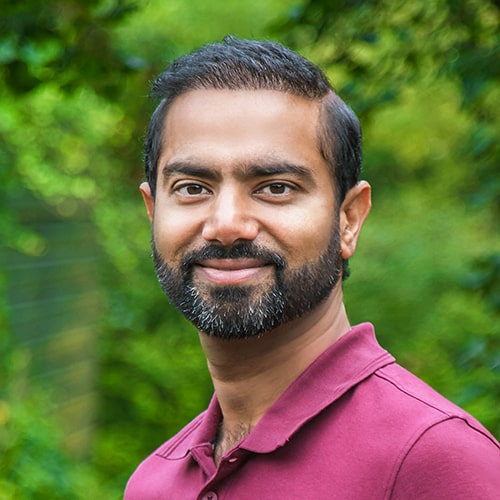
Dr. Ram Jain, PhD (Yoga), founder of Arhanta Yoga and teacher of the yoga philosophy course

Dr. Ram Jain founded Arhanta Yoga and has been teaching since 1998, with over 50,000 hours of teaching experience. He holds a PhD in Yoga, carries Yoga Alliance’s ERYT-500 and YACEP designations, and wrote Hatha Yoga for Teachers & Practitioners, published by Human Kinetics with 20,000+ copies sold in four languages.

Philosophy is where his teaching reputation was built. Explaining subtle concepts in plain language, without diluting them, is a rarer skill than advanced asana, and it’s the skill this course showcases for 25 hours.

Consider what 50,000 teaching hours means for a philosophy course specifically. Every concept in this curriculum has been explained thousands of times, to sceptics, devotees, academics and complete beginners. The explanations that survive that much contact with real students are the ones that actually work, and those are the ones recorded here.

  • Yoga Alliance ERYT-500 designation
  • Yoga Alliance Continuing Education Provider (YACEP) designation

The credentials are worth decoding too, since they’re your comparison tools for any course. ERYT-500 is Yoga Alliance’s experienced-teacher designation at the highest hour level.

YACEP means Yoga Alliance Continuing Education Provider: he’s approved to educate already-certified teachers. And the PhD makes him one of the few course leaders in this niche with doctoral-level training in the subject he teaches.

He also comes from a family that has lived yoga for five generations. When he teaches the concept of God in yoga or the mechanics of karma, he’s transmitting a tradition he was raised inside, refined through a doctorate and decades of teaching students from every culture and background.

The book deserves its own mention. Hatha Yoga for Teachers & Practitioners isn’t self-published marketing; it’s a professional reference from Human Kinetics, a major publisher of movement science, adopted widely enough to sell 20,000+ copies across four languages.

Authors who survive professional editing and international readerships explain things clearly. That’s the voice on every video in this course.

This course specifically has been developed and refined for over 12 years. The explanations you’ll hear have been tested against thousands of real students’ questions, which is why they land.

The School Behind the Course

Arhanta Yoga has provided professional yoga education since 2009, through ashrams in India and the Netherlands and online since 2017. The school has certified over 24,000 yoga teachers, holds a 4.9 out of 5 student rating, and is accredited by Yoga Alliance, the International Yoga Association and the International Yoga Federation, and registered with CRKBO in the Netherlands.

24,000+ yoga teachers certified
Since 2009 professional yoga education
1,000+ enrolled in the first six months online
4.9 out of 5 student rating

When the online programmes launched in 2017, more than a thousand practitioners enrolled within the first six months. This philosophy course carries that same curriculum standard: it’s the philosophy education Arhanta’s teacher trainees receive, packaged for anyone who wants it.

Nine years of online delivery have shaped the details you’ll actually feel: video lessons structured for home attention spans, quizzes tuned to what students genuinely misunderstand, and a discussion culture that’s active rather than ornamental. Online education is a craft, and it improves with exactly this kind of mileage.

That pedigree matters in this niche particularly. Yoga philosophy attracts more unqualified teaching than any other yoga subject, because no posture skills are required to claim expertise. An established school with 17 years of professional education behind it is your quality filter.

There’s a structural reassurance too. Lifetime access is only as good as the institution promising it.

A school with two physical ashrams, tens of thousands of graduates and nearly two decades of operation is built to still exist when you log back in years from now. Course platforms come and go; institutions persist.

The 4.9 out of 5 rating, across a student body of that size, closes the case the numbers can close. The rest, the teaching quality itself, is what the 30-day guarantee lets you verify personally.

Your certificate

Certification and Continuing Education

Complete the course and pass the final exam, and your certificate of completion becomes available for download automatically, at no extra charge.

The certificate carries the school’s accreditations: Yoga Alliance, the International Yoga Association and the International Yoga Federation, with CRKBO registration in the Netherlands. And because the course is taught by a YACEP, a Yoga Alliance Continuing Education Provider, it’s a natural fit for certified teachers building their continuing education.

For working teachers, that’s the practical value: 25 documented hours of philosophy study from an accredited school, on the subject most teachers feel weakest in. According to Yoga Alliance, maintaining an RYT registration involves continuing education alongside the $65 annual membership (2026 figures), and philosophy hours from a YACEP-led course serve exactly that.

The CRKBO registration adds a distinctly non-yoga layer of assurance: it’s the Dutch Central Register for Short Vocational Education, whose registered institutions must meet a national quality code for vocational teaching. Few yoga schools anywhere carry an educational-standards registration like it, and it’s one more reason the certificate reads as education rather than merchandise.

For everyone else, the certificate documents real study: quizzes on every topic and a passed final exam, not an attendance receipt.

The 25-hour yoga philosophy training certificate awarded on completion
  • Yoga Alliance Yoga Alliance
  • International Yoga Association International Yoga Association
  • International Yoga Federation International Yoga Federation
  • CRKBO registered CRKBO registered

What a 25-hour philosophy certificate is, and isn’t

It isn’t a teaching qualification; a 200-hour training is the entry credential for teaching yoga. What it is: documented, assessed depth in the subject that most distinguishes thoughtful teachers and serious practitioners from the crowd.

Where it shines on a teacher’s profile is specificity. “Studied yoga philosophy” is a claim; “25-hour assessed certificate in yogic philosophy under Dr. Ram Jain, PhD” is a fact.

Studios and students both know the difference.

Pricing in context

How Much Does a Yoga Philosophy Course Cost?

Among the top-ranking yoga philosophy courses we compared in July 2026, prices ran from $65 to $1,050, with course lengths from 8 to 120 hours. The spread is enormous because the products are genuinely different:

Observed market prices for yoga philosophy courses by course type, July 2026
Course type (market, July 2026)Typical price observedHoursAccess
Short intro courses$65 to €1198 to 12Often 12 months
Mid-depth certificate courses$115 to $30012 to 100Varies
Premium/advanced programs$497 to $1,050100 to 1203 months to lifetime

Why does an hour of one course cost twenty times an hour of another? Mostly three structural factors: institutional overhead (universities cost more than platforms), production and support models (personal teacher access costs more to run than a video library), and market positioning. Price correlates loosely with depth at best, which is why the checklist below matters more than the number.

Three things to check before comparing any prices:

  • Access period. Several courses we reviewed limit access to 12 months, or charge monthly after 3 months. Lifetime access, included here, changes the long-term value entirely.
  • Assessment. Courses without exams produce certificates without weight. This course requires a passing grade.
  • Who answers your questions. Support ranges from none, to community forums, to this course’s direct email line to the course director.

Arhanta’s current fee is shown at checkout, with a 30-day full refund guarantee, no questions asked. Payment works with debit card, iDeal, Sepa bank transfer or Sofort, so European students aren’t locked into credit cards.

Accepted payment methods: debit card, iDeal, Sepa bank transfer and Sofort

One more honest note on value: this entire course is included inside the school’s 200-hour teacher training. If a full teaching certification is in your future, factor that into your maths before buying the philosophy course separately.

And weigh the lifetime-access arithmetic properly. A $497 course with 3-month access plus a monthly fee afterwards, a model we found at the premium end of the market, costs more every year you stay engaged with the material.

Philosophy is precisely the subject you revisit for decades. Access economics matter more here than in any skills course.

The guarantee completes the risk picture. Thirty days and a full refund mean the real question isn’t “is this course good?”, which you can’t know from a sales page, but “is a month enough to find out?”, which it comfortably is.

How This 25-Hour Yoga Philosophy Course Compares

The market splits into three shapes, and knowing them makes your choice easy:

Short intros

8 to 12 hours. They survey the territory: the eight limbs, a text overview, some key terms. Good for a taste; too thin for working knowledge.

Academic programs

100 to 120 hours. They study the texts themselves, often over months or years, at university-level prices. Superb if you want scholarship; more than most practitioners and teachers need.

This course sits deliberately between them

25 hours is enough to teach the complete foundational system properly, with assessment, without demanding a semester of your life or an academic budget. It’s the practitioner’s and teacher’s depth, not the survey and not the doctorate.

The structural differences from the premium end of the market are worth naming plainly: lifetime access instead of time-limited windows, a final exam instead of attendance certification, and the course director personally answering questions instead of a support inbox. Those three attributes, in one course, at an accessible price, are the comparison in a sentence.

Here’s the market snapshot in table form, from our July 2026 review of the top-ranking courses:

This course compared against the range observed across top-ranking yoga philosophy courses
AttributeRange observed across top coursesThis course
Hours8 to 12025
Advertised price$65 to $1,050Shown at checkout
Access12 months, or 3 months + monthly fee, to lifetimeLifetime, incl. future updates
AssessmentOften none; essay at academic endQuizzes per topic + final exam
Teacher contactUsually none or community-onlyDirect email to the course director
Refund window7 days to 30 days, where offered30 days, full refund

One fair caveat: if what you want is university scholarship, textual Sanskrit study or a 100-plus-hour academic immersion, the academic programs serve that purpose and serve it well. This course optimises for something different: complete working understanding for practitioners and teachers, at practitioner scale.

Why 25 Hours Is the Right Size

Hours are a design choice, not a bragging metric. Shorter than about 12 hours, a course can only survey. Beyond about 100, it’s textual scholarship, wonderful and unnecessary for working understanding.

Twenty-five hours hits the working sweet spot: enough for every foundational concept to be taught, practised through assignments and assessed, without padding. The course has been refined for over 12 years toward exactly that target, trimming what didn’t earn its minutes.

Your time is part of the price you pay for any course. A yoga philosophy course that respects it is cheaper than its price tag suggests, and one that pads its hours is dearer.

Part of the 200-Hour Teacher Training

Full transparency, straight from the course page: this yoga philosophy course is also fully included in Arhanta’s online 200-hour yoga teacher training.

That cuts two ways, both useful. If you’re already planning to become a certified yoga teacher, take the 200-hour training and this philosophy education comes inside it. If you’re not, this course gives you exactly the philosophy module those trainees study, without the other 175 hours.

It’s also a low-risk way to test the school before a bigger commitment. If you’re weighing the full teacher training but unsure about the teaching style, taking the philosophy course first shows you exactly how Arhanta teaches, with a 30-day exit if it’s not your fit. Trainees who later upgrade arrive at the 200-hour with its hardest theoretical module already mastered.

Very few schools structure their courses this transparently. The usual model hides what overlaps what, and students discover the redundancy after paying twice. Here the overlap is stated on the page, and this page repeats it, so you can plan your path deliberately.

It also means the course isn’t an afterthought product. It’s a core module of a certification that has produced thousands of teachers, extracted for people who want the understanding without the teaching credential.

Five real differentiators

What Makes This Yoga Philosophy Course Different

Strip away the shared features every online course advertises, and five genuine differentiators remain:

  • The teacher answers you personally. Not a support team, not a moderator: Dr. Ram Jain, PhD (Yoga), by email or forum, for life. In our July 2026 market review, no competing course offered the course director’s direct line.
  • A five-generation lineage plus a doctorate. Tradition and scholarship rarely arrive in the same teacher. Here they do, and the teaching shows it.
  • Real assessment. Eleven quizzes and a final exam with a required passing grade. The certificate documents understanding you demonstrably have.
  • Lifetime access including future updates. The course you buy improves over time, and philosophy is the subject you’ll return to most across a practising life.
  • It’s the actual teacher-training module. This is the philosophy education inside a 200-hour certification that has produced thousands of teachers, not a side product built for a price point.

None of these are claims you need to take on faith. The curriculum is on this page, the credentials are verifiable, and the 30-day guarantee turns the rest into something you can test personally.

That’s also the honest way to read any course page, including this one: separate what’s checkable from what’s marketing, check it, and let a guarantee cover the remainder. This page was written to survive exactly that reading.

Five minutes to your first lesson

How to Enroll

  1. Press “Get access” on the course page

    You’ll be redirected to the payment page, with the current fee shown before you commit to anything.

  2. Pay your way

    Debit card, iDeal, Sepa bank transfer or Sofort all work; no credit card required, which matters for many European students.

  3. Check your email

    Your login arrives within five minutes of payment, and you can start the first lesson immediately.

  4. Use the guarantee window

    Explore the course properly: watch lessons, take a quiz, ask a question. If it’s not right for you, the 30-day full refund guarantee applies, no questions asked.

  5. Questions first?

    Call or WhatsApp + 31 618 504823, or email ttc@arhantayoga.org. The team answers before you commit, not after.

A sensible first week, if you want one

Watch the opening lesson on the aim of yoga, do its quiz, and post one question in the discussion group. Those three acts show you the teaching, the assessment and the support, which is everything the guarantee window is for.

Frequently Asked Questions

The course and who it’s for

A yoga philosophy course is structured training in the theory behind yoga: its aim, core concepts like the eight limbs and gunas, the yogic model of mind and consciousness, and the reasoning behind practices like pranayama and meditation. This one covers the complete foundational system in 25 self-paced hours.

Yes. Every concept is explained from scratch by the course director, so you’ll have no problem understanding the material even if you’re new to yoga. Sincere interest matters more than experience, and the quizzes after each topic make sure the foundations hold before you build on them.

No. The course requires no previous education and no formal yoga background. It was designed to take a motivated student from zero to a complete foundational understanding of yogic philosophy, which is why it’s also the philosophy module inside the school’s teacher training.

No. Yoga philosophy is a system of analysis and practice rather than a religious doctrine, and people of many faiths and none have studied it for centuries. The course addresses the concept of God in yoga directly and respectfully, so you can understand exactly what the tradition claims and hold your own position clearly.

No. The course teaches the philosophical system, which is valuable to meditators, thinkers and the simply curious as much as to asana practitioners. That said, if you do practise, expect the philosophy to change how your practice feels within weeks.

Time, pace and access

The course represents 25 hours of study across 12 video lessons, quizzes, assignments and a final exam. At a steady pace of a few hours a week, that’s one to two months; studied intensively, considerably less. There’s no deadline, so your pace is genuinely yours.

Whenever you decide. Access begins right after you sign up, with your login emailed within five minutes of payment. There’s no finish date either: lifetime access means you can take as long as you want and revisit any lesson forever.

For life. Lifetime access covers all course materials and every future update to the course, so the version you own improves over time. Many philosophy courses we compared limit access to 12 months or charge monthly after an initial window; this one doesn’t.

As few or as many as you like. At three hours a week, the 25 hours complete in roughly two months; at 90 minutes a week, around four. There are no deadlines and lifetime access, so a demanding month costs you calendar time, never progress.

Assessment, certificate and support

Yes. The school is accredited by Yoga Alliance, the International Yoga Association and the International Yoga Federation, and CRKBO-registered. The course is taught by a YACEP (Yoga Alliance Continuing Education Provider), making its 25 hours a natural fit for certified teachers’ continuing education.

Yes, and they’re the reason the certificate has weight. Simple quizzes follow every topic to consolidate what you’ve learned, and a final exam at the end requires a passing grade to complete the course. It’s real assessment, kept humane.

The certificate becomes available for download automatically once you finish the last chapter and pass the final exam. There are no extra charges for it, no processing fees and no waiting for the post: you complete the course, and the certificate is simply there.

Unlimited teacher support, and unusually direct: for any questions during or after your study, you can contact Dr. Ram Jain himself via email or the discussion forum. The discussion group also connects you with fellow students working through the same material.

Price, payment and enrollment

Across the top-ranking courses we compared in July 2026, prices ranged from $65 for short intros to $1,050 for university certificate programs, over 8 to 120 hours. Arhanta’s 25-hour course shows its current fee at checkout, includes lifetime access and the certificate, and carries a 30-day guarantee.

Yes, fully. The course page states it plainly: this philosophy course is included in the school’s 200-hour yoga teacher training. If you plan to certify as a teacher anyway, take the full training; if you want the philosophy alone, this course is that module by itself.

You’re redirected to the payment page, and once payment completes, your login details arrive by email within five minutes. From there you have immediate access to all 12 video lessons, the notes and resources, the quizzes and the discussion group.

Yes. The course accepts debit card, iDeal, Sepa bank transfer and Sofort, which covers most European payment preferences. If none of those work for you, contact the team at ttc@arhantayoga.org and they’ll help you sort out payment.

Then you get your money back. The 30-day full refund guarantee applies with no questions asked, which gives you a month to judge the teaching quality, the depth and the format from inside. The school can offer that because most students stay.

After the course

Use it. The course is foundational training in yogic philosophy that adds a professional and personal advantage: teachers answer students’ questions with substance and apply the concepts in class themes, while practitioners finally understand what their practice is for. It also pairs naturally with deeper study, like meditation teacher training.

Directly. This course is the philosophy module of Arhanta’s own 200-hour teacher training, so it covers foundational philosophy at teacher-training depth. Students preparing for any school’s YTT, or shoring up a module that went past too quickly, are using exactly the right tool.

25 hours from here

Start Your Yoga Philosophy Course Today

Your practice already asks philosophical questions; you feel them every time a concept floats past in class unexplained. This yoga philosophy course answers them systematically: 25 hours, the complete foundational map, a teacher with a PhD in the subject answering your questions personally, and lifetime access to it all.

Think about the timeline honestly. Two months from now, at a few hours a week, you could understand the eight limbs, the gunas, karma, the mind’s machinery and the purpose of every practice you do.

Or you could still be collecting fragments from class mentions and internet articles. Same two months, very different yogi at the end of them.

You now know what this yoga philosophy course contains, topic by topic, who teaches it, how it’s assessed and how it compares to everything else ranking for your search. The unknowns left are the ones only experience answers, and the guarantee exists precisely for those.

Enroll and start within five minutes, protected by the 30-day guarantee. Or ask your questions first: call or WhatsApp + 31 618 504823, or email ttc@arhantayoga.org. Either way, the version of you who understands the practice is closer than 25 hours away.

Yoga Alliance, IYA and IYF accredited; CRKBO registered 4.9 out of 5 student rating 30-day full refund guarantee, no questions asked

Your Investment

You will not just get any online course. You will get a refined Yoga Philosophy certification course developed by Dr. Ram Jain, PhD (Yoga) with his invaluable teaching experience of 22 years. You will receive guidance and academic support from very dedicated teachers. After finishing this course, you can start teaching Yoga Philosophy professionally worldwide.

What Happens After You Enroll

You receive instant access to the full training and can start immediately. You can progress at your own pace with lifetime access.

  • 25 Hours Training

  • 12 Video Lessons

  • 11 Quizes & Downloadable Resources

  • Access to Discussion Group

  • Certificate of Completion

  • Lifetime Teacher Support

Lifetime Access

Buy now, complete anytime

...

No hidden fees. 30-day guarantee

  • About Us
  • Residential Trainings
  • Online Trainings