200 Hour Yoga Teacher Training Online: Certified Hatha Yoga Course
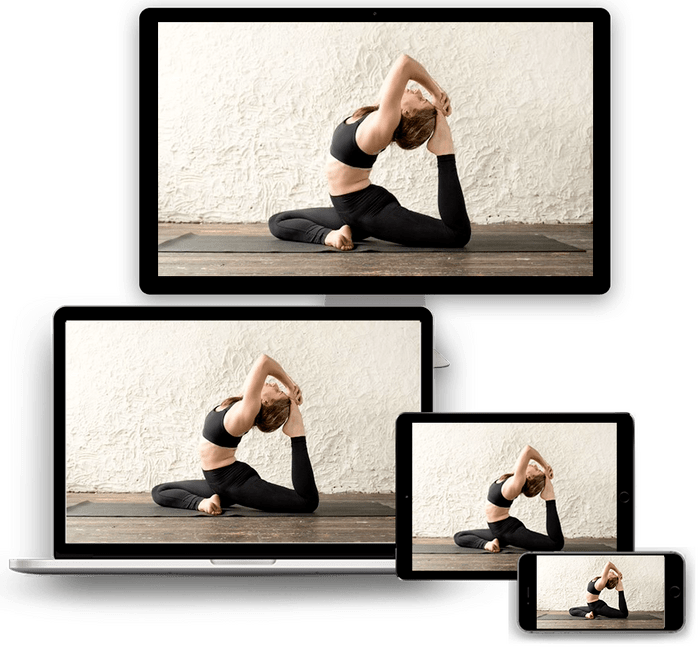
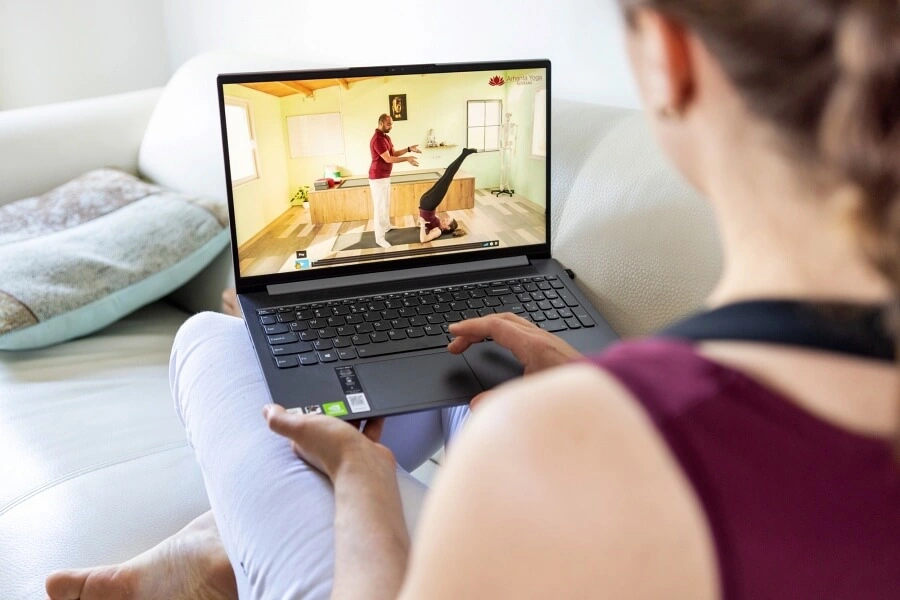
A 200 hour yoga teacher training is the qualification that lets you teach yoga professionally, and you can now complete it entirely online. This self-paced hatha yoga certification comes with lifetime access and lifetime teacher support.
Last updated: 25 July 2026
Written by the Arhanta Yoga team. Reviewed by Dr. Ram Jain, PhD (Yoga), founder of Arhanta Yoga, ERYT-500 and YACEP.
Accredited by Yoga Alliance, the International Yoga Association and the International Yoga Federation, and registered with CRKBO in the Netherlands.
TL;DR: The essentials
- 200 hour yoga teacher training in classical hatha yoga, completed fully online at your own pace.
- Accredited by Yoga Alliance, the International Yoga Association and the International Yoga Federation, and registered with CRKBO in the Netherlands.
- Finish in as little as 26 days full-time; most part-time students complete it in 2 to 4 months.
- Includes 140 hours of videos, a 300-page manual, 31 quizzes, weekly live support calls and lifetime access.
- 30-day money-back guarantee: a full refund, no questions asked.
A 200-hour yoga teacher training is the internationally accepted foundation course for teaching yoga, covering asana technique, anatomy, philosophy, pranayama, meditation and teaching methodology in one certification programme. Complete this one and you can register with Yoga Alliance as an RYT 200 and teach anywhere in the world.
Table of contents
- The course at a glance
- What is a 200-hour yoga teacher training?
- Who this online course is for
- Why choose Arhanta's training?
- Meet your teacher: Dr. Ram Jain
- What you'll learn: the complete curriculum
- Why classical hatha yoga?
- How the online course works
- How long does the course take?
- Online or in-person: which fits you?
- Certification: what you receive
- How much does a 200 hour yoga teacher training cost?
- What's included when you enroll
- What can you do after the course?
- How to enroll
- Frequently asked questions
The 200 Hour Yoga Teacher Training at a Glance
Every key fact about the course, in one place:
| Detail | This course |
|---|---|
| Certification | 200-hour yoga teacher training, classical hatha yoga |
| Format | 100% online, self-paced, start anytime |
| Completion time | As fast as 26 days full-time; typically 2 to 4 months part-time |
| Accreditation | Yoga Alliance, International Yoga Association, International Yoga Federation; CRKBO registered |
| Materials | 140 hours of videos, 300-page manual, 22 downloadable resources, 31 quizzes |
| Live support | Weekly live support calls; 1:8 teacher-student ratio; lifetime teacher support |
| Access | Lifetime access to all course materials |
| Guarantee | 30-day money-back guarantee, full refund, no questions asked |
| Payment | Pay in full or in three equal installments |
| Teacher | Dr. Ram Jain, PhD (Yoga), ERYT-500, YACEP |
| Student rating | 4.9 out of 5 |
Yoga Alliance, IYA and IYF accredited; CRKBO registered 4.9 out of 5 student rating 30-day money-back guarantee
What Is a 200-Hour Yoga Teacher Training?
A 200-hour yoga teacher training is the standard entry-level qualification for teaching yoga, built around 200 hours of study across asana, anatomy, philosophy, pranayama, meditation and teaching methodology. It's the credential yoga studios, gyms and insurers look for when they check whether you're qualified to teach.
The "200 hours" isn't arbitrary. Yoga Alliance, the largest registry of yoga schools and teachers, set 200 hours as the foundation standard for its Registered Yoga Teacher (RYT 200) designation. Schools that meet the standard can register as an RYS, a Registered Yoga School, and their graduates can register as RYT 200 teachers.
Shorter courses exist, and they have their uses. But a 50-hour or 100-hour certificate won't qualify you for RYT 200 registration on its own. If your goal is to teach professionally, 200 hours is where that path starts.
This comparison of 50, 100 and 200-hour yoga certifications breaks down exactly what each level qualifies you to do.
What do the 200 hours contain? Across accredited schools, the framework spans the same core territory: yoga techniques and practice, teaching methodology, anatomy and physiology, philosophy and ethics, and a teaching practicum. The top-ranking trainings we reviewed in July 2026 all structure their hours across those categories, whatever their style or format.
One more distinction worth making early: hours are not weeks. Some schools compress 200 hours into an intensive month; others, like this online course, let you spread the same hours over the schedule you actually have. The certification at the end is the same.
Why a 200-Hour Course, and Not Something Shorter?
Because 200 hours is the smallest container that fits the whole job. Teaching yoga safely requires asana technique, but also enough anatomy to protect bodies, enough philosophy to answer real questions, and enough supervised teaching practice to stand in front of a class without panic.
Trim any of those and you get a certificate that looks similar and performs differently. The industry, the insurers and Yoga Alliance all settled on 200 hours because experience showed that's what competence takes. Shortcuts exist; shortcuts also explain most of the nervous, underprepared teachers you may have already met.
Want a detailed preview of the experience itself? Here's what to expect from a 200-hour YTT, from first module to final assessment.
Who This Online Course Is For
You don't need to touch your toes, quote the Yoga Sutras or have any teaching experience. You need sincerity and a few hours a week.
This course fits you if:
- You want to teach yoga, part-time or full-time, and need a certification that's recognised worldwide.
- You can't leave work or family for a month-long residential training, so you need serious study that fits around real life.
- You practise yoga and keep wanting to know more than your local class explains.
- You live somewhere without a good yoga school nearby, and travelling for training isn't realistic.
- You're a health or fitness professional adding yoga to an existing practice.
Two of those groups deserve a closer word. Career changers are a familiar profile here: people leaving desk jobs who want work that means something, testing the water with evening classes before leaping. The self-paced format is built for exactly that transition, because you certify while the salary continues.
Fitness professionals arrive from the other direction. Personal trainers, physiotherapists and Pilates instructors add the 200-hour credential to broaden what they can offer, and the anatomy and philosophy modules cover ground their original certifications rarely touch.
And a word for the sceptics, because scepticism here is healthy. If you're wondering whether an online course can really prepare you to teach, that's the right question to ask. The section on how the course works answers it concretely: videos you can rewatch, weekly live calls with teachers, assignments that are actually reviewed and a final practicum where you teach.
Three entry worries deserve direct answers, because they stop good candidates every year.
-
"I've never taught anything."
Prior teaching experience isn't required. The course builds your understanding step by step before it moves into teaching principles and methodology, so by the time you're asked to teach, you've been prepared to.
-
"I have no formal yoga education."
None is needed. This is the foundation course: it teaches the most important principles and skills from scratch. Your practice experience helps, but the curriculum assumes nothing.
-
"Am I too old for this?"
There are no age limits. A sincere desire to learn and reasonable physical health are the only real prerequisites, and graduates span every decade of adult life.
What this course is not:
a casual collection of yoga videos. There are quizzes, practical assignments and a real assessment. The certificate means something because you can't sleepwalk to it.
And who should choose differently?
If you know you need a room, a fixed schedule and daily in-person adjustments to thrive, a residential training will serve you better, and Arhanta runs those too. The goal is the right format for you, not the same format for everyone.
Why Choose Arhanta's Online 200 Hour Yoga Teacher Training?
Hundreds of schools sell online yoga certifications now. Most launched during or after 2020. Arhanta's online training has been running since 2017, built by a school that had already been training teachers in its ashrams for years.
A 5-Generation Heritage, Online Since 2017
Arhanta Yoga has provided professional yoga education since 2009, through two ashrams in India and the Netherlands. The teaching lineage behind the school spans five generations.
When the online programme launched in 2017, more than a thousand practitioners enrolled within the first six months. The course you're looking at today is that same programme, refined across nine years of online teaching.
That history matters for a simple reason: this curriculum wasn't adapted for online learning in a hurry. It was built for it, by people who already knew exactly what a qualified teacher needs to know.
24,000+ Teachers Certified From 94 Countries
Arhanta has certified over 24,000 yoga teachers from 94 countries, and serves over 1,000 yoga students annually across its programmes. The student rating stands at 4.9 out of 5.
Numbers like that do two things for you. They prove the course survives contact with every kind of student, from complete beginners to physiotherapists. And they mean the certificate is already recognised by employers who've hired Arhanta graduates before you.
A student body spanning 94 countries also changes the study experience itself. Your discussion group includes teachers-in-training from different continents, time zones and teaching cultures, and the questions they raise widen what you learn. Yoga teaching is global work; it helps to train in a global room.
A 1:8 Teacher-Student Ratio
"Online support" usually means a help desk. Here it means a 1:8 teacher-student ratio, weekly live support calls on Zoom, a discussion group, and teachers who answer your questions while you study and after you graduate.
Lifetime teacher support is included with lifetime access. Not first-90-days support: lifetime. Your hardest questions will come when you start teaching real students, and that's exactly when most schools have already moved on.
There's a structural reason the support stays personal: the school takes a limited number of students every month, precisely so teachers have time to give proper attention and mark every assignment. Popular courses that enroll without limits can't make that promise, because no teaching team scales infinitely.
Student-Centric by Design
"Student-centric" is an easy phrase to print and a hard standard to run. Here it means concrete things.
Your assignments get marked by teachers, not algorithms. Your questions get answered on live calls, in the discussion group and by email. Your pace is yours: the structure adapts to your life, and the assessment standard doesn't.
That combination is the whole idea. Flexible where flexibility helps you, rigorous where rigour protects your future students.
Yoga Alliance, IYA and IYF accredited; CRKBO registered 4.9 out of 5 student rating
Meet Your Teacher: Dr. Ram Jain, PhD (Yoga)
Dr. Ram Jain, PhD (Yoga)
Founder of Arhanta Yoga and lead teacher of this course.
- PhD (Yoga)
- ERYT-500
- YACEP
- 50,000+ teaching hours
- 23+ years teaching
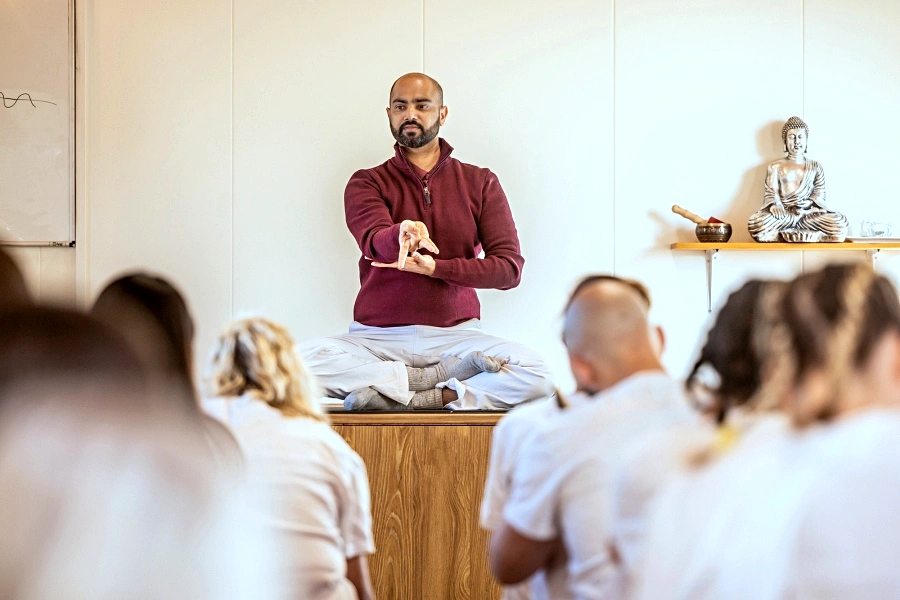
Dr. Ram Jain is the founder of Arhanta Yoga and the lead teacher of this course. He holds a PhD in Yoga, carries the ERYT-500 and YACEP designations from Yoga Alliance, and has more than 23 years of teaching experience totalling over 50,000 teaching hours.
Think about what 50,000 hours means in practice. Every question you're likely to ask, he's answered hundreds of times. Every mistake new teachers make, he's corrected in person, at scale, across two ashrams and nine years of online cohorts.
His teaching style follows from that experience: precise, practical and free of vagueness. You'll hear exactly why an alignment matters, what to say to a student who can't do a pose, and how to explain philosophy without sounding like a textbook.
The credentials are worth decoding, since they're the same ones you should check at any school. ERYT-500 is Yoga Alliance's experienced-teacher designation at the 500-hour level, requiring documented teaching hours well beyond the certification itself. YACEP means Yoga Alliance Continuing Education Provider: he's approved to teach continuing education to already-certified teachers.
In other words, the person teaching your foundation course also teaches the teachers.
The PhD in Yoga adds something rarer. Academic depth in yoga is uncommon among course founders, and it shows up here as precision: claims about the tradition you can trust, taught by someone who has studied the sources rather than summarised other people's summaries.
The School Behind the Course
Arhanta Yoga has been providing professional yoga education since 2009, through two ashrams in India and the Netherlands and, since 2017, online. The numbers tell the story efficiently: over 24,000 yoga teachers certified from 94 countries, more than 1,000 students served annually, and a 4.9 out of 5 student rating.
The online course wasn't a pandemic improvisation. When it launched in 2017, more than a thousand practitioners enrolled within the first six months, and the programme has been refined continuously since. By the time online training became fashionable, this one had already graduated years of teachers.
Behind the institution sits a family lineage of five generations of yoga teaching. That heritage isn't decoration on a sales page. It's the reason the curriculum teaches classical hatha yoga as a complete system, and the reason the standards don't drift with trends.
Two Ashrams, One Standard
The same school runs residential teacher trainings at its ashrams in India and the Netherlands, and that matters for the online course more than it first appears. The curriculum you study online isn't a product designed by a marketing team. It's the ashram curriculum, carried into an online format by the people who teach it in person.
It also means the online course lives inside a real institution with physical roots, permanent staff and a reputation built across formats. Schools that exist only as websites can vanish, taking "lifetime access" with them. A school with two ashrams and a 17-year history is structurally harder to disappoint you.
If you evaluate schools the sensible way, by asking how long they've operated, how many teachers they've produced and whether graduates recommend them, this is what a strong answer looks like.
What You'll Learn: The Complete Curriculum
The course covers five areas: 170+ yoga asanas, anatomy and physiology, pranayama and meditation, yoga philosophy, and teaching methodology. Four structured modules carry that material, and each one ends in assessment, so knowledge gets tested rather than assumed.
- 170+ yoga asanas
- anatomy and physiology
- pranayama and meditation
- yoga philosophy
- teaching methodology
Module 1: Yoga Asanas and Practice

The practical heart of the training. You'll study:
- 170 classical yoga asanas, with the proper alignments of 95 asanas in detail
- How to create a proper class environment and the basic structure of a yoga class
- The structure of a beginner's course, and asana variations for beginner and elementary levels
- How and when to modify asanas for different bodies
- Kids yoga, gentle and limited-movement yoga, and yoga for pregnant women
- Deep relaxation and yoga nidra
- Pranayama, bandhas and kriyas
- Meditation, the four paths of yoga and kundalini yoga
Notice the emphasis. You're not just learning to do 170 postures. You're learning to teach 95 of them with precise alignment, which is a different skill entirely.
The breadth here is deliberate. Kids yoga, gentle and limited-movement yoga, and pregnancy yoga each demand different modifications, and a teacher who only knows the standard adult class freezes the first time a pregnant student or a stiff 70-year-old walks in. You'll know what to change, and why.
The subtler practices carry equal weight. Yoga nidra and deep relaxation are among the most requested class elements today, pranayama gives your classes their depth, and the bandhas and kriyas connect your teaching to the classical hatha tradition most modern courses skip. The four paths of yoga and an introduction to kundalini round out the map, so you understand where your own teaching sits within the wider tradition.
Module 2: Anatomy and Physiology

Anatomy is what keeps your future students safe. This module covers:
- The eight main body systems and how yoga affects them
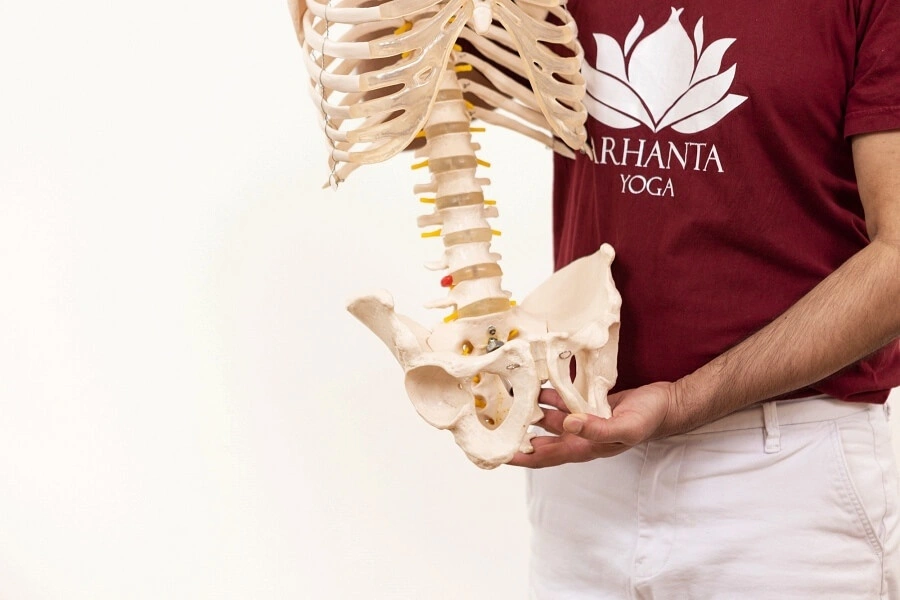
- The spine and its common disorders
- The difference between yoga and other physical exercise
- Injury prevention and cures
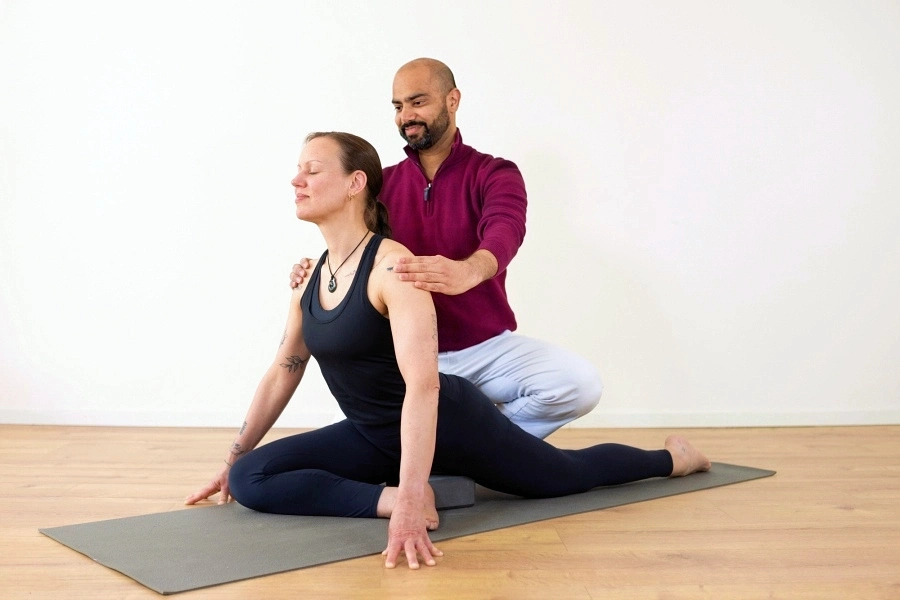
- Alignments, adjustments and modifications
- Yoga as therapy
- Diet and nutrition: Ayurveda, the yogic diet, body types and how food and lifestyle affect body and mind
When a student with a herniated disc walks into your class, this is the module that tells you what to do. That moment will come. Every teacher meets it eventually.
Two parts of this module earn special attention. The spine section covers its common disorders because back issues are the single most frequent thing students bring to a yoga class, and vague knowledge here is how well-meaning teachers cause harm. And the "yoga versus other exercise" material gives you clear, accurate answers when a personal trainer or physiotherapist asks what your class actually does.
The diet and nutrition section goes further than most 200-hour courses: an introduction to Ayurveda, the yogic diet, body types and suitable diets, and how food and lifestyle shape body and mind. You won't graduate as a nutritionist, and you're not meant to. You'll graduate able to answer the "what should I eat" questions every yoga teacher gets, responsibly.
Module 3: Yoga Philosophy

Philosophy is what makes you a yoga teacher rather than a stretching instructor. You'll study:
- The aim and meaning of yoga, and the five principles of yogic practice
- The four paths of yoga and the eight limbs of Raja Yoga
- The seven stages of awareness and the three gunas: sattva, rajas and tamas
- Core concepts: maya, prakriti, brahman, avidya, atman, paramatman and jiva
- The three bodies (physical, astral, spiritual) and four inner instruments (mind, intellect, subconscious, ego)
- How the mind works, and the five major and five minor pranas
- Karma and reincarnation: the laws of action, compensation and retribution, destiny versus self-effort, and the purpose of birth and rebirth
Taught in plain language. The concepts are deep; the explanations don't need to be complicated.
Why does a teacher need this much philosophy? Because students ask.
After a few months, someone stays behind after class and asks what karma actually means, or why the practice is calming their anxiety, or what "the mind" even is in yogic terms. Teachers without philosophy deflect. Teachers with it give an answer that keeps the student practising.
The karma and reincarnation section alone covers the laws of action and reaction, compensation and retribution, the interplay of destiny, self-effort and free will, and the purpose of birth and rebirth. That's the material that separates a yoga education from a fitness certification, and it's taught here as living ideas rather than museum pieces.
Module 4: Teaching Techniques and Your Yoga Career

Knowing yoga and teaching yoga are different skills. This module builds the second one:
- The psychology of a teacher and the psychology of a student
- Correction, guidance, motivation and communication techniques
- Ethical guidelines for a yoga teacher
- Running your own yoga school or studio: finding a location, promoting your classes, getting renewals, and the common mistakes that sink new studios
The psychology material deserves a note, because almost nobody else teaches it at this level. Understanding the psychology of a student tells you why the person in the back row won't try the pose, and what actually helps. Understanding the psychology of a teacher tells you what's happening in your own head in week one, and how to keep nerves from becoming your teaching style.
That business section is rare in a 200-hour course too. Most trainings hand you a certificate and wish you luck with the business side. This one covers finding a location, promoting your classes, getting students to renew, and the common mistakes that sink new studios: your first year of teaching, treated as part of the syllabus.
For a wider look at what the level builds, see the skills you learn in a 200-hour training.
Yoga Alliance, IYA and IYF accredited; CRKBO registered 30-day money-back guarantee
Why Classical Hatha Yoga?
This is a hatha yoga teacher training, and that's a deliberate choice rather than a default. Classical hatha yoga is the root system that modern styles grew from. Vinyasa, ashtanga-influenced flows, yin and restorative classes all draw on hatha foundations.
What does "hatha" actually cover? In the classical sense taught here, it's the complete physical branch of yoga: asanas held with attention to alignment and breath, pranayama to train the breath itself, bandhas and kriyas to work with the body's subtler mechanics, and relaxation and meditation to integrate it all. The modern gym usage of "hatha" as merely "slow yoga" is a shadow of the system.
Learn hatha properly and you understand the source material. You know why poses are sequenced the way they are, what each posture actually does, and how to slow a practice down or build it up for the students in front of you.
There's a career argument too. A hatha yoga teacher training prepares you for the widest range of teaching situations: beginners' courses, gentle classes, corporate sessions, seniors, mixed-level studio classes. Specialise later if you like, starting from the foundation that supports every specialisation.
Think about who actually fills yoga classes. Beginners outnumber advanced practitioners everywhere, and what beginners need is exactly what hatha training teaches: clear alignment, sensible pacing, breath awareness and postures held long enough to understand. A teacher trained in fast flow alone has nothing to offer the largest audience in the room.
And if you're comparing styles before committing, that's wise. A style-hopping teacher with shallow roots struggles; a hatha-trained teacher reads any class and adapts.
What Makes This a Complete Hatha Yoga Teacher Training
"Hatha" on a course page can mean anything from classical practice to generic slow flow. Here it means the classical system, taught whole: asana with precise alignment, pranayama, bandhas and kriyas, deep relaxation and yoga nidra, meditation, and the philosophy the practices grew from.
That's the checklist worth applying to any hatha yoga teacher training you consider. If a course teaches postures plus a weekend of "philosophy highlights," it's teaching exercise with Sanskrit names. The tradition is a system, and teaching it well requires learning it as one.
The lineage behind this course makes the point concrete: five generations of yoga teaching, carried into a curriculum by a founder who wrote his PhD on yoga. You're not getting a fitness company's interpretation of hatha. You're getting hatha.
How the Online Course Works
Enroll, get instant access, start learning. The structure underneath is what makes it work:
Study at Your Own Pace
All 140 hours of video lessons are available from day one, alongside the 300-page manual and 22 downloadable resources. You study when your life allows: early mornings before work, weekends, or full-time if you're between commitments.
There are no cohort deadlines and no expiry date. Lifetime access means the course waits for you, not the other way around. Enroll now, start later if you need to.
31 quizzes checkpoint your progress through the modules. They're not decoration. They catch the gaps in your understanding while the material is fresh, which is exactly when gaps are cheap to fix.
How a Typical Study Session Flows
The rhythm of the course settles quickly. You watch a lesson, then practise what it taught, on the mat for asana material or in stillness for pranayama and meditation. The 300-page manual consolidates what the video covered, so revision doesn't mean rewatching everything.
At section ends, a quiz confirms the material landed. At module milestones, practical assignments ask you to apply it: this is where teachers review your actual work rather than your quiz scores. And whenever something won't click, the week's live call or the discussion group is where you take it.
Watch, practise, check, apply, ask. Five verbs, repeated across four modules, and at the end of them you can teach.
Five Habits That Make Online Study Stick
The success patterns in self-paced study are remarkably consistent. Steal them:
-
1
Fix a study slot, even a small one. The same 45 minutes most days beats a heroic Sunday. Momentum is the whole game in self-paced study.
-
2
Practise what you watched the same day. Asana knowledge lives in the body; a lesson left unpractised for a week evaporates.
-
3
Never skip the quiz. It's two minutes, and it tells you honestly whether to move on or rewatch.
-
4
Show up to the live calls, prepared or not. Even listening recalibrates you. The students who vanish from calls are the ones who stall.
-
5
Tell someone your certification date. A partner, a friend, your future first student. Accountability you didn't build won't appear later.
None of that requires discipline you don't have. It requires structure you decide once, which is a much smaller ask.
Weekly Live Support Calls
Self-paced doesn't mean alone. Every week there are live support calls on Zoom where you ask teachers anything: a pose you can't figure out, a philosophy concept that won't click, a nerves-about-teaching question.
The calls do something subtler too. They put a rhythm under a self-paced course. Knowing a live call is coming on a set day nudges you to have studied something worth asking about, and hearing what other students are working through calibrates your own progress better than any progress bar.
Between calls, the discussion group keeps you connected to teachers and fellow students. And the 1:8 teacher-student ratio means your practical assignments get real attention, not automated approval. When your class plan comes back with feedback, a teacher wrote it.
What You Need to Study
The equipment list is refreshingly short. For practice, you'll need a yoga mat, a meditation cushion and a blanket. For the coursework, a decent working computer with a good internet connection.
That's the whole list.
No studio membership, no prop collection, no travel budget. If you have a quiet corner and a mat, you have a training space.
The Final Practicum
The course ends the way teaching begins: you teach. The final practicum is where you demonstrate that you can plan and deliver a real class, applying everything from alignment cues to sequencing.
It's assessed by teachers, and it's the reason this certificate carries weight. Nobody passes by watching videos alone. When you finish, you've already taught, which changes how you walk into your first paid class.
It's normal to dread the practicum in advance; it's also where the course pays off. Preparing it forces every module to integrate: alignment knowledge shapes your cues, philosophy shapes your framing, teaching methodology shapes your structure. It's the moment the course stops being subjects and becomes a profession.
And the feedback is the real graduation gift. An experienced teacher watching your teaching and telling you specifically what to strengthen: that's what in-person trainings charge thousands for, and it's built into this course's final step.
Yoga Alliance, IYA and IYF accredited; CRKBO registered 30-day money-back guarantee
How Long Does the Course Take to Complete?
You can complete the course in as little as 26 days if you study full-time. As a part-time study, most students complete it in 2 to 4 months.
Here's how those timelines look in practice:
| Study pattern | Time to certification |
|---|---|
| Full-time (career break, sabbatical) | As fast as 26 days |
| Committed part-time (evenings + weekends) | Around 2 months |
| Steady part-time (a few hours a week) | Around 3 to 4 months |
| Life got busy | No deadline; lifetime access means you finish when you can |
The honest advice: consistency beats intensity. Students who study a little most days retain more than students who binge a module and vanish for three weeks. But the structure accommodates both, because it was built for people with real schedules.
A Realistic Study Plan
Run the arithmetic and the commitment becomes concrete. The training represents 200 hours of study. Spread over the typical part-time timelines, that works out to:
| Timeline | Weekly commitment (approx.) | Fits |
|---|---|---|
| 26 days full-time | About 7 to 8 hours a day | Career breaks, sabbaticals, between jobs |
| 2 months part-time | Around 22 to 25 hours a week | Evenings plus committed weekends |
| 3 months part-time | Around 15 to 17 hours a week | Steady evenings-and-weekends rhythm |
| 4 months part-time | Around 11 to 13 hours a week | Busy work and family schedules |
A workable week at the 3-to-4-month pace looks like: one video session most weekdays, a longer practice-and-study block on the weekend, one live support call, and the module quiz when you finish a section.
And if your real week collapses now and then? Nothing breaks. The course has no deadlines to miss, so a bad fortnight costs you calendar time, never progress already made.
Full-time study deserves its own honest note. Finishing in 26 days means treating the course as your job: seven-plus hours of daily study, practice and assignments. It's usually done between jobs or during a sabbatical, and it's genuinely demanding.
If that's your plan, clear the month properly.
Half-committed full-time study delivers the worst of both paces.
There's no prize for speed, either. The certificate doesn't note your completion time, and a teacher who absorbed the anatomy properly over four months out-teaches one who skimmed it in four weeks. Pick the pace your life can actually sustain, and let the structure do its work.
Online or In-Person: Which 200-Hour Training Fits You?
Both formats produce certified, Yoga Alliance-registrable teachers. The right choice depends on your time, budget and learning style, so here's the honest comparison most course pages won't give you:
| Factor | Online (this course) | Residential in-person |
|---|---|---|
| Schedule | Self-paced, fits around work and family | Fixed 3 to 4 week block, full immersion |
| Location | Anywhere with an internet connection | Travel to the venue |
| Pace of learning | Rewatch any lesson, anytime, for life | One pass, real-time |
| Practice feedback | Assignments + live calls + assessed practicum | Daily in-room feedback |
| Cost | Lower; no travel or accommodation | Higher; includes room and board |
| Immersion | You build the discipline yourself | The environment builds it for you |
Online wins on flexibility, price and the ability to revisit lessons forever. In-person wins on immersion and the intensity of daily in-room practice. Neither wins on certification value: both routes end in the same 200-hour credential.
The revisit point deserves more weight than it usually gets. In a residential training, the anatomy lecture happens once; whatever you absorbed that afternoon is what you keep.
Online, the same lecture is available the night before you teach your first student with back pain. For material you'll need across a whole career, permanent access is not a small convenience.
The immersion point cuts the other way, honestly. Three residential weeks build a discipline that self-paced study has to construct deliberately, through routine and the weekly call rhythm.
If you know your own follow-through is fragile, weigh that seriously. If your life simply can't pause for a month, the question answers itself.
Arhanta teaches both, which is why this comparison can afford to be honest. If a residential immersion suits you better, the same curriculum runs at the 200-hour yoga teacher training in India and the residential training at our Netherlands ashram.
Still weighing it up? These two guides go deeper: the benefits and drawbacks of online yoga teacher training and a structured comparison of online vs residential vs hybrid training.
How This Course Compares to Other Online 200-Hour Trainings
We looked closely at the top-ranking online 200-hour courses in July 2026, and the differences hide in the details rather than the headlines. Every course promises certification. The variables that actually shape your experience:
-
1
Live teacher contact. Among courses we reviewed, live interaction ranged from a minimum of three required group Zoom calls across the whole course to multiple weekly calls. Arhanta runs weekly live support calls, plus a discussion group and direct teacher contact throughout.
-
2
Who reviews your work. Some courses auto-grade everything. Here, practical assignments are reviewed by teachers, at a 1:8 teacher-student ratio, and the final practicum is assessed by a person qualified to judge teaching.
-
3
Access duration. Some schools set completion deadlines of a year or two after enrollment. This course has no deadline at all, and access is lifetime, materials and teacher support included.
-
4
Assessment rigour. The strongest online courses end in a real teaching assessment. The weakest end when the videos do. This one ends when you've taught a class that passes review.
-
5
The teacher's actual credentials. Marketing pages blur this. Look for named lead teachers with E-RYT designations and verifiable history. This course is led by its founder: PhD (Yoga), ERYT-500, YACEP, 50,000+ teaching hours.
Price spreads are wide too: advertised online course fees among those top-ranking programmes ran from $397 to $2,599 in July 2026. Cheap doesn't automatically mean weak, and expensive doesn't automatically mean rigorous. The five variables above are the honest comparison points, whichever school you choose.
Here's the same comparison in table form, using what the top-ranking online courses published in July 2026:
| Factor | Range observed across top courses | This course |
|---|---|---|
| Live teacher contact | From 3 required group calls total to multiple calls weekly | Weekly live support calls, plus discussion group |
| Teacher-student ratio | Rarely published | 1:8, stated |
| Access duration | Completion deadlines up to two years at some schools | No deadline; lifetime access, including support |
| Final assessment | None, to recorded-class review | Teacher-assessed final practicum |
| Refund terms | 7-day with deductions, to 30-day | 30-day full refund, 25% preview |
| Advertised price | $397 to $2,599 | Shown at checkout; 3 installments available |
A published ratio is worth a paragraph of its own.
Schools that enroll without limits can't promise one, which is why so few publish theirs. When a school states 1:8 and caps monthly intake to protect it, the support claims stop being marketing and start being arithmetic.
Certification: What You Receive
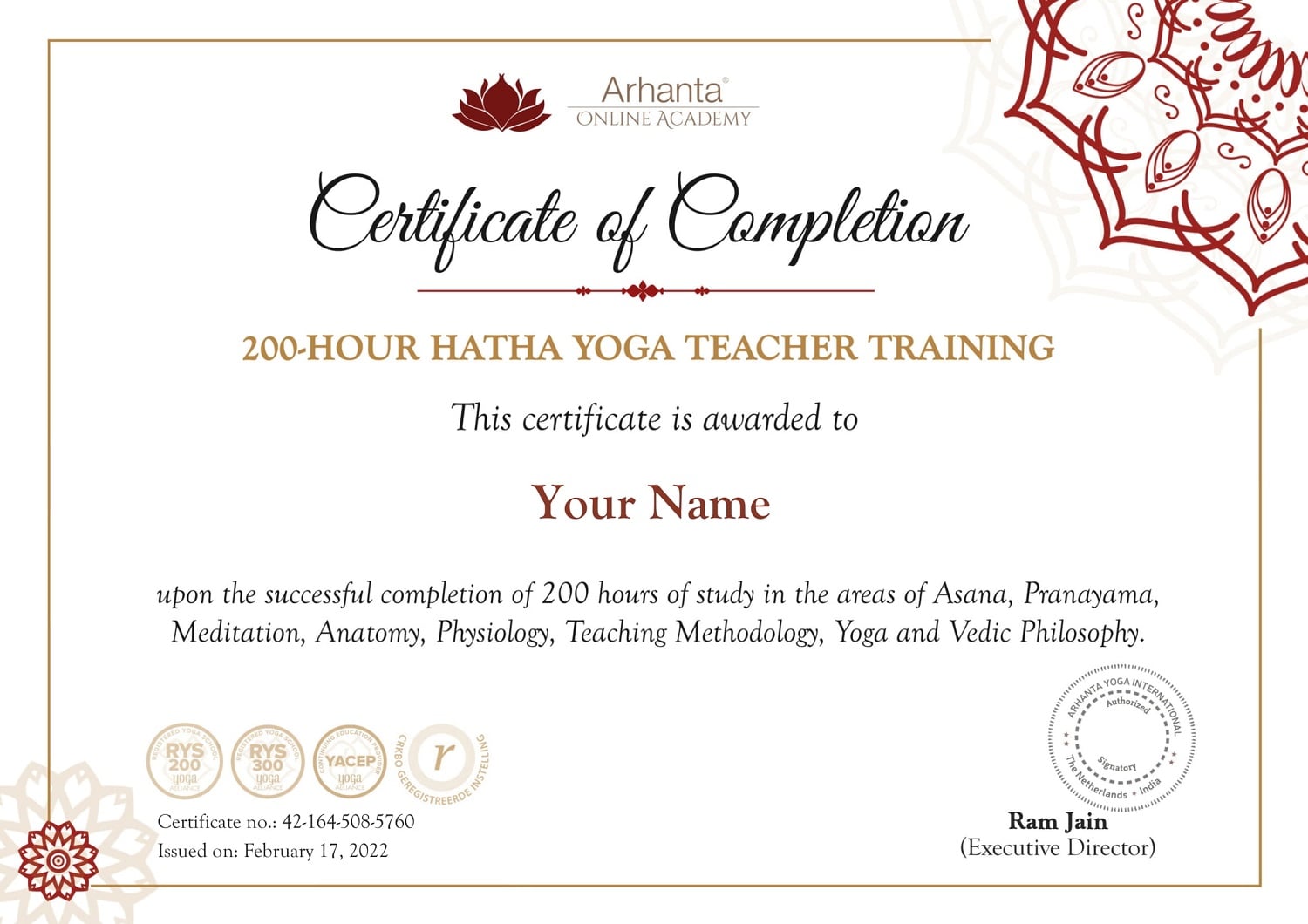
Complete the course and pass the assessments, and you receive a 200-hour yoga teacher training certificate you can use to teach and register internationally.
Yoga Alliance, IYA, IYF and CRKBO Recognition
The course is accredited by Yoga Alliance, the International Yoga Association and the International Yoga Federation, and the school is registered with CRKBO, the Dutch Central Register for Short Vocational Education.
That last one is unusual for a yoga school and worth understanding. CRKBO registration means the institution complies with the Dutch Quality Code for Short Vocational Education Institutions. It's an independent, non-yoga quality standard applied to the school as an educational provider.
The certificate itself carries no "online" asterisk. It certifies a completed 200-hour hatha yoga teacher training, full stop.
There's a practical benefit that surprises new teachers: insurance. A 200-hour international standard certification ensures you can buy yoga teacher insurance, and most insurance companies now insist on at least 200 hours of certified training before they'll cover you.
Studios, in turn, usually require insurance before you teach. The 200-hour credential is the key that opens both doors in sequence.
Receiving your certificate is refreshingly undramatic. When you finish the last chapter and the final assignment, the certificate becomes automatically available to download. No waiting weeks for the post, no processing fees.
-
Yoga Alliance
-
International Yoga Association
-
International Yoga Federation
-
CRKBO registered
How to Register as an RYT 200
After graduating, you can register yourself as an RYT 200 with Yoga Alliance. The process is straightforward: complete the training, submit your certificate with the application, and maintain the credential annually.
According to Yoga Alliance, registration costs a one-time $50 application fee plus a $65 annual membership (2026 figures). Registration is optional in most countries, but many studios and gyms ask for it, so most new teachers register.
Registration is worth understanding before you need it, so here's the sequence in full:
- Complete the 200-hour course, including all quizzes, assignments and the final practicum.
- Download your certificate. It's automatically available once the last chapter and final assignment are done.
- Apply to Yoga Alliance with your certificate, paying the one-time $50 application fee.
- Maintain the credential with the $65 annual membership and Yoga Alliance's continuing education expectations.
- Add insurance. With the 200-hour certification in hand, you qualify for yoga teacher insurance, which most venues require.
If you're mapping the full route from student to working teacher, this guide to how to become a certified yoga instructor covers every step, including the paperwork.
Yoga Alliance, IYA and IYF accredited; CRKBO registered 4.9 out of 5 student rating
How Much Does a 200 Hour Yoga Teacher Training Cost?
Across the market, 200-hour yoga teacher training costs vary enormously. Yoga Alliance reports that registered schools set tuition anywhere from $1,500 to over $5,000. Among the top-ranking courses we compared in July 2026, online programmes advertised between $397 and $2,599, while in-person trainings ran roughly $2,700 to $3,600 before travel and accommodation.
Three things actually drive the differences:
-
Format. Online courses cost less because you're not paying for a venue, meals and housing.
-
What's included. Some low prices exclude materials, support or certification fees. Check before comparing.
-
Who teaches. Experienced, credentialed lead teachers cost more than licensed video libraries. That difference shows up in your teaching.
Factor in the costs that don't appear on course pages, too. A residential training adds flights, and often visa fees and travel insurance. An in-person local training adds months of commuting.
An online course adds a yoga mat, a cushion and a blanket, which you probably own already. Compared on total cost, the online format's advantage widens further.
Course fee: shown at checkout
Arhanta's course is priced as an accessible investment, with the current fee shown at checkout. You can pay in full or in three equal installments, and payment processing is secure with instant access afterwards. There are no hidden extras: the videos, manual, resources, quizzes, live calls, assessment and certificate are all included.
- Pay in full or in three equal installments
- 30-day money-back guarantee
Included in the fee
- the videos
- manual
- resources
- quizzes
- live calls
- assessment
- certificate
Whether any training is worth the money depends on what you do with it. Judge the fee against lifetime access, lifetime support and a certification you'll use for years, not against a month of access somewhere cheaper.
Is a 200 Hour Yoga Teacher Training Worth It?
For most people who complete one, yes, and the reasons go beyond employment. A 200 hour yoga teacher training is worth it if any of these apply: you want to earn from teaching, even part-time; you want your own practice to rest on real understanding; or you want a structured study of a tradition you already love.
The financial maths is friendlier than most education. Teaching even one or two weekly classes returns the cost of an accessible online training within a realistic first year, and the credential doesn't expire, need renewal or lose relevance when platforms change.
The non-financial return is harder to price and, for many, larger. You come out the other side understanding what your body and mind are doing on the mat, which changes a practice permanently. Employability is the visible benefit; depth is the durable one.
Common Mistakes When Choosing an Online Course
Having compared the market closely, here's what trips buyers most often:
- Comparing price tags instead of contents. A cheap course with no live teaching contact and time-limited access is not the same product as a course with weekly calls and lifetime support at a higher fee.
- Not checking who actually teaches. If a course page can't name its lead teacher and their credentials, that's the answer.
- Ignoring the assessment. No practicum means the certificate proves you watched videos. Studios increasingly know the difference.
- Missing the refund terms. A guarantee with a preview cap, like this course's 30 days and 25% preview, is honest. No guarantee at all, or one buried in conditions, tells you what the school expects you to feel.
- Forgetting the after. Your questions don't end at graduation. A course that ends contact at the certificate leaves you alone precisely when teaching gets real.
Try It Risk-Free: The 30-Day Money-Back Guarantee
Enrollment comes with a 30-day money-back guarantee: a full refund, no questions asked. You can try up to 25% of the course within that window, which is more than enough to judge the teaching quality, the materials and whether the style suits you.
That structure is deliberate and fair in both directions. You get a real look inside before committing for good.
The school protects the course from being consumed and refunded whole. Honest schools can afford guarantees like this; content mills can't.
Use the window properly. In your first weeks, watch lessons from more than one module, attempt a quiz, join a live call and read a chapter of the manual.
That sample tells you everything: the teaching style, the depth, the support. Decide from evidence, and either way you decide well.
One comparison point from our July 2026 review of top-ranking courses: refund terms across the market ranged from 7-day windows with fee deductions to 30-day guarantees like this one. Read the terms wherever you enroll. They're a school's honest opinion of its own course.
30-day money-back guarantee
a full refund, no questions asked. You can try up to 25% of the course within that window.
What's Included When You Enroll
One enrollment covers everything you need from first lesson to certificate:
- 140 hours of video lessons, professionally structured across four modules
- A 300-page course manual you'll keep using long after graduation
- 22 downloadable resources for planning and teaching
- 31 quizzes plus practical assignments with teacher review
- Weekly live support calls on Zoom
- Access to the student discussion group
- The final practicum assessment
- Your certificate of completion
- Lifetime access to all materials, and lifetime teacher support
A few of those items deserve a closer look, because their value isn't obvious from a list.
The 140 hours of video are structured teaching, not recorded webinars: lessons build on each other in sequence, filmed to show alignment and technique clearly. The 300-page manual becomes the reference you'll actually teach from later, the kind you reach for when planning classes years after certifying.
The 22 downloadable resources cover the practical scaffolding of teaching, and the weekly live calls turn a self-paced course into a supported one. Even the discussion group earns its place: hearing other students' questions surfaces gaps you didn't know you had.
Instant access begins as soon as your enrollment is processed. And if you enroll now but life intervenes, nothing expires: you can start later without losing anything, and an email to the team sets up a delayed start formally.
Yoga Alliance, IYA and IYF accredited; CRKBO registered 30-day money-back guarantee
What Can You Do After the Course?
Teach, in short. The certificate qualifies you to teach hatha yoga classes and register as an RYT 200, and graduates put it to work in different ways:
-
Studio and gym teaching. The classic route: regular weekly classes, building from cover slots to a stable schedule. Your hatha foundation fits the beginner and mixed-level classes that studios most need covered.
-
Private students and corporate classes. Higher rates, flexible hours, and a natural fit for teachers who like working one-to-one.
-
Online teaching. Live-streamed or recorded classes that reach beyond your city. Having certified online, you'll already understand the format from the student's side, which is an underrated head start for teaching in it.
-
Specialisation. The 200-hour level is the prerequisite for advanced study. When you're ready, the 200 vs 300 vs 500-hour path shows how the levels stack.
-
Personal depth. Some graduates never teach a class, and the training still rewires their practice. That's a valid outcome, not a consolation prize.
Two practical notes for the professionally minded. First, you can buy yoga teacher insurance after this course, which most studios and venues require; here's exactly which certifications and insurance you need to teach yoga. Second, set your income expectations with data: the yoga teacher salary guide and this guide on how to make a living as a yoga teacher are the honest versions.
Module 4 already covered the studio-business fundamentals, so you graduate knowing how teaching actually pays, not just how it works.
Your First Classes: How Graduates Actually Start
The gap between certificate and first paid class intimidates every new teacher, so it's worth demystifying. The sensible start is small and close to home: a weekly class for friends and colleagues, a community-centre slot, cover classes at a local studio. Small stakes, real students, growing confidence.
This is also where the lifetime support earns its keep. Your first months of teaching generate questions no training can fully anticipate: a student with a condition you haven't met, a class that won't settle, a sequence that looked good on paper and died in the room. Having teachers you can still ask, years after graduating, is the difference between working it out alone and working it out fast.
And because your access never expires, the course itself becomes a reference library. You'll return to the anatomy module when a new student arrives with an injury, and to the business section when it's time to raise rates or open a studio.
How to Enroll
The whole process takes a few minutes:
-
1
Choose your payment option
Choose your payment option. Pay in full, or split the fee into three equal installments. Current pricing is shown at checkout.
-
2
Complete secure checkout
Complete secure checkout. Payment processing is secure, and your access is created immediately.
-
3
Start when it suits you
Start when it suits you. Instant access means you can begin today, or enroll now and start later. Nothing expires.
-
4
Use the 30-day window
Use the 30-day window. Explore up to 25% of the course. If it's not right for you, request a full refund within 30 days, no questions asked.
-
5
Ask your questions first
Questions first? Call or WhatsApp + 31 618 504823, or email ttc@arhantayoga.org.
Enroll today
Course fee shown at checkout. Pay in full or in three equal installments. Instant access. 30-day money-back guarantee.
Enroll todayPayment processing is secure
Businesses and self-employed teachers, note the invoice option:
you can request an invoice for your payment, and if you have a company, the training can go through your books as professional education.
One honest scheduling tip.
Because intake is limited each month to protect the teacher-student ratio, enrolling when you're ready beats waiting for a mythical perfect moment. The course adapts to your schedule after you're in; the door itself isn't always open at any size.
Ask your questions first
Questions first? Call or WhatsApp + 31 618 504823, or email ttc@arhantayoga.org.
Frequently Asked Questions
The qualification
It's the internationally recognised foundation qualification for teaching yoga, built on 200 hours of study across asanas, anatomy, philosophy, pranayama, meditation and teaching methodology. Completing one at an accredited school qualifies you to teach and to register with Yoga Alliance as an RYT 200.
Because 200 hours is the international standard that everything else keys on: Yoga Alliance registration, studio hiring expectations and insurance eligibility all reference it. Shorter courses can deepen a practice, but the 200-hour level is where the profession recognises you as trained to teach.
Yes: a 200-hour certification from an accredited school is the standard entry qualification studios and gyms look for worldwide. Confidence grows with practice, which is why this course includes teacher-reviewed assignments and an assessed practicum. Here's a deeper answer on whether 200 hours is enough to teach.
Yes. The course is accredited by Yoga Alliance, along with the International Yoga Association and the International Yoga Federation, and the school is CRKBO-registered in the Netherlands. After completing it, you can register yourself as an RYT 200 with Yoga Alliance.
Classical hatha yoga. It's the foundational style that modern forms like vinyasa and yin grew from, which makes it the most versatile base for a new teacher. Master hatha and you can adapt to nearly any class format or student level afterwards.
The course itself
Yes, all four, each with its own dedicated place in the curriculum. Anatomy and physiology form Module 2, yoga philosophy fills Module 3, and pranayama and meditation run through Module 1 alongside the asana training, together with yoga nidra, bandhas and kriyas.
The combination of lineage and support. The curriculum comes from a 5-generation yoga heritage and a school teaching professionally since 2009, and the delivery includes weekly live calls, a 1:8 teacher-student ratio, teacher-reviewed assignments, an assessed practicum and lifetime access with lifetime support.
Three ways, all included: ask live on the weekly Zoom support calls, post in the student discussion group, or email the teaching team directly. With lifetime access, that teacher support continues after you graduate, which matters most in your first months of real teaching.
Yes, when it's structured for it: this course pairs 140 hours of video with weekly live Zoom calls, a 1:8 teacher-student ratio, reviewed assignments and an assessed final practicum. You're taught and tested by teachers, not just streamed at. Over a thousand students enrolled within six months of its 2017 launch.
As fast as 26 days if you study full-time. Most part-time students finish in 2 to 4 months. There's no deadline: lifetime access means you set the pace, pause when life interferes and resume without penalty.
Whenever you decide. Access begins instantly after enrollment, there are no cohort start dates, and lifetime access means there's no finish deadline either. You can also enroll now and start later; nothing expires while you wait.
Exactly what it says: the videos, manual, resources and quizzes remain available to you permanently after enrollment, with no renewal fees. You can rewatch any lesson years into your teaching career, which is when much of the material becomes newly useful.
Yes, weekly live support calls run on Zoom, where you can ask questions about anything in the course. Combined with the discussion group and the 1:8 teacher-student ratio, you have direct access to teachers throughout your study, not just recorded content.
The practicum is your final assessment: you plan and teach a class, demonstrating alignment knowledge, sequencing and communication. Teachers assess it and give feedback. It's the step that turns study into readiness, and it's why the certificate reflects demonstrated teaching ability rather than video-watching.
Very little: a yoga mat, a meditation cushion and a blanket for the practice side, plus a decent working computer with a good internet connection for the coursework. There's no required prop collection or studio access, so most students already own everything they need.
Yes, intake is limited. The school takes a limited number of students every month to ensure proper attention and support for everyone, and time to mark every assignment. It's the operational side of the 1:8 teacher-student ratio, and it's why the support stays personal.
Am I eligible?
Yes: the course starts from the foundation and builds systematically, so no prior teaching experience or advanced practice is required. Sincere interest and consistent study matter far more. If you're unsure about readiness, read this guide to 200-hour training for beginners.
No: teaching yoga well depends on understanding alignment, sequencing and safe instruction, not on advanced flexibility. Flexibility develops with practice during the course itself. If this worry is holding you back, here's the full picture on flexibility requirements for yoga teacher training.
No. Prior teaching experience isn't required, and the course assumes none. It builds your understanding step by step first, then moves into teaching principles and methodology, so the teaching skills arrive on a foundation that's already solid rather than being demanded upfront.
Yes: this is the foundation course, and it requires no previous yoga education. It teaches the most important principles and skills from scratch, which is exactly what a 200-hour level is designed to do. Consistent personal practice helps you absorb the material, but no formal study is assumed.
No, there are no age limits for this course. As long as you have a sincere desire to learn and you're physically fine, you can follow the training. The self-paced format helps here too, since you never have to keep up with a room of twenty-somethings.
Yes, you can do this training while pregnant, provided you don't push yourself too far. The self-paced format lets you adjust your physical practice to how you feel, and the curriculum itself includes yoga for pregnant women. Listen to your body and consult your doctor about your practice.
Money and the guarantee
Yoga Alliance reports registered schools charge from $1,500 to over $5,000, though online courses we compared in July 2026 advertised between $397 and $2,599. Arhanta's current fee is shown at checkout, includes everything, and can be paid in three equal installments.
A 30-day money-back guarantee: if the course isn't right for you, you receive a full refund within 30 days, no questions asked. You can explore up to 25% of the course during that window, which is plenty to judge the teaching quality before committing.
Yes. If you want to join now and begin the course at a later date, just drop the team an email and they'll take care of it. Since access is lifetime, nothing you've paid for expires while you wait for the right moment to start.
Yes to both. A three equal installment plan is available at checkout, and you can request an invoice for your payment. For the self-employed and business owners, the invoice lets the training be claimed as a professional education cost.
After you certify
Teach hatha yoga at studios and gyms, take private or corporate students, teach online, or continue to advanced certifications. You can register as an RYT 200 with Yoga Alliance, and Module 4's business training covers how to find students and run classes profitably.
Yes. The certification qualifies you for professional yoga teacher insurance, which most studios, gyms and venues require before you teach. Requirements vary by country and insurer, so check locally; this guide to certifications and insurance for teaching yoga explains what to look for.
Automatically. When you finish the last chapter and the final assignment, your certificate becomes available to download straight away. There's no waiting period, no postal delays and no separate processing step between finishing the course and holding your qualification.
Yoga Alliance, IYA and IYF accredited; CRKBO registered 30-day money-back guarantee
Start Your 200 Hour Yoga Teacher Training Today
The best 200 hour yoga teacher training is the one you'll actually finish, taught by people qualified to teach it. This online hatha yoga certification gives you both: a curriculum refined since 2017 by a 5-generation yoga lineage, and a format that bends around your life instead of demanding it pause.
You've seen what's inside: four modules, 140 hours of video, weekly live calls, lifetime access and a certificate accredited by Yoga Alliance, IYA and IYF. The 30-day guarantee means the risk of trying it is zero.
Compare it against anything else on the market, and use the five comparison points above when you do. Then compare it against the cost of another year of intending to. Somewhere in that second comparison is usually the real decision.
Enroll today and start immediately, or call or WhatsApp + 31 618 504823, or email ttc@arhantayoga.org with your questions first. The team answers before you commit, not after.
And in 26 days or a few unhurried months, you won't be researching yoga teacher training anymore. You'll be certified to teach it.
Yoga Alliance, IYA and IYF accredited; CRKBO registered 4.9 out of 5 student rating 30-day money-back guarantee, full refund, no questions asked
Your Investment
You will be investing in a highly refined course developed by Dr. Ram Jain, PhD (Yoga), with his invaluable teaching experience of more than 23 years. You will receive guidance and teachings from very dedicated teachers. This course will give you a solid foundation on your yoga journey for the rest of your life.
- Pricing
What Happens After You Enroll
You receive instant access to the full training and can start immediately. You can progress at your own pace with lifetime access.
-
200 Hours Training
-
22 Downloadable Resources
-
31 Quizes & weekly zoom calls
-
Access to Discussion Group
-
Certificate of Completion
-
Lifetime Teacher Support
Lifetime Access
- Lifetime Access
Buy now, complete anytime
...
Try Risk Free. 30-day refund guarantee
- Pricing
What Happens After You Enroll
You receive instant access to the full training and can start immediately. You can progress at your own pace with lifetime access.
-
200 Hours Training
-
22 Downloadable Resources
-
31 Quizes & weekly zoom calls
-
Access to Discussion Group
-
Certificate of Completion
-
Lifetime Teacher Support
Lifetime Access
- Lifetime Access
Buy now, complete anytime
...
x3
Try Risk Free. 30-day refund guarantee