200-hour yoga teacher training vs self-practice is a common comparison for students who want to deepen their yoga practice. While self-practice builds consistency, a 200-hour Yoga Teacher Training provides structured guidance, expert feedback, and the knowledge to understand why you practice, not just how.
If you’re weighing up whether to continue learning on your own or invest in a teacher training, understanding that difference is exactly where you should begin.
Self-Practice Is a Great Beginning But It Has Limits
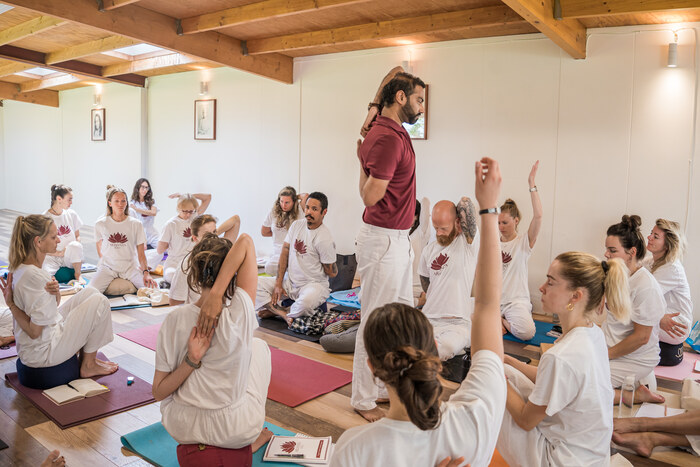
Self-practice is one of the most valuable habits you can build. It helps you:
- build consistency
- develop self-awareness
- create a personal relationship with yoga
- practice without depending on a class schedule or instructor
Whether you practice from memory, follow an online class, or attend a local studio a few times a week, you’re investing time in your health. You’re learning to notice your breath, move with more awareness, and perhaps even carry a little more calm into the rest of your day.
For many people, that’s enough.
But over time, progress often slows because:
- you repeat the same sequences
- you avoid poses that feel uncomfortable
- your practice becomes familiar instead of challenging
I’ve seen this pattern in many students who join our teacher trainings. They often arrive with years of practice but discover they’ve developed habits they never questioned, such as:
- small alignment mistakes
- inefficient breathing patterns
- practicing poses without understanding their purpose
That realization can feel uncomfortable, but it’s often where real learning begins.
What does each practice focus on?
Self-Practice Focuses on Doing. Teacher Training Focuses on Understanding.
During self-practice, your attention naturally stays on what you’re doing.
Questions often include:
- Which pose comes next?
- How long should I hold this stretch?
- Should I try the advanced variation?
A 200-hour Yoga Teacher Training shifts your focus from what to why.
Instead, you begin asking:
- Why is this posture sequenced here?
- Why does one alignment cue work for one student but not another?
- Why does breath change the experience of a pose?
- Why am I practicing yoga in the first place?
This transition from doing yoga to understanding yoga is difficult to achieve through self-practice alone. It develops through discussion, observation, personalized feedback, and shared learning.
What Happens During a 200-Hour Yoga Teacher Training?
A 200-hour Yoga Teacher Training isn’t simply about learning how to teach a class. At its heart, it’s an immersive learning experience that helps you understand yoga in a way that’s difficult to achieve through independent practice alone.
During a 200-hour Yoga Teacher Training, you’ll learn:
- how postures work
- why they’re taught in specific ways
- when they should be adapted for different bodies
- how alignment influences safety and effectiveness
Students often tell us they stop seeing yoga poses as isolated movements. Instead, they begin noticing how everything connects.
For example:
- standing poses make sense because of what comes before them
- breathing practices support challenging sequences
- meditation and relaxation become intentional parts of practice instead of separate activities
It’s almost like reading a language you’ve spoken for years but never learned to write.
A typical 200-hour YTT also introduces subjects that rarely receive much attention during regular classes, including:
- Functional anatomy and safe alignment
- Intelligent sequencing for different goals
- Breath awareness and foundational pranayama
- The principles behind meditation practice
- Yoga philosophy explained in a practical, modern context
These topics are taught to make you understand yoga feel more accessible. They’re there because understanding creates confidence. And confidence changes the way you practice.
I still remember one student saying she finally understood why a pose had never felt comfortable because she’d been forcing herself into an alignment that simply wasn’t appropriate for her proportions. That single insight changed years of frustration.
Insights like these are difficult to gain through videos alone.
200-Hour YTT vs Self-Practice: The Real Differences
By now, you might be wondering what these differences look like in practice.
They’re not about knowing more poses or mastering advanced postures. They come down to how you learn, how you think, and how your practice continues to evolve.
Before comparing both approaches, here are the three differences that have the greatest long-term impact.
1. Feedback Changes Everything
During self-practice, it’s easy to develop blind spots. For example, you might:
- think your spine is neutral when it isn’t
- unknowingly hold your breath during difficult poses
- change a posture to avoid discomfort without realizing it’s limiting progress
A good teacher notices what you can’t see yourself. Sometimes one adjustment or one well-timed question completely changes how a posture feels. That’s the kind of learning that’s difficult to recreate through self-practice alone.
2. Structure Creates Steady Progress
One challenge of self-practice is deciding what to focus on next.
You might wonder:
- Should I work on backbends?
- Should I build strength?
- Should I spend more time on pranayama?
- Or should I simply repeat yesterday’s sequence?
There is no shortage of information, only too many choices.
A structured 200-hour Yoga Teacher Training removes that guesswork. Each lesson builds on the previous one, so your understanding develops in a logical way rather than through random pieces collected from different sources.
It’s similar to learning a language. You can memorize useful phrases on your own, but studying with an experienced teacher helps grammar, vocabulary, and pronunciation come together. Yoga learning works the same way.
3. Community Becomes Part of the Learning
Yoga is deeply personal, but learning with others offers benefits that are difficult to recreate alone.
Learning in a group helps you:
- observe different bodies in the same posture
- hear questions you wouldn’t have asked yourself
- understand that there isn’t one perfect way to practice
Some of the richest conversations during teacher training don’t happen while holding a pose. They happen afterwards, when students reflect on what they experienced, compare observations, or simply realize they’re not the only one finding a particular concept challenging. That is the power of shared learning.
4. Quick Comparison: 200-Hour YTT vs Self-Practice
Neither approach is inherently better. They simply serve different purposes.
Do You Need a 200-Hour Yoga Teacher Training If You Don’t Want to Teach?
You don’t have to want to become a yoga teacher to benefit from a 200-hour YTT.
Every teacher training includes students with different goals. Some join to:
- understand their bodies better
- recover from burnout and restore balance
- explore yoga beyond the physical practice
- understand the purpose behind what they’re practicing
Teaching isn’t always the destination. Sometimes it’s simply the format through which deeper learning happens.
I’ve spoken with many students who never taught a class after graduating. Yet they still describe the training as one of the best investments they made because it changed how they approached learning, discipline, and self-awareness.
Interestingly, some students later did not decide to teach because they planned to, but because their confidence grew naturally during the course.
A teacher training should first make you a better student. Everything else grows from there.
Why Self-Practice Eventually Plateaus
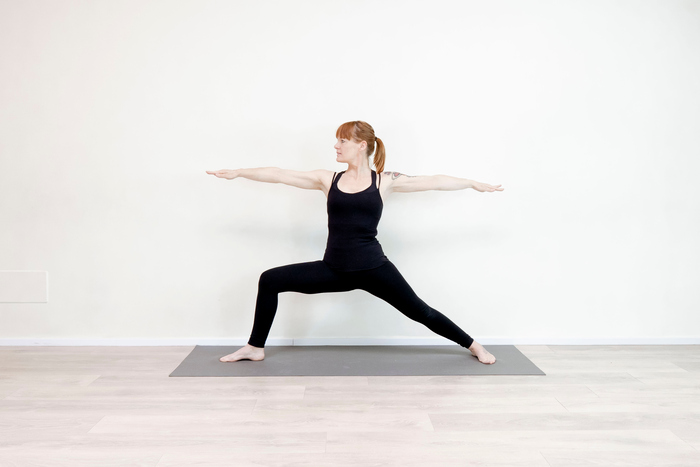
Self-practice gradually becomes familiar as you settle into routines you enjoy, repeat sequences that feel comfortable, and naturally avoid the poses that expose weaknesses or challenge your patience.
As a result, your practice becomes shaped by preference rather than purpose. That’s often when progress begins to slow.
I’ve watched students arrive convinced they needed more advanced poses. What they actually needed was a fresh perspective on the foundational ones.
Growth doesn’t always come from doing more. Sometimes it comes from seeing familiar practices differently.
Can Online Self-Practice Replace Teacher Training?
Online yoga has made learning more accessible than ever. You can:
- practice with experienced teachers from anywhere
- explore different yoga styles
- build a consistent routine from home
However, online self-practice is still mostly one-way learning, you watch, then follow.
Videos continue whether your alignment is correct or not. Even live online classes have limitations because teachers can’t always:
- observe every student closely
- answer detailed questions
- build knowledge progressively over time
That doesn’t make online learning ineffective. It simply means it serves a different purpose.
This is why many students choose an online 200-hour Yoga Teacher Training instead of relying only on online classes. A structured online program still provides:
- a progressive curriculum
- experienced teacher guidance
- meaningful interaction
Because it’s the structure that supports long-term growth, not the learning format.
Who Should Choose Self-Practice?
Self-practice can be the better choice if your current goals are simple, practical, and centered around your own well-being rather than deeper study.
Self-practice is likely the right fit if you:
- You’re still building a consistent habit.
Give yourself time to establish a regular practice before committing to formal training. - You primarily practice yoga for your health and well-being.
If yoga helps you reduce stress, stay active, sleep better, or manage everyday aches, self-practice may already be meeting your goals. - You enjoy exploring different teachers and styles.
Many practitioners spend years attending classes, retreats, or online sessions before choosing a structured training. - You don’t feel limited by your current practice.
If you’re still learning, feeling challenged, and rarely wishing you understood more, there’s no need to rush into teacher training.
One thing I’ve learned from working with yoga students is that a teacher training becomes worthwhile when it answers a genuine need. Until then, an honest, consistent self-practice is more than enough to help you grow.
Who Is Ready for a 200-Hour Yoga Teacher Training?
You don’t need years of experience or advanced yoga practice before joining a 200-hour Yoga Teacher Training. In fact, many people begin their training while they’re still refining the fundamentals. What matters far more than your ability is your willingness to learn.
A teacher training is likely the right next step if:
- You want answers, not just instructions.
Regular classes leave you curious about the purpose behind poses, breathing techniques, and sequencing. - You want personalized guidance.
You’re ready to move beyond trial and error and understand how to adapt yoga for your own body. - You’re considering teaching yoga—now or in the future.
You want a strong foundation before leading others. - You want yoga to become a bigger part of your life.
Whether that’s through teaching or personal growth, you’re looking for a deeper understanding of the practice. - You’re asking “Why?” instead of “What’s next?”
You’re becoming more interested in understanding yoga than simply learning another pose.
One conversation I remember is with a student who admitted on the first day, “I almost didn’t enrol because I thought I wasn’t experienced enough.” By the end of the training, she realized that the course wasn’t designed for people who already knew everything; it was designed for people who genuinely wanted to understand more.
Once you’ve decided you’re ready, the next questions become practical:
- Should you study online or in person?
- Do you want an intensive course or a flexible schedule?
- Which learning format best suits your lifestyle?
Taking time to compare different Yoga Teacher Training formats makes that decision much easier.
Conclusion
I’ve watched students transform when they stopped trying to “do yoga correctly” and started understanding why their bodies moved the way they did. That’s the kind of progress that isn’t always visible, but it lasts.
If your current self-practice leaves you feeling healthier, calmer, and genuinely fulfilled, there’s no reason to rush into a teacher training. Keep practicing as it has immense value. But if you find yourself struggling after class with more questions than answers, or feeling that your curiosity has outgrown what videos, apps, or weekly classes can offer, it may be a sign that you’re ready for a systematic learning.
Ultimately, the biggest difference between self-practice and a 200-hour Yoga Teacher Training isn’t the number of poses you know, it’s how differently you begin to understand your practice every time you step onto the mat.