You’ve completed your yoga teacher training, learned the asanas and anatomy, and earned your certificate. Yet, you may still wonder, “Am I ready to teach?” This uncertainty is common. A certificate gives you knowledge, but confidence grows through teaching, feedback, and practice. Your first 30 days help you begin that transition.
What Most New Yoga Teachers Experience After YTT
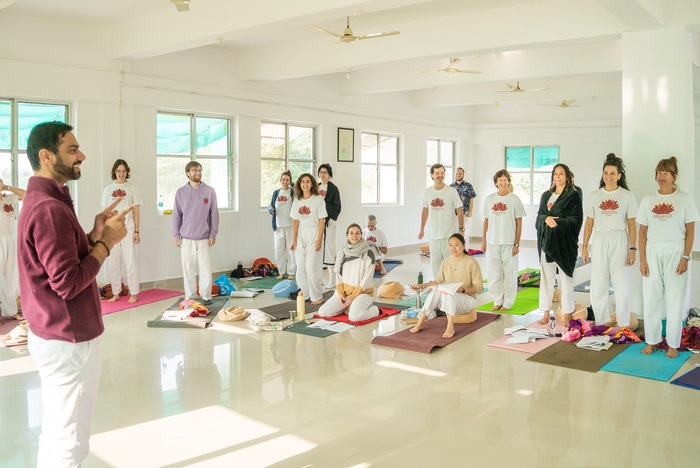
The first 30 days after your yoga teacher training don’t always go the same way you imagined. Many new yoga teachers experience a mix of motivation, hesitation, and overthinking, instead of feeling confident, excited, or ready. This phase is not a sign that you’re unprepared; it’s a natural part of stepping into a new role.
Excitement Meets Uncertainty
You feel inspired to start teaching, but you’re unsure how to begin. Questions keep popping into your head: Should you teach immediately, or practice more before teaching, or just focus on your presence first? This push and pull can make you delay your first step, even if you’re capable of starting small.
Fear of Teaching Real Students
Practicing in a training environment feels quite different. It feels safe and much more comfortable. Teaching outside, on the other hand, is a very different kind of experience. There’s a concern about saying the wrong thing, missing something important, or not being able to guide the class smoothly. This fear is less about your knowledge and more about a lack of confidence and real teaching exposure.
Overthinking Alignment and Cues
In the class, you’ve learned so much about alignment and safety that you try to include everything at once. This often leads to overexplaining or second-guessing your instructions mid-class. Because of this, we see many new teachers feel heavy and distracted during class, rather than flowing naturally.
Comparing Yourself to Experienced Teachers
It’s quite obvious to look at experienced teachers and feel like you’re far behind. Their classes might seem effortless, their words may feel more precise, and their presence may feel steadier. Most new yoga teachers feel this way at this point. However, what you don’t see is the years of repetition behind that ease. Comparing your beginning to someone experienced can quietly affect your confidence and interrupt the natural flow of your teaching.
Imposter Syndrome
A common but rarely spoken experience. You might feel like you’re “not good enough yet” to teach, or that others know more than you. Even with proper training, this doubt can hold you back from taking real opportunities. This phase is known as imposter syndrome. Remember, most teachers feel this way at the start. But it fades as you teach consistently.
Learn more: How to Overcome Imposter Syndrome as a New Yoga Teacher
The Biggest Shift: From Learning Yoga to Teaching Yoga
Finishing your Yoga Teacher Training (YTT) can feel like you reached your destination, but it’s actually the start of a new chapter. What you studied during your yoga teacher training now needs real-life application and testing. This is where many new teachers see the gap between understanding yoga and guiding others in the poses.
Practicing Yoga vs Teaching Yoga: A Different Responsibility
When you practice yoga, your attention stays inward. You focus only on yourself, your breath, your alignment, and your own experience in the pose. This practice is quite personal.
On the other hand, teaching naturally shifts that focus outward. You no longer move for yourself; you guide others. You watch how different bodies respond to poses, how your students adapt to new asanas, adjust the instructions based on your students’ progress, and maintain a steady structure for the class. What felt intuitive in your own practice now must be explained clearly, step by step.
See: Finding Your Teaching Voice as a Yoga Instructor: A Practical Guide
Why Knowing the Pose Is Not Enough
Understanding a posture is one thing. Teaching it is another.
You may know multiple poses, including advanced ones, and you may know exactly how a pose feels in your body, but your students will have different limitations, strengths, and patterns. This is where many new teachers feel unsure. The challenge is not performing the pose well; it is breaking it down step by step so your students can follow it safely and confidently.
Clear cueing, simple language, and well-paced transitions matter more than demonstrating advanced poses.
The Core Skills Every New Teacher Must Develop
Good teaching largely depends on three essential abilities:
- Observation: noticing how students move, where they struggle, and when they need your support.
- Communication: giving cues that are simple, precise, and easy to follow
- Structure: designing a class that flows logically, without confusion or long pauses.
These skills are not built overnight. Instead, they develop gradually, with ongoing practice and experience.
Teaching Is a Skill You Build, Not Something You Finish
One of the biggest misconceptions after YTT is the idea that you should already feel “ready.” Teaching, however, is a skill that grows through real-life experiences, not theory.
Each class you guide, even if it’s imperfect, strengthens your clarity and makes you more confident. You begin to notice what works, what doesn’t, and how to adjust poses in real time. Over time, your instructions become more natural, you become more efficient in sequencing classes, and your presence becomes more grounded.
The transition from learning yoga to teaching it marks the true growth.
Find Out: Is Age a Barrier to Learning Yoga? A Practical Perspective
A Simple 30-Day Plan to Build Confidence After YTT
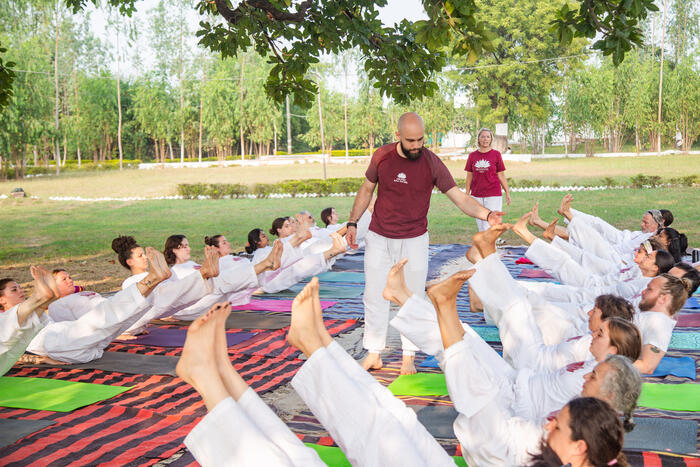
Confidence doesn’t appear all at once; it builds through small, consistent action. Instead of waiting until you feel “ready,” it helps to follow a simple structure. These first 30 days are less about perfection and more about showing up, observing, and improving step by step.
Week 1: Reconnect with Your Own Practice
Before teaching others, return to your mat intentionally. Move with awareness, not just habit.
- Practice daily: Keep routines simple and consistent. Concentrate on breathing, transitions, and the sensations each pose creates in your body.
- Review your notes: Revisit alignment cues from YTT, update teaching points, and practice corrections learned during training.
- Refine basic sequences: Work with a few simple class structures instead of trying to remember everything at once.
This week helps you move from passive learning to active understanding.
Week 2: Start Teaching (Even Without Students)
You don’t need a full class to begin teaching. Don’t compare yourself to a teacher leading a room full of 40 or more students. This week, what matters is getting comfortable using your voice.
- Teach friends or family: Even one person is enough. The goal is not feedback; it’s practice.
- Practice cueing aloud: Deliver your instructions as if teaching an actual class. Though awkward at first, this quickly sharpens clarity and builds confidence.
- Record yourself: Try to record these sessions. Listen to them afterward. Listening back often helps you notice gaps, your own tone, and whether your cues are easy for students to follow. This will give you a clear idea of where you stand as a teacher at this point.
Week 3: Teach Small, Real Classes
Now it’s time to step slightly outside your comfort zone.
- Offer free sessions or small group classes: Keep the environment low-pressure so you can focus on learning. You can also post about the free sessions online. This will help you create a small-group class quickly.
- Focus on clarity, not perfection: A clear, simple class is far more effective than trying to include too much. Keep the classes short. Instruct your students with clarity. Don’t chase perfection. Focus only on building confidence in this stage.
- Observe your students: Notice where they are hesitating, losing balance, looking clueless, or seeking more help. This is where real learning happens. Focus on correcting alignment, give straightforward instructions, and address their questions with clarity and compassion.
Week 4: Reflect and Improve
By now, you’ve already gathered enough experience to see patterns.
- Identify gaps: Try to observe yourself more. Where do you feel unsure? Is it about sequencing, cueing, or managing the class flow? Ask yourself these questions. Once you have answers, you can identify the areas where your teaching needs more attention.
- Improve your sequencing: Simplify the transitions and make your class feel more connected. Let your students express their thoughts; let them ask you questions. This way, they will feel more heard, seen, and valued in your class, which, in turn, will improve the sequencing.
- Build consistency: Set a regular rhythm for teaching, even if it’s just a few sessions a week. Don’t skip the classes often. Remember, consistency drives efficiency.
Note: Growth becomes visible when you start refining what you’ve already practiced.
See: Can You Teach Yoga Confidently with a 200-Hour Certification?
How to Keep Growing as a Yoga Teacher
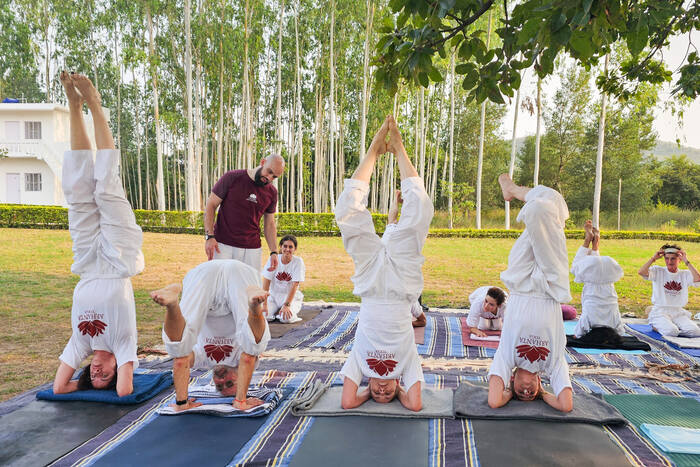
The first 30 days after yoga teacher training give you a starting point. What shapes you as a teacher is what you continue doing after that. Growth in teaching is not about collecting more information; it’s about using what you already know with more clarity and consistency.
Keep Teaching Regularly
Teaching improves only when you teach consistently. Not when you plan more, not when you wait to feel ready. Even one or two sessions a week can make a difference. Each class shows you something new about how students respond to your instructions, where they struggle, and how your instructions help them overcome those struggles. Over time, this repetition builds a steady kind of confidence that theory alone cannot give.
Keep Learning (But Don’t Overconsume)
It’s natural to want to keep learning after your training. But constantly jumping between new information, copying new techniques from social media, and imitating experienced teachers’ styles immediately can create confusion rather than growth.
Instead, focus on deepening what you’ve already learned. Revisit your training material, refine your understanding, and apply it in your classes. Learning becomes more useful when it connects directly to your teaching.
Find Out: What Is Intensive Yoga Teacher Training & Does It Work?
Refine Your Cueing Skills
Clear instructions are what make a class more effective. Pay attention to how you guide students into and out of poses. Are your cues useful? Are they easy to follow without demonstration? Do they help students feel safe and aware in the posture?
Over time, you’ll notice that fewer, more precise cues work better than long explanations. This is where your teaching starts to feel more natural.
Focus on Simplicity and Clarity
It’s easy to assume that more complex sequences or advanced variations make you a better teacher. In reality, clarity is what students remember.
A well-structured, simple class, when led with attention and precision, has a much stronger impact than an advanced but confusing one. This is where real teaching skills show.
Clarity will always take you further than complexity.
Watch our teacher, Omkar Jain, guide on how to teach a class.




