Teaching yoga regularly isn’t enough. To grow as a teacher, you also need a consistent Yoga teacher self-practice. A regular personal practice helps you build teaching confidence, improve observation skills, refine verbal cues, and teach from experience instead of memory.
This 30-day Yoga self-practice plan is designed for busy teachers. Each week focuses on one area of growth, helping you build a sustainable practice that strengthens both your teaching and your personal development.
Why Yoga Teacher Self-Practice is Important
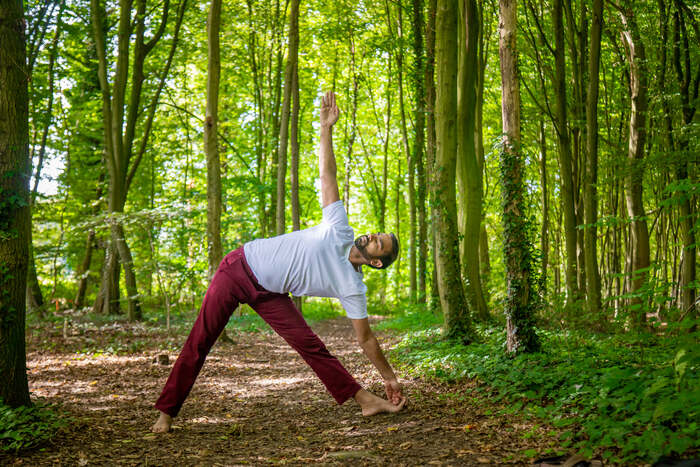
Self-practice turns knowledge into experience. While teacher training gives you the tools, your own practice helps you understand how they feel in your body and mind.
Over time, this experience shapes your presence, improves your decision-making, and helps you teach with greater confidence. Many of the biggest teaching insights come during quiet personal practice, not while leading a class.
A regular self-practice also helps you:
- Understand how poses feel instead of simply knowing their alignment.
- Notice physical limitations before asking students to attempt challenging movements.
- Refine your verbal cues through direct experience.
- Stay inspired instead of repeating the same classes every week.
Research also supports these benefits. Regular Yoga practice improves body awareness, emotional regulation, attention, and stress resilience; all qualities that contribute to more effective teaching.
The Hidden Cost of Skipping Your Own Practice
Missing an occasional practice isn’t a problem. But when your self-practice disappears for weeks or months, it begins to affect your teaching.
You may notice:
- Less natural demonstrations
- Repetitive verbal cues
- Reduced curiosity
- Feeling disconnected from your practice
Even experienced teachers can lose that connection when teaching becomes busier than practicing. Usually, it’s the result of habit and exhaustion rather than lack of knowledge.
Your personal practice is where you:
- Explore new variations.
- Refine breathing patterns.
- Improve alignment awareness.
- Discover cues that naturally become part of your classes.
Students may not recognize every technical adjustment, but they notice authentic teaching.
How Self-Practice Improves Your Observation Skills
Regular self-practice helps you understand movement from the inside. When you’ve experienced tight hips, balance challenges, or mental distraction yourself, you become more patient and observant with your students.
Experience teaches lessons that no textbook can.
Self-practice also helps you recognize subtle patterns, such as the following:
- Where do people tend to rush?
- When does breathing become strained?
- How do emotions sometimes appear during stillness?
- Why do small adjustments often create the biggest changes?
Over time, these observations strengthen your teaching voice because they come from personal experience rather than memorized instruction.
How Self-Practice Builds Teaching Confidence
Confidence doesn’t come from knowing every answer. It comes from practicing consistently.
A regular Yoga teacher self-practice helps you:
- Trust your teaching.
- Give clearer instructions.
- Stay curious instead of chasing perfection.
- Continue growing throughout your teaching career.
Students don’t need a perfect teacher. They need a teacher who continues to learn.
The 30-Day Yoga Teacher Self Practice Plan
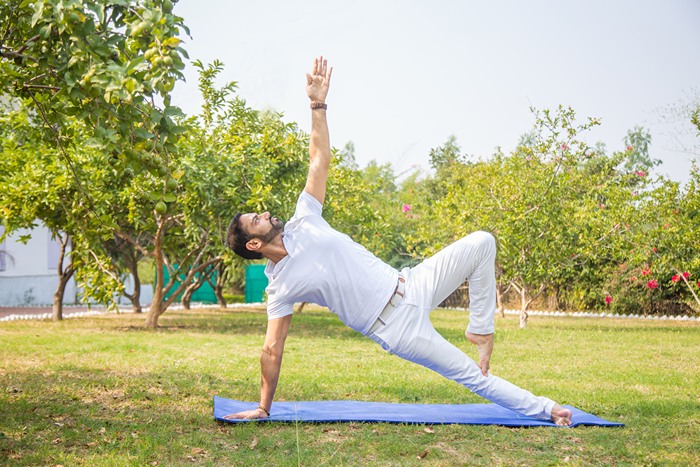
A successful Yoga teacher’s self-practice doesn’t have to be long. It needs to be consistent and intentional.
This 30-day plan gradually builds your practice by focusing on:
Most practices take 20-45 minutes.
Week One Builds the Habit
The goal of the first week is consistency, not perfection. Focus on building a routine that feels realistic and easy to maintain.
Days 1 and 2
Start with gentle movement and observation.
Practice:
- Five minutes of quiet breathing.
- A slow Hatha Yoga sequence.
- Five minutes in Savasana.
- Write three observations in your journal.
Don’t write whether the practice was “good” or “bad.” Notice what you really experienced. Perhaps your breath felt shallow. Maybe your shoulders softened halfway through. Tiny details matter.
Days 3 and 4
Spend more time exploring familiar poses. Stay in each posture a little longer than usual.
Ask yourself:
- Where am I working too hard?
- Where am I avoiding sensation?
- What cue would help me here if I were my own student?
- What surprised me today?
Days 5 to 7
Choose 6-8 poses that you regularly teach.
After each pose:
- Pause briefly.
- Explain the pose as if teaching a beginner.
- Notice which cues feel clear and which need improvement.
This simple exercise helps refine your teaching language through practice.
Week Two Improve Awareness
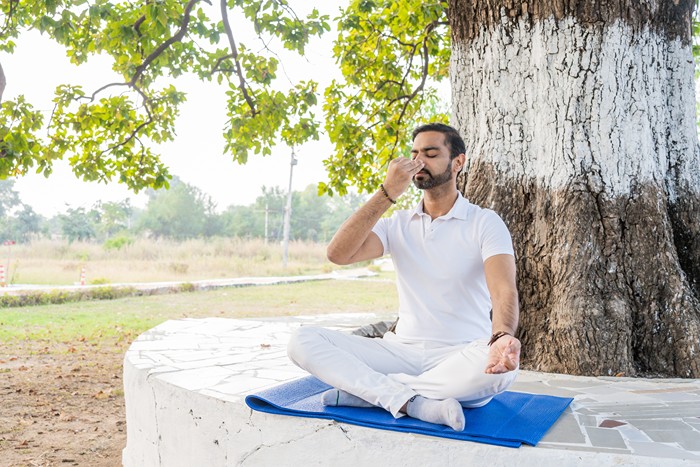
By the second week, your practice should begin to feel more natural. This week focuses on slowing down, connecting movement with breath, and improving your awareness during practice.
Days 8 to 10
Practice slower than what feels comfortable. Most teachers move much faster when practicing alone than they realize.
Spend time noticing:
- How does your breath changes during effort?
- Which transitions feel rushed?
- Where do unnecessary tension appears?
- How does your mind reacts to slowing down?
It’s almost surprising how impatient we can become with ourselves.
Days 11 and 12
Introduce simple Pranayama before movement.
Try:
- Three rounds of full Yogic breathing
- Five minutes of Nadi Shodhana
- A gentle asana practice
- Five minutes of seated meditation
Studies suggest that slow breathing practices may improve emotional regulation and reduce stress, making them valuable for teachers managing full schedules.
Days 13 and 14
Choose one posture you’ve always found challenging. Instead of trying to master it, become curious about it. I’ve noticed after years of teaching that the poses we resist often have less to do with flexibility and more to do with patience.
Week Three Begins to Shape Your Teaching
By Week Three, your personal practice should begin influencing your teaching. You may notice new sequencing ideas, clearer verbal cues, and better solutions to challenges you’ve seen in class.
Day 15
Today, become both student and teacher. Practice a complete class without following a video or written sequence. Create your own flow based on how your body feels.
Afterward, spend ten minutes writing about:
- Which sequence felt natural?
- Which transitions felt awkward?
- Which cues came to mind automatically?
- What you’d change next time?
Don’t worry if it feels a little messy. Some of my best class sequences started as scribbles in a notebook after an ordinary morning practice. That’s often where creativity hides.
Reflection
Before moving into Week Four, ask yourself one question, “Am I practicing to perform, or am I practicing to understand?”
The answer just needs to be honest.
Week Four Builds Teaching Confidence
By Week Four, your self-practice should begin to feel like a regular part of your teaching life.
This week focuses on turning consistent practice into greater confidence and clearer communication.
Days 16 to 18
Teach yourself through your entire practice.
- Speak every:
- Alignment cue
- Breathing reminder
- Transition
Afterward, ask yourself:
- Which instructions felt natural?
- Which cues were too long?
- Did your voice stay calm?
- Where did you hesitate?
Teaching aloud helps you identify habits that silent practice cannot.
Days 19 to 21
Practice poses that challenge you, not to perfect them, but to develop patience.
Focus on:
- Staying curious
- Accepting limitations
- Observing your reactions
Remember, students rarely remember the most advanced teacher. They remember the teacher who made them feel safe enough to keep learning.
Your own practice teaches that lesson first.
Week Five Creates a Sustainable Routine
The goal isn’t to finish a 30-day challenge. It’s to build a self-practice you can maintain long after these 30 days.
Some practices will be longer than others, and that’s okay. Consistency matters more than perfection.
Days 22 to 24
Explore an area of Yoga you don’t usually study.
Choose one:
- Yoga philosophy
- Meditation
- Pranayama
- Functional movement
Learning beyond asana keeps your teaching fresh and encourages lifelong learning.
At our ashram, we encourage trainees to remain students even after graduation.
Yoga is far too layered to believe we’ve reached the end of learning. That’s one of the reasons many experienced teachers still attend trainings years later, not because they lack knowledge but because curiosity keeps the practice alive.
If you’ve never experienced a structured teacher training, it can be difficult to imagine how much your understanding evolves when you’re immersed in daily practice, philosophy, and teaching.
If you’re curious about what that journey really looks like, our guide on What to Expect From a 200-Hour Yoga Teacher Training offers an honest look at the experience before you decide whether it’s the right next step.
Days 25 to 27
Observe Your Teaching Patterns
After your personal practice, think back to the classes you’ve taught recently.
Notice patterns.
Ask yourself:
- Which cues do I repeat too often?
- Which poses do I avoid teaching?
- Where do students usually become confused?
- What would I teach differently now?
Sometimes your own mat answers questions your classroom couldn’t.
Days 28 to 30
Practice Without Expectations
Instead of chasing progress, simply:
- Arrive
- Breathe
- Move
- Observe
Some of the most meaningful Yoga practices are the simplest ones. Consistent attention, not perfect performance, is what supports long-term growth as both a practitioner and a teacher.
How Research Supports a Regular Yoga Teacher Self-Practice
The benefits of a personal Yoga practice extend beyond teaching skills.
At our ashram, we’ve seen that trainees who stay committed to a regular self-practice often become calmer, more observant, and more confident in front of a class. Those qualities are difficult to develop through theory alone.
A systematic review published in Frontiers in Human Neuroscience found that Yoga practice positively influences attention, emotional processing, and self-regulation, all skills that contribute to clearer teaching and stronger classroom presence.
Another review published in the International Journal of Yoga reported that regular Pranayama practice may help reduce stress while supporting emotional balance and cognitive function.
These findings simply reinforce what many teachers discover through years of consistent practice.