Ever stood up from your desk after hours of work and realized your shoulders have crept forward and your back feels stiff? Long hours of sitting can make this feel normal. Gentle backbends can help you counter these patterns by opening the front of the body, improving spinal mobility, and supporting better posture.
How Backbends Help Office Workers
They counteract constant flexion from sitting
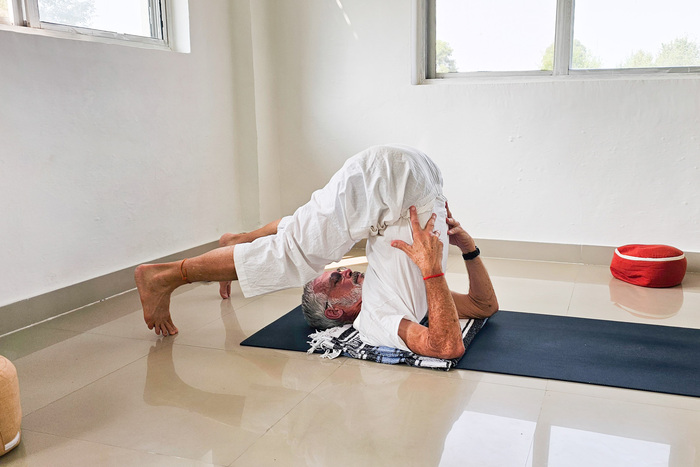
Most desk work involves your spine, keeping your spine in a flexed position all day. Beginner backbends yoga gently extends the spine, creating space between the vertebrae and easing stiffness in the upper and lower back. Even if you practice it for 10-15 minutes a day, you will find it surprisingly relieving.
They improve posture awareness
Backbends don’t just fix posture; they make you aware of it. As you open your chest and align your spine, you notice how you sit, stand, and walk. This awareness helps improve posture over time.
They support deeper, more relaxed breathing
A collapsed chest limits how fully you can breathe. Backbends gently open the front of the body, allowing the lungs to expand more. This often leads to slower, deeper breathing, which helps calm the nervous system, especially useful during long, exhausting workdays.
They build confidence without strain
Beginners shouldn’t force extreme backbend shapes. If practiced mindfully, backbends may help you feel upright, open, and steady, both physically and mentally. This openness can boost confidence without stressing your back or forcing you to stretch while also supporting better posture in the digital age.
What Makes a Backbend Safe?
Backbends can feel either deeply nourishing or extremely uncomfortable, depending on how you are practicing them. For office workers and beginners, safety comes from how you move, not how deep you go. When done with awareness, backbends should create ease and openness, never compression or strain.
Focus on length before depth
A safe backbend starts by lengthening the spine before bending. Instead of pushing the lower back forward, lift the chest and elongate upward first. This distributes movement and prevents excess pressure on the lumbar spine; a common mistake for those who sit for long hours.
Even distribution through the spine
Your spine moves as a whole, yet backbends often overwork your lower back while leaving your upper back stiff. Safe backbends gently extend the thoracic spine (upper and mid-back) while the pelvis and neck stay stable. Balanced movement reduces strain and makes the pose supportive.
Using props and support: how they actually help here
Props in backbends offer more than just comfort; they guide safer movements. Using a block under the upper back encourages chest opening instead of collapsing into the lower spine. A bolster lengthwise along the spine lets your tight muscles release softly. Walls, chairs, or blankets can limit your range, especially if flexibility is uneven. Remember, the goal is gradual spinal opening with support, not achieving higher flexibility. In such cases, you may consider 5 restorative yoga poses with DIY props for at-home healing.
Breath-led movement
Your breath works like a safety check here. Inhaling into a backbend supports expansion and length; exhaling softens tension. If breathing is strained, ease out. When breath and movement connect, backbends feel calm and sustainable, not forced.
Beginner-friendly Backbends for Office Workers
Always start this sequence with a brief warm-up: neck rolls, shoulder shrugs, and a few minutes of movement or walking to ease stiffness. For the best result, practice these backbends 3–4 times a week, or daily if possible.
Seated Chest Opener
What it does:
This simple backbend eases your rounded shoulders and forward-head posture commonly caused by long hours at a desk, releasing tension in the upper back and helping restore better alignment.
How to practice:
- Sit upright in a chair with both feet on the ground.
- Interlace your fingers behind your back or hold the sides of the chair. Inhale, gently lift the chest, and draw the shoulders back and down.
- Keep the neck straight and avoid pushing the ribs forward.
Key focus:
Lengthen the spine before opening your chest. Breathe smoothly; aim for 4–6 breaths.
Cat–Cow (Slow and Supported)
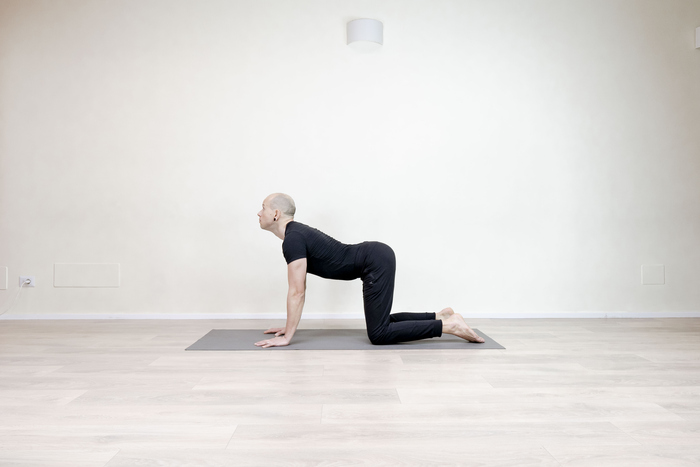
What it does:
Cat–Cow improves your overall spinal mobility, gently introducing back extension and flexion while reducing the stiffness you often experience after spending a long day sitting at the same desk.
How to Practice:
- Come onto all fours, placing your hands under your shoulders and your knees under your hips.
- Inhale into Cow Pose, lifting the chest and tailbone slightly.
- Exhale into Cat Pose, rounding the spine. Move slowly, allowing your breath to guide every movement.
Key focus:
Keep movement smooth and controlled. Avoid dropping into the lower back; create an even wave along the spine.
Supported Puppy Pose
What it does:
This pose opens the shoulders and upper back, effectively counteracting stiffness from extended periods of sitting and typing, and can help improve posture by increasing flexibility.
How to practice:
- From all fours, walk your hands forward while keeping the hips above the knees.
- Rest the chest or forehead on a bolster or folded blanket.
- Let the spine gently extend as the chest melts downward.
Key focus:
Support the pose fully to open the upper back, not compress the lower spine. Remain for 6–10 calm breaths.
Sphinx Pose
Sphinx Pose gently strengthens the lower back, counters slouching from desk work, and opens the chest to encourage deeper breathing and better posture.
How to practice:
- Lie on your belly with your forearms on the floor, elbows under your shoulders.
- Inhale and lightly lift the chest, pressing the forearms down.
- Keep the pelvis grounded and legs relaxed.
Key focus:
Lengthen forward, not upward. If the lower back feels discomfort, lower the height or place a folded blanket under the ribs.
Supported Bridge Pose
What it does:
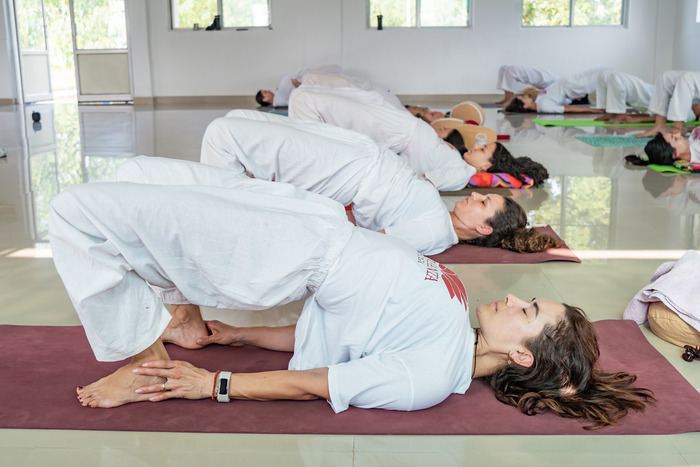
This restorative backbend opens the front body, relieves tight hip flexors from sitting, and allows the spine to relax and decompress after a day at the desk.
How to practice:
- Lie on your back, knees bent, feet hip-width apart.
- Lift hips slightly; place a block or bolster under the sacrum.
- Rest onto the support.
Key focus:
Let the chest open without tightening the glutes. Breathe slowly; stay for 30–60 seconds.
Standing Backbend with Hands on Hips
What it does:
This pose enhances posture awareness, builds confidence, and encourages gentle spinal extension, helping counteract the forward slump that often comes from prolonged sitting or computer work.
How to practice:
- Stand tall with feet hip-width apart.
- Place hands on hips or lower back.
- Inhale, lift the chest, and gently lean back, keeping the neck long.
Key focus:
Keep the movement subtle. Engage your legs, breathe steadily, and return to neutral after 3–5 breaths.
Consult a qualified professional before beginning this sequence if you have recent spinal injuries, severe lower-back pain, slipped discs, or uncontrolled high blood pressure. Professional guidance is advised for anyone with these conditions.
Alignment and Safety Tips
Practicing beginner backbends yoga isn’t about achieving flexibility; it’s more about awareness. These simple alignment cues help protect the spine while allowing you to experience the benefits of gentle extension.
Engage the core lightly
Rather than gripping the abdomen, think of a soft, supportive engagement around the waist. This subtle activation stabilizes your spine and prevents excessive pressure on the lower back, especially in seated and standing backbends.
Avoid collapsing into the lower back
A common mistake most people make is pushing the hips forward and dropping into the lumbar spine. Instead, you can simply lengthen the spine first and allow the opening to spread through the chest and mid-back. If the sensation feels sharp or compressed, reduce the range or use props.
Keep the neck neutral
The neck naturally follows the spine. Avoid throwing the head back, which can strain the cervical area. Maintain length through the back of the neck, and allow gentle extension only if it feels completely comfortable.
Move with the breath
Keep inhaling to create space and lift through the spine, and then exhale to soften unnecessary tension. Breath-led movement keeps the practice controlled, calm, and responsive. If the breath becomes strained, it’s a clear signal to ease out of the pose and perhaps to try simple standing yoga stretches.
Final Thoughts
Backbends don’t need to be intense to be effective. When practiced gently and consistently, they can help undo the physical and mental exhaustion of long hours at a desk, bringing more ease into your posture, breath, and daily movement. Even a few minutes of mindful backbend yoga practice can remind the body what balance feels like again.
If you’re looking for simple ways to integrate this into your workday, our online restorative yoga course offers practical, accessible guidance you can follow anytime. And if you feel drawn to explore slower, deeply restorative practices, going deeper through a Yin Yoga Teacher Training can help you understand how to support the body safely and thoughtfully- both for yourself and others.
For more guidance, watch: https://youtu.be/qx0EkCc_HsM?si=xJ6J9meM_PNTCk0c




