Mental preparation for yoga teacher training is often overlooked but matters more than physical readiness. It helps you handle discipline, silence, and self-doubt with clarity, so you stay grounded, focused, and open throughout the training.
Why Mental Preparation for Yoga Teacher Training Matters More Than Physical Readiness
The structure demands mental steadiness
A yoga teacher training tends to follow a disciplined rhythm like early mornings, multiple sessions, self-study, and continuous engagement. To maintain this rhythm, one needs a stable, focused mindset.
Fewer distractions, more self-awareness
With limited phone use and reduced external noise, your usual distractions fade. Instead, your own thought patterns become more noticeable, which can feel a little unfamiliar at first.
The internal intensity most don’t expect
Many students feel mentally overwhelmed, even when they are physically comfortable. As the environment quiets down, internal activity becomes more visible and sometimes intense. Also, understanding theoretical concepts of yoga can become intense, as most students have this idea: that yoga is all about performing poses.
Emotional challenges are part of the process
Beyond practice, you begin observing habits, reactions, comparisons, and validation patterns. Yoga philosophy deepens this process, often bringing emotional challenges that require awareness and patience. We often see students getting quite well-versed in the physical practices within 4-5 days; however, they still talk about the emotional challenges they didn’t expect to occur.
Mental preparation helps you stay open
Preparing for an intensive yoga course is about building presence, adaptability, and openness. It allows you to move through discomfort without resistance and fully engage with the experience.
Not sure what to expect from a 200-Hour YTT? Read our complete blog What to Expect from a 200-Hour Yoga Teacher Training.
What Makes Yoga Teacher Training Mentally Challenging
When students think about difficulty in a yoga teacher training, they usually imagine long hours of practice or physically demanding sessions. But in reality, the mental challenges are often more impactful. They don’t always appear immediately, but as the days settle into a routine, these inner shifts become more noticeable.
Slowing Down Feels Unfamiliar at First
Most people arrive from a lifestyle of constant movement: receiving constant notifications, having constant conversations, and sometimes multitasking. Then, all of a sudden, this pace changes during the YTT. Movements slow down, instructions become more direct, and there is space between activities.
In the first few days, this can feel a little uncomfortable. I often see students adjusting their mats and looking around with a confused expression, not because they are distracted, but because they are not used to slowing down this much. The challenge is not the practice itself but staying with it without seeking stimulation.
Being Present Without Distractions
During training, the usual escapes are limited. There’s less phone use, fewer external interruptions, and more time spent in practice, study, or quiet reflection.
At first, this sounds ideal. But when distractions reduce, your attention turns inward. Thoughts that usually go unnoticed become clearer. Some students even told me, “I didn’t realize how busy my mind was until I had nothing to distract me.”
Learning to stay present in that space, without reaching for something to fill it, is one of the deeper mental shifts in YTT.
Facing Self-Doubt More Directly
At some point, almost every student questions themselves. It may come up during alignment practice, philosophy discussions, or especially when they begin teaching in front of others.
“Am I good enough to teach?” is not always said out loud, but it’s there. Even students who are confident in their practice can hesitate when asked to guide a class.
I remember a student who was very consistent in her practice but avoided eye contact when it was time to teach. Later she shared that it wasn’t the teaching itself; it was the fear of being seen and evaluated. This kind of self-doubt is common, and working through it is part of the training.
Letting Go of Your Usual Routine
Before training, everyone has their own way of doing things, like when to wake up, how to practice, and how to structure the day. In a TTC, the control shifts. The schedule is fixed, the sequence is guided, and you follow a shared routine.
For some, this feels grounding. For others, it takes time to adjust. I’ve seen students feel slightly unsettled not because the schedule is difficult, but because they are new to this.
This adjustment, moving from personal control to a structured environment, can be mentally demanding and slightly overwhelming.
Unexpected Emotional Release
Yoga, especially when practiced consistently and combined with breathwork or stillness, can trigger emotion release. Most people usually push these emotions aside. However, this doesn’t happen dramatically for everyone, but it does happen quietly and unexpectedly.
A student may feel emotional during a long-held posture or after a meditation session without fully understanding why. Nothing “went wrong,” but still, something has changed internally.
This is a natural part of the process. When the body relaxes and the mind slows down, stored tension, both physical and emotional, can start to release. It’s not something to fear, but it does require openness and patience.
What skills do you primarily develop in a YTT? Find Out Here.
Common Mental Blocks Students Experience During a YTT
Overthinking about the Performance
Instead of simply practicing or learning, many students constantly evaluate themselves: “Is my alignment correct?” “Am I looking like a teacher?” Am I doing this right? Will I be able to teach this clearly?
This constant self-checking can create self-doubt, confusion, and gradually kill the confidence you’ve earned through practice, dedication, and study. I’ve seen students who understand the posture well but hesitate because they are trying to “get it perfect” before moving forward.
Comparing Yourself to Others
In a group setting, it’s natural to look around. Some students may appear more flexible, more confident, and more knowledgeable.
The real problem happens when observation turns into comparison. Students start to compare themselves to others, thinking, “They’re better than me; I’m falling behind.” What often gets missed is that everyone is working through a different set of challenges, even if it’s not visible. Students often don’t realize that everyone’s journey is different; their adaptability levels are different, too.
Resistance to Stillness
Not every part of the training is active. Practices like meditation, pranayama, or Yin yoga often ask you to stay still for longer periods.
For many, this is where discomfort shows up, not in the body, but in the mind. While staying still, many students report feeling restless, impatient, or the urge to move, which can become very noticeable when there’s nothing to distract them.
Fear of Being Judged
The moment students are asked to speak, assist, or teach in front of others, a different kind of hesitation often appears.
It’s not always about a lack of knowledge. Often, it’s the feeling of being observed, such as “What if I say something wrong?” What if I forget the cues? This fear can hold students back even when they are capable of leading a class successfully.
Impatience with Progress
There is a lot to absorb in a YTT: postures, philosophy, alignment, teaching methods. So, learning all these modules within the first 3-4 days is an unrealistic expectation. Also, learning in a TTC doesn’t always follow a straight line. Some days you may feel clear and steady; other days, a philosophy lesson might feel confusing. The expectation that you will learn everything as quickly as you expect often creates impatience and self-doubt.
To go deeper into this, read our complete blog 7 Beginner Yoga Mistakes I See as a Teacher (And How to Fix Them)
Simple Ways to Mentally Prepare Yourself Before You Join a YTT
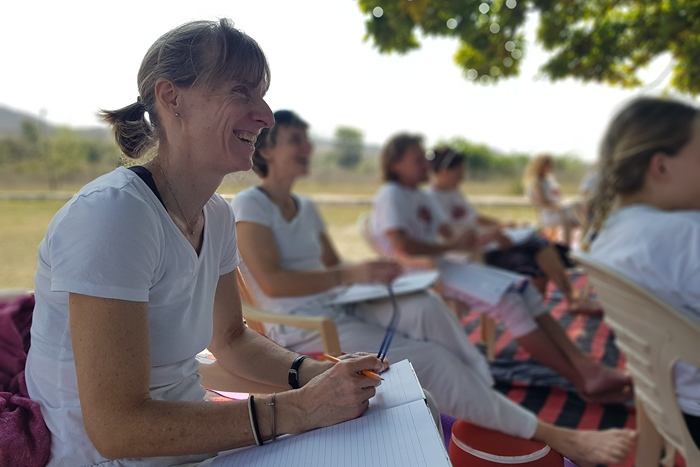
Mental readiness doesn’t require dramatic changes. Small, consistent changes in your daily habits can make a noticeable difference once you enter training. If you’re wondering how to prepare mentally for a yoga TTC, follow the steps below.
Get Comfortable with a Routine
The structured schedule of YTT can feel demanding if you’re not used to it. Start adjusting your day gradually so the routine feels less sudden. For example, wake up a little earlier and start your day with pranayama or Surya Namaskar, set fixed times for meals or practice, and use your evening leisure time for meditation. Follow this routine for a few days and notice how your energy responds.
Last year, a student told me the most difficult part of her first week wasn’t the practice; it was waking up early and staying focused throughout the day. By the second week, once her body adapted to the routine, everything else started to feel more manageable.
Reduce Constant Stimulation
Most of us begin our mornings with emails, messages, and ongoing conversations, staying connected to some form of digital distraction throughout the day. During training, this kind of distraction naturally reduces. So easing into that change beforehand can really help you adapt to the routine earlier.
You don’t have to eliminate everything. You can simply begin by limiting unnecessary phone use or social media scrolling. This helps your mind limit distractions and adjust to a quieter environment, making it easier to stay focused during an intensive yoga course.
Start Short Periods of Silence
Silence is often underestimated until you experience it for longer periods. Instead of waiting for the training, slowly introduce it into your routine so quiet feels more familiar when the training begins.
Sit quietly for 10–15 minutes a day without music, phone, or conversation. You’ll start noticing how quickly the mind seeks engagement and, over time, how it begins to settle. This directly supports what to expect mentally in YTT, where stillness becomes a regular part of the day and feels easier to handle.
For more guidance, explore The Art of Being Alone. Lessons About Solitude from the Ashram
Build a Consistent Self-Practice
As I said, your practice doesn’t need to be advanced or long. What matters is showing up regularly, because that steadiness builds the habit of returning to practice without pressure.
Even a short, steady practice helps you develop discipline and familiarity with your own patterns. It also reduces the pressure to “keep up” once training begins, so you can feel more stable in your yoga teacher training mindset.
Want more guidance? Read our complete blog How to Do Yoga at Home Daily: A Guide for Beginners.
Observe Your Reactions
This is one of the most practical forms of preparation. Start paying attention to how you respond in everyday situations so you can notice your habits before training brings them into sharper focus.
Do you get impatient when things slow down? Do you compare yourself when you see someone doing better? Do you reach for your phone the moment you are alone?
These small observations prepare you for the emotional challenges of yoga teacher training, where these reactions become more apparent throughout your day and easier to work with.
Let Go of Expectations
It’s natural to enter training with certain ideas about how well you should perform, how quickly you should improve, or how confident you should feel. Letting go of those expectations helps you stay open and less tense as the process unfolds.
But TTC is not about performing well or competing with your yoga mates. It’s about learning, observing, and gradually growing into the role of a teacher. Letting go of fixed expectations makes it easier to stay open to the process and benefit more fully from it.
Wondering if there are any fitness requirements for a YTT? Find Out Here.
Signs You’re Mentally Ready (Even If You Feel Nervous)
Feeling nervous before a yoga teacher training is completely normal; it doesn’t mean you are not ready. In fact, most students feel some level of doubt before they begin. Mental readiness doesn’t mean feeling fully confident; it shows up in quieter, more practical ways such as:
You’re Willing to Learn, Not Prove
You don’t feel the need to impress anyone. You keep telling yourself, “I’m here to understand and grow.” This clarity shows you are now mentally ready to begin this journey.
You Can Stay Committed to a Routine
You may not have a perfect schedule yet, but you’re able to show up consistently, whether it’s for practice, learning, or even small daily habits. That willingness to stick to a routine matters more than doing everything perfectly.
You’re Open to Feedback
You are able to listen, reflect, and adjust without taking it personally. This openness indicates you are ready to begin your YTT journey, which helps students improve steadily during training.
In a YTT, you may receive constant corrections from experienced teachers. Please note that this kind of correction helps you see where you are mistaken and what you can do to improve. If you already feel corrections are like constructive feedback for you, you are already ready enough.
You’re Curious About Yoga Beyond Postures
Your interest goes a little deeper than just the physical practice. You find yourself wanting to understand breathing, philosophy, or the purpose behind what you’re doing, not just how it looks.
You’re Okay Feeling Uncomfortable Sometimes
You don’t expect every moment to feel easy. Whether it’s sitting in silence, trying something new, or stepping slightly outside your comfort zone, you’re willing to stay with it instead of avoiding it.
To go deeper into this, read our complete blog, 10 Signs You Are Ready to Become a Yoga Teacher.
Final Thoughts
You don’t need to feel 100% ready to begin. A bit of uncertainty is natural, it simply means you’re stepping into something new.
Mental preparation is not about having everything figured out. It’s about your willingness to learn, to stay consistent, and to remain open even when the experience feels unfamiliar.
Remember, the right training environment makes a real difference here. When the space is supportive, structured, and guided with clarity, it helps you settle in and grow at your own pace.
If you’re feeling curious about joining a yoga teacher training at our ashram, you can explore our 200-Hour Yoga Teacher Training Courses and see if it feels like the right fit for you. And if you have any doubts or questions, you’re always welcome to reach out to us. we’re happy to guide you.