Yoga has increasingly surfaced as an effective means of healing from trauma, focusing on mind, movement, body and breath. There is strong and growing research to support yoga as an evidence-based intervention for the treatment of post-traumatic stress disorder (PTSD) symptoms and trauma-related emotional distress. Research studies from reputable journals, such as The Journal of Clinical Psychology and Traumatology, have shown that yoga for trauma healing also reduces anxiety and depression and helps in developing self-awareness and nervous system regulation.
When someone experiences trauma, they often disconnect from their bodies. Yoga helps build gentle movement, mindful breathing and awareness of the present moment. With this, a trauma survivor can rebuild a sense of control and safety. Mindful movement practices such as restorative yoga, pranayama (the practice of breath or breathing techniques) and meditation stimulate the parasympathetic nervous system, taking the body from a fight-or-flight response to a rest-and-digest response.
In various studies and clinical trials, participants report improved emotional resilience, reduced flashbacks, and increased self-compassion. Yoga is not just therapy, but also an excellent, body-centered, healing practice that is used to augment traditional therapy methods. With more studies published using yoga in trauma recovery, it continues to be acknowledged as a valid option in recovery.
What is Trauma Informed Yoga Research?
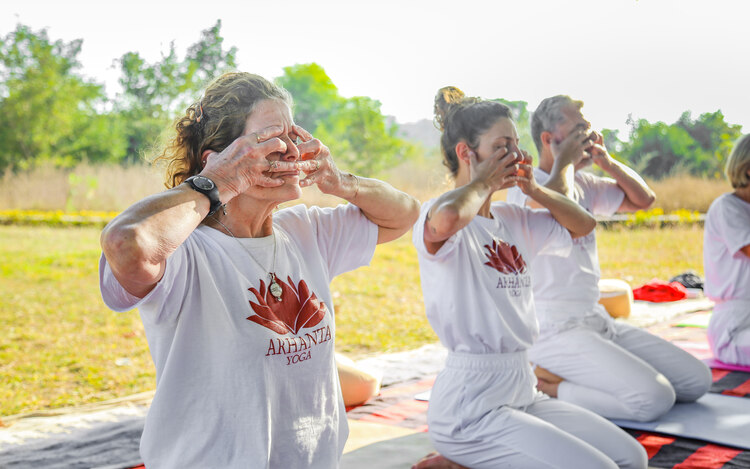
Trauma Informed Yoga is a way of practicing yoga that takes into consideration the fundamental principles of choice, safety, and empowerment specific to those who have been affected by trauma. To be trauma-informed means that the yoga session is sensitive to the relational aspect of the physical and emotional ramifications of trauma. In trauma-informed yoga, teachers do not perform hands-on adjustments during yoga classes, nor do they make directional statements. Each pose includes more than one option, however, some poses may have a limit depending on the individual. Trauma-informed yoga emphasizes self-agency for the students. Therefore, the expectations for the students’ bodies are kept realistic, and the option to choose is placed back where it belongs–with the student.
The intent of trauma-informed yoga is to maintain a continuous and predictable environment in which the students can become aware of themselves and engage in various forms of healing. Teachers utilize language that is invitational and non -directional, thus avoiding command sounds that might induce triggering responses. Breathwork and movement are offered mindfully, and with consideration for sensations and posture as they may contribute additional emotions that cause the individual to feel intense emotions while integrating these practices.
The goal of a trauma-informed yoga practice is to help individuals reconnect to their bodies, ultimately regulate their functioning nervous systems while realizing and including resilience and self-regulation concerns when appropriate. This model has been a common form of complementary practice in therapeutic settings as a tool to help with emotion and psychological healing.
The Somatic Experience of Trauma
The term “Somatic” refers to something “of the body” and somatic experiencing is a process of healing developed by Dr. Peter Levine. Somatic experience emphasizes that trauma resides in the nervous system rather than in the event itself. Somatic healing draws attention to bodily sensations and allows for gentle release of energy that is frozen in the body. It does not imply getting well only by talking about it, but rather, that getting well includes relating to, reconnecting with, and releasing what had been conserved by the body.
Many trauma survivors completely disconnect from their bodies, either as a protective mechanism or because their body is no longer considered a safe place. Adult trauma survivors often engage in this behavior in a long-term way, which can make it difficult to feel grounded, safe, or present. This disconnection is necessary and helpful for a time, but that is one of the ways the world, especially trauma, becomes a source of pain and discomfort.
How Trauma is Stored in the Body?
Although trauma can be seen as a psychological experience, it also becomes a part of the body. When we experience a traumatic event, our body instinctually responds in order to protect us by activating the fight, flight, or freeze response. While this response is necessary for survival, at times the body is unable to fully process the event, especially when the trauma is highly overwhelming or prolonged. As a result, that experience’s energetic component can be stored in the body.
The nervous system is central to this process of “storing” trauma in the body. When we experience trauma, our sympathetic nervous system (the part of our nervous system associated with fight or flight responses, i.e., our stress response) becomes hyper-aroused. Basically, we flood our body with stress hormones like adrenaline and cortisol (the “stress response”). If we can’t find a way to release this energy in our bodies (e.g., we move, express or receive help); then the trauma can get “stuck” in the tissue, muscles and fascia of our bodies. Trauma is most often stored in the hips, jaw, neck, shoulders, and abdomen.
Stored trauma can be experienced in many physical and emotional forms. People may experience chronic tension, fatigue, gastrointestinal symptoms, or ongoing pain with no discernible physical explanation. Emotionally, unprocessed trauma can show up as anxiety, numbness, erratic moods, and an out-of-body feeling. Over time, unprocessed trauma can even impact body posture, breath patterns, and movement patterns.
Because trauma is stored in our body, healing has to happen in the body. Healing practices that increase awareness of physical sensations (e.g. somatic therapy, yoga, breath work, mindful movement, etc.) reconnect people more thoroughly with themselves and promote gentle release of stored trauma. When one feel safe in one’s body again, gradually unwinding the trauma induced patterns that were developed allows one to re-stabilize toward a more balanced and well-being state.
How Yoga Asana and Meditation Help Release Stored Trauma?

Trauma disconnects us. However, yoga is one way, through gentle movement and breath work, that we can come home and reconnect to ourselves. It allows us to listen to our bodies deeply, feel our bodies safely, and then release that which no longer serves us. When we integrate somatic awareness and a yoga practice, we begin to heal mentally, physically, and energetically from the inside out.
For quick trauma and stress relief, check our blog on 15-Minute Yoga Practice.
1. Trauma is Stored in the Body
Trauma can create physical manifestations such as muscle tension, shallow breathing, or dysregulation in the nervous system. The physical responses to trauma can persist long after an event has ended and may manifest as chronic levels of stress and numbness in the emotional body.
Yoga goes into the body as a means to release the held trauma, making it a useful practice for healing.
2. Reconnecting with the Body
Trauma can create disassociation from the body or a feeling of separation. Mindful movement, in particular yoga, allows the individual to safely start to reconnect with their physical form. This will help the person re-establish an ownership and awareness of their body again.
3. Establish Safety
Trauma alters our safety and the predictability of our life. Grounding postures such as child’s pose, mountain pose, and corpse pose, will help bring calmness and stability to your nervous system. By moving slowly and deliberately, you are helping to signal to your nervous system that it is safe.
4. Releasing Tension from Important Areas
The body stores tension resulting from trauma in the hips, shoulders, and jaw. There is a multitude of yoga asanas (Pigeon Pose, Camel Pose, Reclined Bound Angle, etc…) that can release long-held tension in these areas. During or after practice, students may experience some kind of emotional release (tears, sighs, or a feeling of lightness).
5. Encouraging Awareness of the Breath
Survivors of trauma often demonstrate irregular or shallow breath patterns. During asana practice, a student will naturally deepen their breath and possibly gain and/or reinforce healthy breathing awareness. Breath work/body awareness practices such as yoga will engage the parasympathetic nervous system and encourage evidence-based techniques that may regulate the student’s nervous system, sense of calm and help them learn the regulation of their emotions.
6. Empowering Choice and Control
Trauma can entail loss of control or trajectories that have breached a person’s sense of boundaries. Having students take control in a trauma-informed yoga practice means creating a student-centered approach to a recovery or healing environment. When students know they have autonomy over their practice, they feel guided when they choose to take a rest in Child’s Pose or to cover their bodies with a blanket in Savasana. This builds a sense of emotional safety and can build their confidence from within.
7. Mindfulness through Meditation
Meditation builds interoception—the capacity to notice and understand cues from the body’s internal state. The consistent practice of developing awareness without judgment allows trauma survivors to track feelings toward feelings instead of ignoring or avoiding them.
Over time, this practiced awareness helps to soften trauma and lessen reactivity.
Check our complete blog on – What Is Meditation? How to Meditate, Benefits and Effects
8. Gently Processing Emotions
Meditation allows for suppressed emotions to emerge within a safe and manageable context. In this way, you can work toward diminishing emotional numbness and building resilience.
9. Regulating the Nervous System
Yoga and meditation create a shift from fight or flight mode to rest-and-digest mode. Practicing these periodically can lower anxiety, improve sleep patterns, and help with emotional regulation. Over time, a well-regulated nervous system develops, and you start to respond reactively rather than have disconnected responses.
10. Building a Daily Healing Ritual
By regularly practicing yoga and/or meditation, you create a self-care ritual that promotes safety. Making a daily connection helps build trust, function as a healing process, and provides the mind and body with a sense of safety.
Practice to the extent and level you are comfortable, but over time we can accumulate movement or mindfulness into a meaningful part of your long-term recovery.
To overcome trauma and stress from yoga, you can check our blog on 7 Powerful Yoga Practices for Burnout, Anxiety & Stress Relief.
Scientific Research on Yoga for Trauma Healing

In recent years, yoga has received growing attention as a therapeutic approach for trauma recovery. Research is showing how the mind, body and trauma are connected, and how yoga may be a valuable complementary approach to traditional therapies that include psychotherapy and medication. Consider the following: Trauma includes experiences of abuse, accidents, or chronic stress that may become embedded in the body and affect the nervous system, posture, and affect regulation. Yoga, with an emphasis on breath, movement, and mindfulness, may offer a path toward healing.
Leading the conversation in this area is Dr. Bessel van der Kolk, a psychiatrist and author of The Body Keeps the Score. In Dr. van der Kolk’s research at the Trauma Center in Massachusetts, trauma-sensitive yoga decreased PTSD (post-traumatic stress disorder) symptoms significantly. In a controlled study, women with treatment-resistant PTSD, in a 10-week trauma-informed yoga program, reported a 30% decrease in symptomology.
Research published in the Journal of Clinical Psychology and Psychological Trauma: Theory, Research, Practice, and Policy shows that yoga helps regulate the autonomic nervous system; trauma often causes dysregulation in an individual’s autonomic nervous system and can become stuck in a state of fight-or-flight response or freeze response. Yoga practices such as deep breathing (pranayama), mindful movement, and meditation have been shown to activate the parasympathetic nervous system to create a feeling of safety, and calm in the body again.
In addition to these benefits, yoga allows for body awareness, which is an important piece of the trauma recovery process. Many survivors of trauma will disassociate or experience disconnection from their physical self. The gentle movements of mindful asana provide survivors the opportunity to slowly gain trust in their body, and experience a sense of grounding. Additionally, in a yoga therapy context, survivors can commit to their yoga practice without needing to talk about ‘what happened’, which can be a good alternative for many survivors who are challenged by verbal communication.
Research on survivors of domestic violence and survivors of sexual assault shows that easing anxiety, depression, and intrusive thoughts was linked to regular yoga practice. Trauma-informed yoga instills self-regulation, non-judgment, and empowerment to help build resilience in trauma recovery and emotional health. In conclusion, accumulating evidence shows that yoga is an effective, body-based method to aid in the healing of trauma. Although yoga is not a replacement for traditional therapies, it can provide a meaningful and effective opportunity to heal anyone suffering from trauma.
Final Thoughts
Yoga presents an easy, holistic means of healing trauma by reconnecting the mind & body in a safe, supportive way. With the appropriate mindful movement, breathing practices, and meditation, people are able to release tension held in the body, downregulate their nervous systems, and cultivate feelings of internal safety and choice. Even though it is not a basis for a standalone solution, yoga provides an additional tool that, when used along with traditional therapies, allows trauma survivors to develop practical approaches to resilience, self-awareness, and emotional regulation. There is growing research validating the benefits of yoga, and trauma-informed yoga is fast becoming a widely available and impactful resource on the journey toward healing and wholeness.
Source: