Hatha vs Vinyasa Yoga: Key Differences & Which One to Choose
Hatha & Vinyasa Yoga teacher training helps aspiring teachers develop different teaching skills. This guide compares Hatha Yoga vs Vinyasa Yoga teacher training so you can confidently choose the course that best supports your teaching goals.
This guide compares Hatha Yoga vs Vinyasa Yoga teacher training from the perspective of teaching, not practicing. You’ll learn how each course approaches sequencing, anatomy, cueing, assessments, and classroom skills, so you can choose the path that genuinely matches the teacher you want to become.
Hatha Yoga vs Vinyasa Yoga Teacher Training at a Glance
A Hatha Yoga teacher training generally focuses on alignment, posture analysis, anatomy, and learning how to teach individual poses with precision.
A Vinyasa Yoga teacher training places greater emphasis on flowing sequences, transitions, movement with breath, and creating dynamic class experiences.
Neither is inherently better. They simply prepare you for different teaching approaches.
Throughout this guide, we compare Hatha and Vinyasa Yoga teacher training from a teacher’s perspective, focusing on the skills each approach develops rather than which style is better.
|
Feature
|
Hatha Yoga Teacher Training
|
Vinyasa Yoga Teacher Training
|
|---|---|---|
|
Primary focus
|
Alignment and posture mastery
|
Flow, transitions, and movement
|
|
Teaching pace
|
Slower and methodical
|
Dynamic and continuous
|
|
Sequencing
|
Individual postures with logical progression
|
Breath-led flowing sequences
|
|
Cueing style
|
Detailed alignment instructions
|
Rhythmic movement cues
|
|
Anatomy emphasis
|
High focus on structural alignment
|
Applied anatomy during movement
|
|
Observation skills
|
Strong emphasis
|
Moderate to strong
|
|
Best suited for
|
Teachers who enjoy precision and individualized instruction
|
Teachers who enjoy creative sequencing and energetic classes
|
The differences may look straightforward on paper. In reality, the experience of learning to teach each style feels different. One style needs you to slow down and notice tiny details that most students overlook. The other needs you to think of several poses ahead while keeping an entire class moving together.
Should You Choose Based on the Classes You Enjoy?
Not always. The classes you enjoy practicing don’t necessarily reflect the teaching skills you’ll enjoy developing. Choose your teacher training based on how you want to teach, not just how you like to practice.
I’ve met trainees who regularly attended energetic Vinyasa classes and assumed a Vinyasa teacher training was the obvious next step. Yet once they began learning to teach, they became fascinated by alignment, biomechanics, and helping one student find comfort in a single posture. Their interests shifted almost without them noticing.
Teaching changes the way you experience yoga. As a practitioner, you’re mostly aware of your own body. As a teacher, your attention expands.
You’re constantly:
- observing different bodies
- listening to breathing patterns
- adapting your instructions
- noticing hesitation
- deciding when to simplify or progress a posture
It becomes a completely different practice.
That’s why choosing a teacher training simply because you enjoy attending a certain style of class can be misleading. Instead, ask yourself, “How do I want to teach?”
What Is a Hatha Yoga Teacher Training?
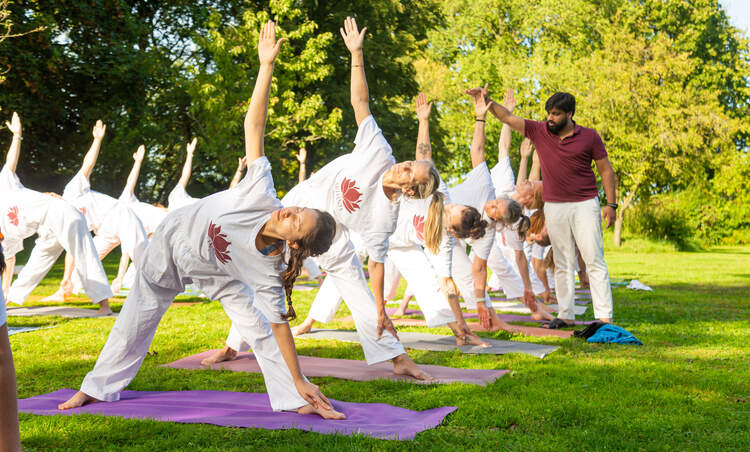
A Hatha Yoga teacher training teaches you how to understand, analyze, and teach each posture before combining them into complete classes. Rather than moving quickly from one pose to the next, you’ll learn why a posture works, how to adapt it for different students, and how to teach it safely.
Within Hatha and Vinyasa Yoga teacher training, Hatha places greater emphasis on alignment, observation, and posture analysis before progressing to more complex sequencing.
Many people arrive expecting a gentle yoga course. Instead, they discover that much of the learning happens off the mat. You’ll observe movement patterns, study anatomy, refine your cueing, and practise teaching individual postures until your instructions become clear and natural.
At our ashram, I’ve watched this shift happen countless times. During the first week, most trainees are focused on remembering the sequence. Before long, they begin noticing details on their own, such as lifted shoulders, locked knees, or uneven weight distribution. That’s when they stop thinking only as practitioners and begin seeing like teachers.
Good teaching rarely starts with speaking.
It starts with seeing.
A typical Hatha Yoga teacher training includes:
- Alignment principles for foundational asanas
- Functional anatomy and biomechanics
- Verbal cueing and demonstration skills
- Hands-on adjustments and modification techniques, where appropriate
- Purpose-driven class sequencing
- Supervised teaching practice and structured feedback
Research on motor learning suggests that practicing individual movement patterns with focused feedback improves skill acquisition before combining them into more complex sequences. This helps explain why Hatha teacher training emphasizes mastering individual postures before teaching complete classes.
The pace may feel slower than expected, but it gives you time to develop one of a teacher’s most valuable skills: careful observation. Once you learn to notice the details that shape a student’s practice, you begin seeing them everywhere.
What Is a Vinyasa Yoga Teacher Training?
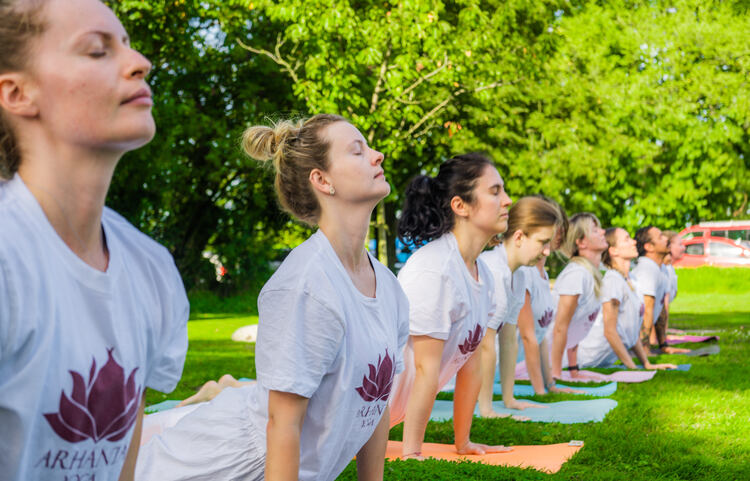
A Vinyasa Yoga teacher training teaches you how to create classes where movement, breath, and sequencing work together as one continuous experience. Rather than refining each posture in isolation, you’ll learn how poses connect to create a safe, purposeful flow.
Alignment still plays an important role. The difference is that you’ll study it in motion rather than static holds. Instead of focusing only on alignment in Warrior II, you’ll also learn to guide safe, smooth transitions into and out of the pose.
Over the years, I’ve noticed that many trainees begin by trying to memorize impressive sequences. Before long, they realize effective sequencing isn’t about creativity alone; it’s about helping students move confidently through a class with clear purpose.
A typical Vinyasa Yoga teacher training includes:
- Building balanced flow sequences
- Linking breath with movement
- Teaching safe transitions between postures
- Creating classes for different levels and themes
- Applying anatomy during movement
- Developing clear verbal cueing for dynamic classes
Teaching a flowing class can feel demanding at first because you’re observing students, giving cues, and planning the next sequence at the same time. With regular teaching practice, that rhythm gradually becomes natural.
Research on attentional focus suggests that concise, well-timed instructions improve movement learning without overwhelming students. This is especially relevant in Vinyasa classes, where teachers need to communicate clearly while students continue moving.
The Biggest Differences Between Hatha and Vinyasa Teacher Training
Both teacher trainings prepare you to teach Yoga professionally, but they don’t develop your teaching habits in the same way. The differences become obvious once you step into practice teaching sessions, where your role shifts from following instructions to giving them.
Teaching Methodology
Hatha and Vinyasa teacher training both prepare you to teach professionally, but they build teaching skills differently. The biggest difference is how the learning process is structured.
|
Hatha Yoga Teacher Training
|
Vinyasa Yoga Teacher Training
|
|---|---|
|
Learn one posture at a time
|
Learn movement patterns earlier
|
|
Master alignment first
|
Build complete class journeys
|
|
Receive feedback before progressing
|
Practice sequencing from the beginning
|
|
Focus on individual postures
|
Focus on transitions between postures
|
Key takeaway: Both approaches are effective; they simply organize learning differently.
Sequencing
Sequencing is often where the difference between Hatha and Vinyasa teacher training becomes most noticeable. While both teach you to build effective classes, the way you approach sequencing is different.
|
Hatha
|
Vinyasa
|
|---|---|
|
Focus on the purpose of each posture
|
Focus on the flow between postures
|
|
Prioritize alignment
|
Prioritize rhythm and continuity
|
|
Build sequences step by step
|
Build a complete class journey
|
Anatomy
Both trainings teach anatomy, but they apply it in different ways during class planning and instruction.
|
Hatha
|
Vinyasa
|
|---|---|
|
Joint mechanics
|
Anatomy in movement
|
|
Muscle stability
|
Weight-bearing transitions
|
|
Individual alignment
|
Continuous movement
|
Cueing
Clear communication is one of the hardest teaching skills to develop.
Many trainees assume they’ll naturally know what to say because they’ve attended Yoga classes for years. Then they stand in front of their first practice group… and their minds go completely blank.
I’ve seen that moment countless times.
The biggest difference lies in how each training develops your communication skills.
|
Hatha Yoga Teacher Training
|
Vinyasa Yoga Teacher Training
|
|---|---|
|
More time to refine verbal cues
|
Cue with precision under time pressure
|
|
Guide alignment step by step
|
Guide students before they move
|
|
Observe and adjust while poses are held
|
Match cueing to the rhythm of the class
|
|
Refine instructions through longer posture holds
|
Deliver concise cues during continuous movement
|
Pace of Learning
The learning experience itself feels noticeably different.
Hatha Yoga teacher training often suits students who enjoy:
- Studying details before moving on
- Asking questions throughout the learning process
- Building confidence through repetition
Vinyasa Yoga teacher training often appeals to students who enjoy:
- Learning through continuous movement
- Developing sequencing and teaching skills together
- A faster-paced learning environment
Neither reaction is unusual. Learning to teach Yoga stretches your attention in ways regular practice never does.
Student Assessment
Assessment methods often reflect each training philosophy.
|
Hatha Yoga Teacher Training
|
Vinyasa Yoga Teacher Training
|
|---|---|
|
Posture analysis
|
Balanced flow sequencing
|
|
Alignment knowledge
|
Maintaining class rhythm
|
|
Verbal cueing
|
Cueing during movement
|
|
Observation skills
|
Creating cohesive class experiences
|
|
Teaching foundational asanas safely
|
Guiding dynamic classes from start to finish
|
Which Training Develops Different Teaching Skills?
Neither Hatha nor Vinyasa teacher training produces a better yoga teacher. Instead, they often develop different teaching instincts, especially during the first few years of teaching.
I’ve worked with trainees who could design beautiful flowing classes but struggled to notice that a student was forcing a knee into a twist. I’ve also seen trainees who could spot subtle alignment issues almost instantly but needed more time to build confidence leading a moving class. Neither group was lacking; they simply developed different strengths because of how they learned.
Your first 200 hours won’t define the teacher you’ll become forever, but they do shape the habits you naturally fall back on in the classroom.
|
Teaching Skill
|
Hatha Yoga Teacher Training
|
Vinyasa Yoga Teacher Training
|
|---|---|---|
|
Observation
|
Strong focus on posture analysis
|
Strong focus on whole-class awareness
|
|
Verbal cueing
|
Detailed and descriptive
|
Concise and rhythmic
|
|
Sequencing
|
Purpose-driven and structured
|
Creative and movement-based
|
|
Class management
|
Individual student support
|
Group pacing and flow
|
|
Teaching confidence
|
Built through repetition
|
Built through continuous practice
|
Over time, experienced teachers develop all of these skills. The difference lies in where they begin.
Observation
Observation is one of the least glamorous teaching skills.
Students rarely compliment you on it because, when you’re doing it well, they often don’t realize it’s happening. But it quietly influences every decision you make as a teacher.
Hatha teacher training helps you notice:
- Weight shifting into one foot
- A shoulder creeping towards an ear
- Holding the breath without realizing it
- Small alignment changes during static postures
Vinyasa teacher training helps you notice:
- Movement quality
- Breathing patterns
- Signs of fatigue
- How the whole class responds to pace and transitions
It’s almost like developing two different kinds of vision.
Verbal Cueing
Every new teacher talks too much.
Many of my students do too.
Many trainees believe that more words equal better teaching. Then they teach their first class and realize students are confused halfway through a long explanation.
That moment stays with you.
Hatha teacher training helps you:
- Refine instructions during longer posture holds
- Observe whether your cues are working
- Simplify your language over time
Vinyasa teacher training helps you:
- Deliver cues before students move
- Communicate with fewer words
- Match instructions to the rhythm of the class
Eventually, you stop trying to sound knowledgeable and start trying to sound useful.
That’s usually when your cueing begins to improve.
Classroom Confidence
Confidence doesn’t appear because you earn a certificate.
It grows through repetition.
One of the biggest changes I notice in trainees isn’t how much anatomy they remember or how polished their sequencing becomes. It’s the moment they stop worrying about themselves and start paying attention to their students.
Most trainees move through a similar progression:
1. They focus on themselves.
- Am I saying the right thing?
- Did I forget something?
- Do I sound confident enough?
2. They begin noticing their students.
- Who needs a modification?
- Who looks uncertain?
- Who needs a quieter reminder to breathe?
3. Teaching starts to feel natural.
- Confidence grows through repeated teaching, honest feedback, and learning that mistakes are rarely as disastrous as they first seem.
Whether you’re learning through Hatha or Vinyasa, confidence develops by teaching real people again and again.
Who Should Choose a Hatha Yoga Teacher Training?
A Hatha Yoga teacher training may suit you if you’re naturally curious about why a posture works, not just how it looks.
Perhaps you enjoy slowing down to understand movement. Maybe anatomy genuinely interests you, or you like solving small puzzles about alignment and posture adaptations. Some people simply enjoy taking things apart before putting them back together again. Hatha teaching tends to attract that kind of mind.
I’ve also noticed that many healthcare professionals, physiotherapists, fitness instructors, and complete beginners feel comfortable with this learning style because it builds knowledge gradually. Each concept supports the next instead of arriving all at once.
You might enjoy Hatha Yoga teacher training if you want to:
- Build a strong foundation in alignment and anatomy
- Feel confident teaching beginners and mixed-level classes
- Develop detailed observation and adjustment skills
- Learn structured sequencing before exploring more creative styles
That doesn’t mean every Hatha graduate teaches slow classes forever.
Far from it.
Many teachers begin with Hatha because they want a solid understanding of movement before adding more dynamic teaching styles later in their careers.
Who Should Choose a Vinyasa Yoga Teacher Training?
A Vinyasa Yoga teacher training may feel like a better fit if you’re energized by movement and enjoy thinking creatively about how postures connect.
You might already find yourself remembering transitions after class or imagining different ways to link poses together. Some trainees naturally think in patterns rather than individual steps, and Vinyasa teaching often feels intuitive for them.
The training also suits teachers who enjoy working with rhythm. You’re learning how to guide an experience that feels continuous without losing clarity or safety along the way.
You might prefer Vinyasa Yoga teacher training if you want to:
- Teach dynamic, movement-based classes
- Learn creative sequencing techniques
- Develop strong pacing and class rhythm
- Guide students through flowing practices linked with breath
Even so, it’s worth remembering that the best Vinyasa teachers I’ve worked alongside weren’t successful because their sequences were complicated.
They were successful because every transition felt intentional, accessible, and well taught.
Creativity is memorable.
Clarity is what keeps students coming back.
If you’re still deciding, read our guide on which style is the best fit for you to compare your options in more detail.
Can You Switch Between Hatha and Vinyasa After Graduation?
Yes. In most cases, you can.
Many aspiring teachers assume that a Hatha Yoga teacher training means they’ll only teach Hatha classes, while a Vinyasa Yoga teacher training limits them to flow classes. In reality, teaching yoga is rarely that rigid.
Most studios offer a variety of classes throughout the week. A teacher might lead a Hatha class one day, a Vinyasa Flow the next, and a mixed-level class later in the week. The ability to adapt is a valuable skill for professional yoga teachers.
Moving between teaching styles becomes much easier when your training builds a strong foundation in movement, alignment, and sequencing rather than relying on memorized routines.
I’ve watched many graduates evolve in unexpected ways. Some arrived determined to teach energetic flow classes but later discovered they loved introducing beginners to Yoga through slower, alignment-focused lessons. Others started with Hatha and gradually added Vinyasa classes as their confidence with sequencing grew.
Very few teachers stay exactly where they started.
Your first teacher training is exactly that, your first.
It builds your foundation, but your teaching style continues to evolve with every class you teach, every workshop you attend, and every student who challenges you to think differently.
How to Choose the Right Teacher Training for You
If you’re still deciding between Hatha and Vinyasa teacher training, try shifting your focus away from the style itself and toward the kind of teacher you hope to become.
Think about how you naturally like to learn and teach.
A Hatha Yoga teacher training may be the right fit if you:
- Enjoy understanding movement in detail
- Prefer structured, step-by-step learning
- Like refining alignment and observation skills
- Want to build teaching confidence gradually
A Vinyasa Yoga teacher training may suit you if you:
- Enjoy guiding continuous movement
- Like creating class sequences
- Prefer a more dynamic teaching style
- Feel energized by leading flowing classes
Neither path guarantees you’ll become an exceptional teacher. What matters most is your willingness to keep learning after graduation.
The most respected teachers I’ve met over the years never stopped asking questions. They continued refining their language, improving their observation skills, and adapting their teaching with experience.
That’s a habit no certificate can give you but it’s one every great teacher develops.
Ready to Build a Strong Teaching Foundation?
If you’re looking for a teacher training that emphasizes safe alignment, practical anatomy, thoughtful sequencing, and extensive hands-on teaching practice, our 200-Hour Hatha Yoga Teacher Training offers a comprehensive foundation for aspiring teachers.
At Arhanta Yoga, you’ll study in a traditional ashram environment in India or Europe, where the focus extends beyond completing a certification. You’ll receive structured guidance from experienced teachers, teach real classes throughout the course, and graduate with the confidence to lead students safely while continuing to grow into your own teaching style.
Whether you eventually teach Hatha, Vinyasa, or a combination of both, a strong foundation can support every class you teach in the years ahead.
Months or even years from now, your students probably won’t remember whether you called your class Hatha or Vinyasa. They’ll remember whether they felt safe, understood, and confident under your guidance. That’s the part of teaching worth investing in from the very beginning.
Holistic Hatha Sequencing for Practitioners & Teachers
Get 17 primary asanas and key principles for a balanced practice sent straight to you.