- 21-day Residential Training
Yoga Teacher Training in Europe: 200-Hour Certification at a Real Ashram in the Netherlands
Yoga teacher training in Europe shouldn’t force you to choose between authentic teaching and practical travel. At Arhanta Yoga Ashram in the Netherlands, you complete a 200-hour, Yoga Alliance recognised hatha yoga certification in 21 residential days.
Recognised by Yoga Alliance, the International Yoga Association (IYA) and CRKBO, the Dutch register for short vocational education. Arhanta is also a FIYM member.
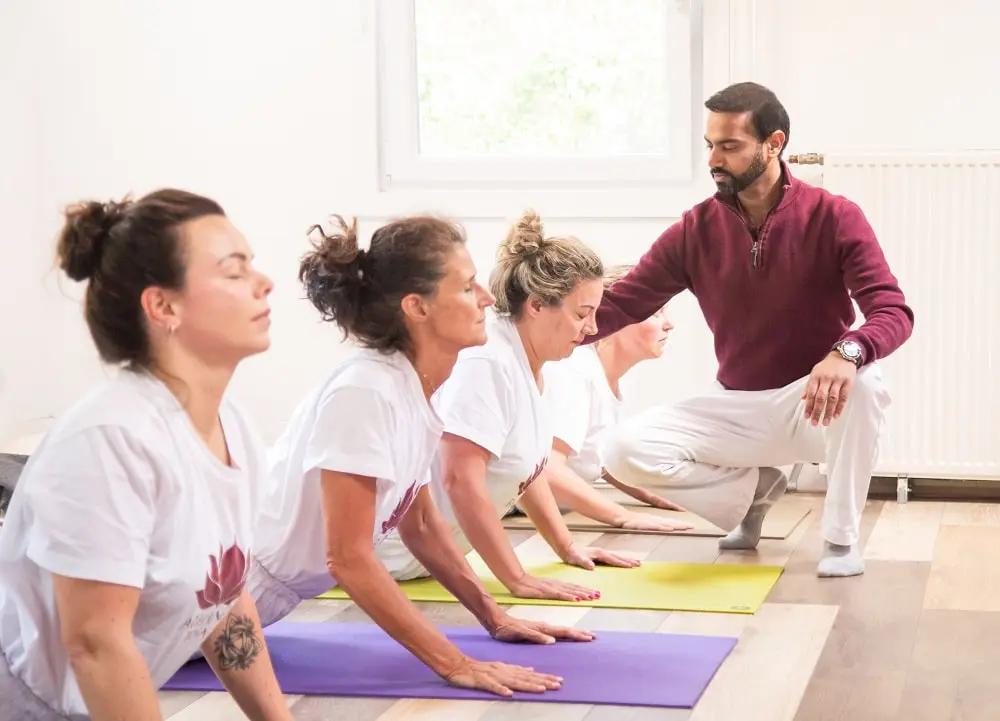
Teaching Since 2009
Indian roots. Global standards
24,000+ Graduates
Students from 90+ countries since 2009
Yoga Alliance RYS
Become eligible for RYT 200 registration
5th Generation
Learn Yoga from 5th generation teachers
Table of contents
- Yoga teacher training in Europe at a glance
- Why train in Europe instead of India or Bali?
- Who this training is for
- What makes this 200-hour training different
- What you'll learn: the 200-hour curriculum
- Residential, online or hybrid: which format fits you?
- A day at the ashram: your daily schedule
- Your teachers
- Certification: what you receive
- Upcoming 2027 dates in the Netherlands
- How much does yoga teacher training in Europe cost?
- The location: Arhanta Yoga Ashram, Netherlands
- How to choose a yoga teacher training in Europe
- Where in Europe can you train? Countries compared
- What happens after you graduate?
- Preparing for your training
- How to book your spot
- Frequently asked questions
- At a glance
Yoga Teacher Training in Europe at a Glance
Here’s the whole course in one table. Everything below expands on these facts.
-
Certification: 200-hour hatha yoga teacher training
-
Duration: 21 days, residential
-
Style: Classical Hatha Yoga (170+ asanas)
-
Level: Suitable for committed students; advanced postures are not required
-
Language: English (basic level is enough)
-
Recognition: Yoga Alliance, IYA, CRKBO (FIYM member)
-
Location: Arhanta Yoga Ashram, Netherlands

Why Train in Europe Instead of India or Bali?
Training in Europe gives you the same internationally recognised 200-hour certification as India or Bali, usually at a comparable or lower total cost once flights, visas and insurance are added. You skip the jet lag, EU residents skip visas entirely, and every one of your 21 days goes into training instead of recovery.
A 200-hour training is intense. You’re studying, practising and teaching six days a week. Arriving exhausted from a long-haul flight, then adjusting to new food, a new climate and a several-hour time difference, costs you the first precious days of the course.
Train in the Netherlands and those problems disappear. EU residents don’t need a visa at all. The water is drinkable, the food hygiene standards are Dutch, and if something goes wrong at home you can be back in hours.
No Visa Stress, No Recovery Days
Think about what your three weeks actually contain. In Asia, the first days often go to jet lag and stomach adjustment, and the last days go to worrying about the flight home. In the Netherlands, day one is a training day and so is day twenty-one.
There’s a quieter benefit too. Family emergencies, work problems, a forgotten document: everything is solvable from two hours away in a way it simply isn’t from another continent. Students focus better when the exit is close, even if they never use it.
The Real Cost Comparison
Tuition in Asia looks cheaper on paper. Add flights, travel insurance, visa fees and buffer days for jet lag, and the gap narrows fast. For most Europeans it can close entirely.
Arhanta’s European fees are all-inclusive: accommodation, three daily meals and the full 200-hour program in one price. There’s no separate bill for food or housing, which is where many “cheap” trainings claw the money back.
Same Indian Lineage, Shorter Flight
Here’s what most European trainings can’t offer: Indian teachers carrying a 5-generation yoga heritage, teaching the same principles, standards and methods developed at Arhanta’s Indian ashram.
When India Is Still the Right Choice
Honesty helps here: for some students, India remains the better pick. If you have five or six weeks rather than three, if immersion in Indian culture is part of what you’re seeking, or if the lower base tuition matters more to you than travel convenience, train in India.
The useful part is that with Arhanta you don’t have to choose between lineage and location. The yoga teacher training in India and this Netherlands course teach the same curriculum to the same standard. Pick the country; the education is constant.
Who This Training Is For
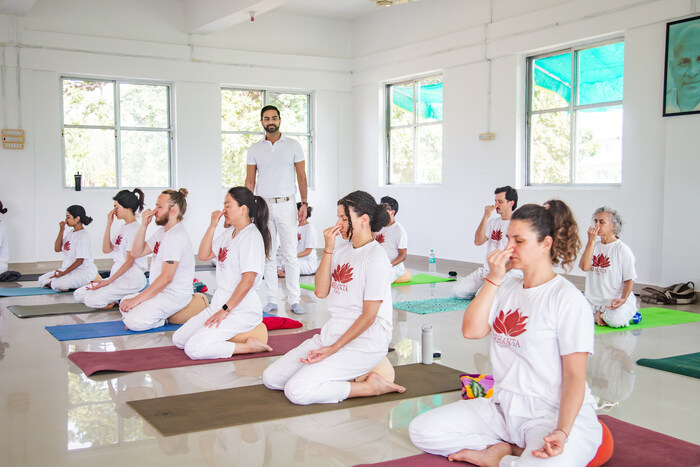
You don’t need years on the mat or a plan to open a studio. You need commitment and three free weeks.
This training fits you if:
-
You practise yoga and want to understand it properly, not just follow along in class.
-
You want to teach, part-time or full-time, and need a certification employers recognise.
-
You've been putting off training because India felt too far, too long or too uncertain.
-
You want a structured, residential immersion instead of scattered weekend modules.
-
You're a beginner with dedication. Prior teaching experience isn't required, and neither is advanced flexibility.
The days here are full, the schedule is fixed and the standard is professional. Students who arrive wanting a spa leave disappointed. Students who arrive wanting to become teachers leave as teachers.
Still deciding whether teaching is your path? This guide on how to become a certified yoga instructor walks through every route, hour requirement and career option first.
What Makes This 200-Hour Training Different
Plenty of 200-hour graduates finish their course able to do yoga but afraid to teach it. They know the poses. Put them in front of a class, and the sequencing, cueing and correcting fall apart.
Why So Many 200-Hour Graduates Feel Unprepared
The pattern is common enough to name. A training spends its hours on personal practice and theory, students watch experienced teachers demonstrate, and everyone assumes teaching skill will transfer by osmosis. It doesn’t.
Teaching is a separate skill from practising, the way playing football and coaching football are separate skills.
Then graduation comes. The certificate is real, the knowledge is real, but the graduate has only taught a handful of supervised classes. Standing in front of a room of strangers for the first time as “the teacher” feels like a cliff edge, and many never jump.
They frame it as waiting for the right moment. The moment doesn’t come.
The fix isn’t more theory. It’s repetition under feedback, early and often, which is exactly how this course structures its mornings.
Teaching Practice, Not Just Practice
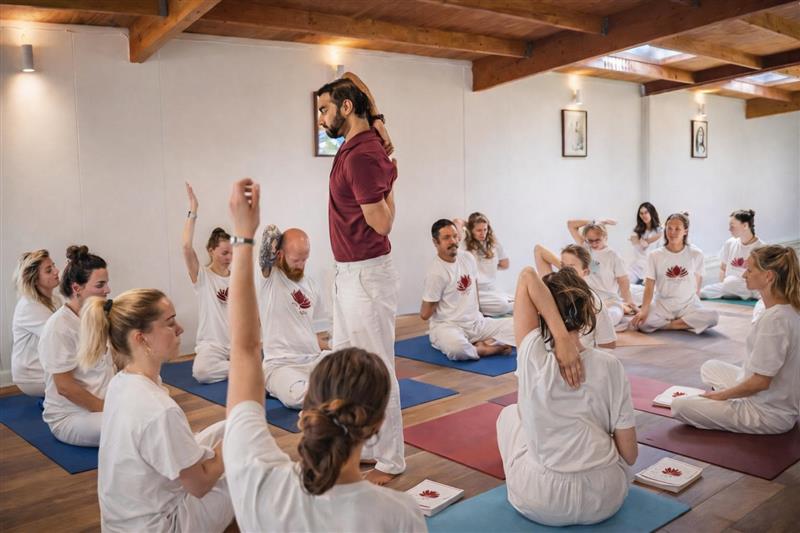
Look at the daily schedule below and you’ll spot it immediately: teaching practice has its own dedicated block every morning, separate from your personal asana practice in the afternoon.
You learn to teach by teaching. Repeatedly, with feedback, from the first week. By graduation day, standing in front of a group feels normal because you’ve done it dozens of times.
Wondering whether that’s enough to actually work as a teacher afterwards? Here’s an honest look at whether a 200-hour certification is enough to teach.
A 5-Generation Yoga Heritage
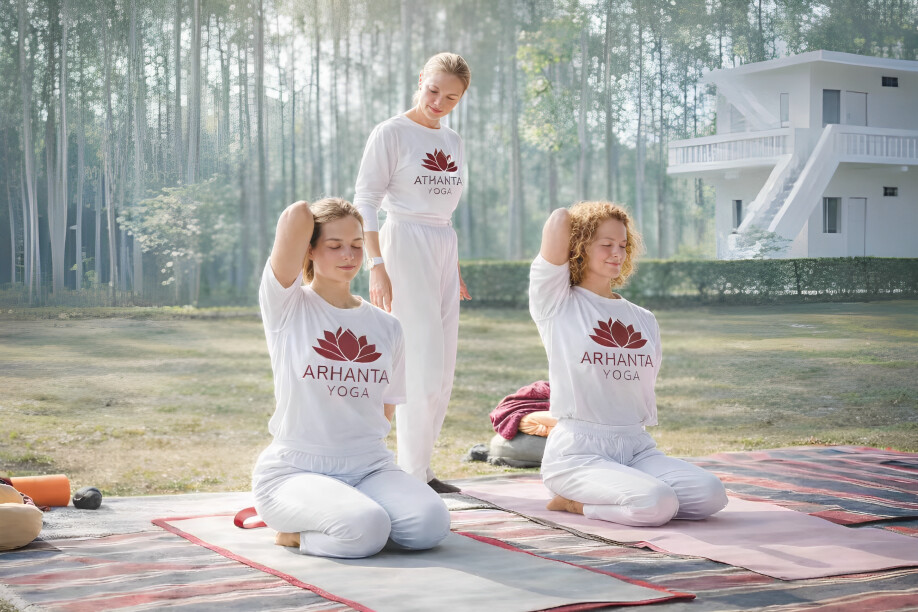
Arhanta isn’t a retreat company that added a certification arm. It’s a yoga school with a 5-generation heritage, more than 18 years of experience training teachers worldwide, and over 24,000 graduates since 2008.
That history shows up in the details: a fixed curriculum, experienced Indian teachers and standards that don’t bend to trends.
5
Generations of yoga heritage
18+
Years training teachers worldwide
24,000+
Graduates since 2008
2008
Training in Europe since
- Curriculum
What You'll Learn: The 200-Hour Curriculum
Here is an overview of what you will learn in this 200-hour yoga teacher training.
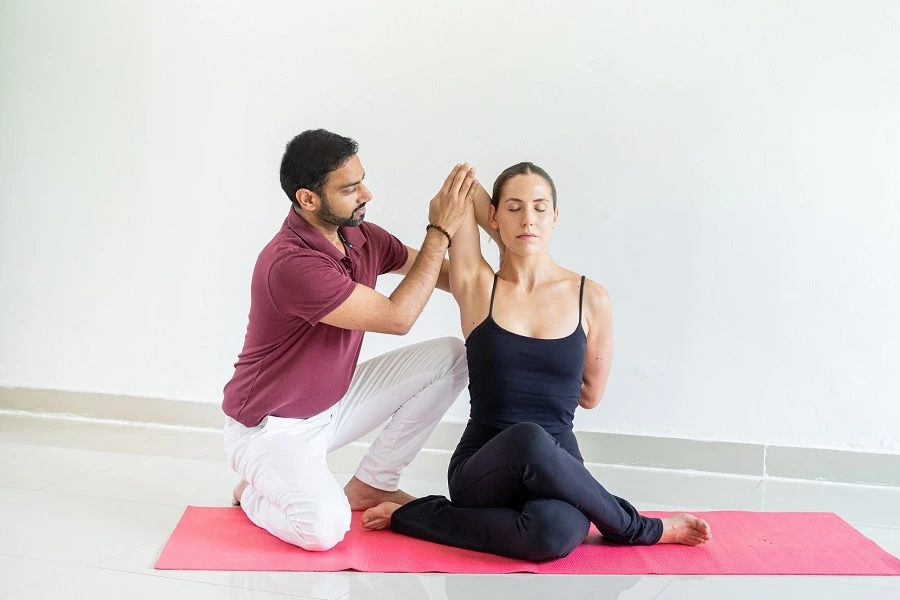
170+ Hatha Yoga Asanas
Detailed instruction on proper alignment, variations, and adjustments for fundamental and advanced poses.
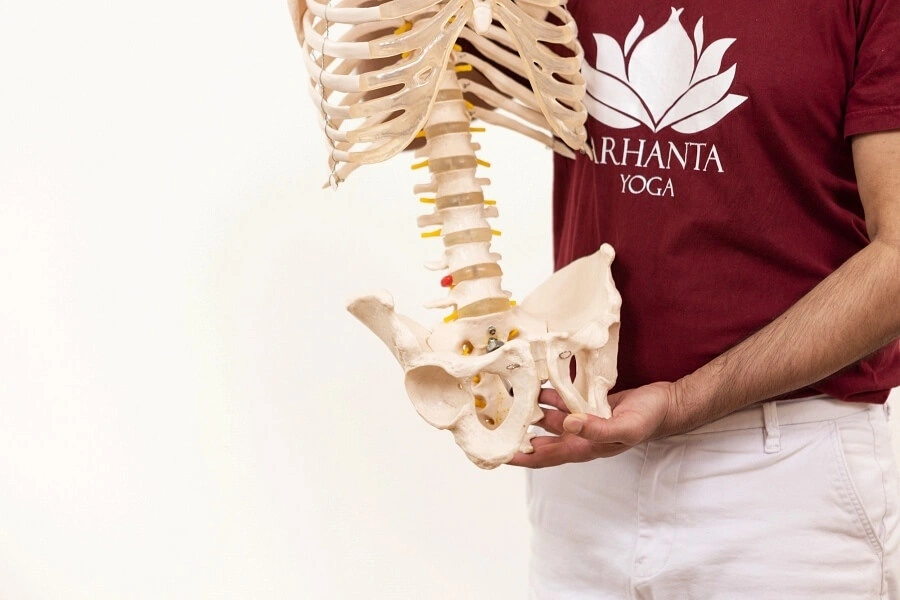
Anatomy & Physiology
Understand body structure, archetypes, and movement mechanics to prevent injuries and teach safely.
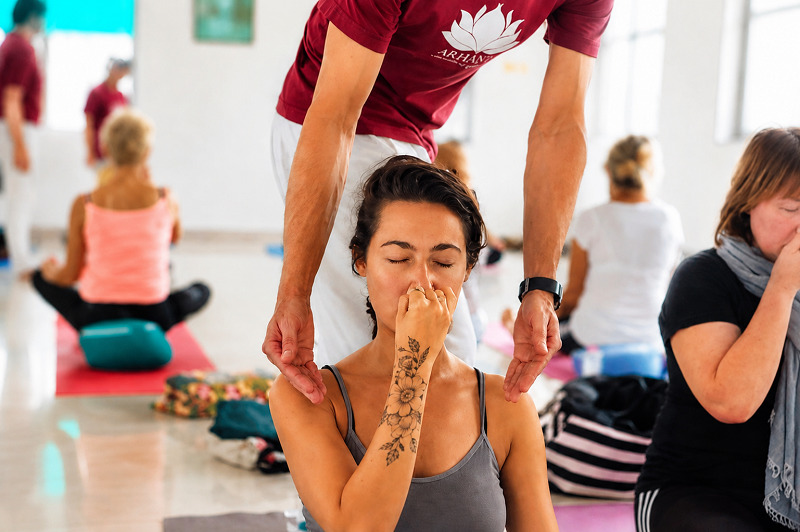
Pranayama & Meditation
Build a daily practice of various breathing techniques and meditation practices to deepen your spiritual practice.
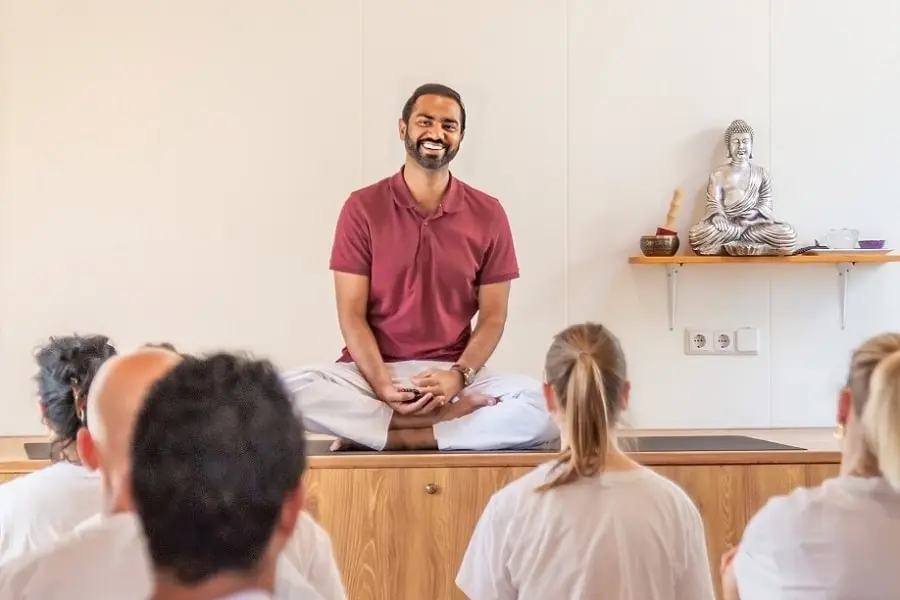
Yoga Philosophy
A deep dive into yogic philosophy, ancient scriptures, and the timeless wisdom of traditional yoga.
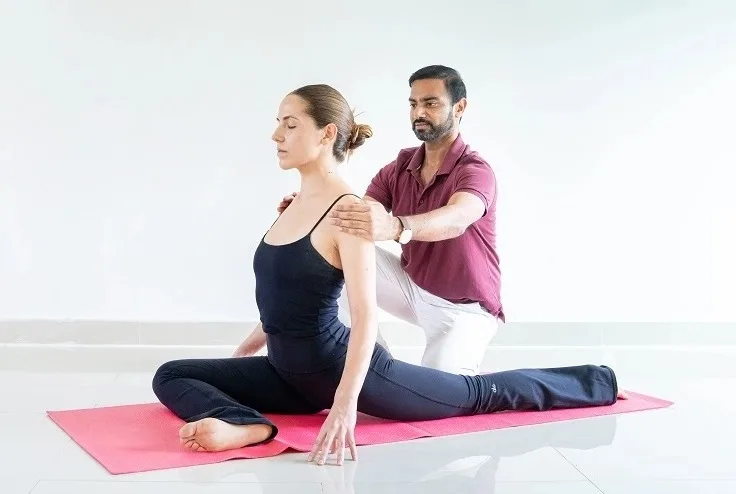
Teaching Methodology
Learn how to give a structured class, provide safe adjustments, and effectively communicate with students.
- Detailed Curriculum
What’s inside the course
We have continuously refined our training to create a comprehensive online yoga teacher certification program for aspiring yoga teachers worldwide.
170 classical yoga asanas |
Proper alignments of 95 yoga asanas |
How to create a proper class environment? |
Important pointers on teaching a yoga class |
The basic structure of a yoga class |
The basic structure of the beginner’s course |
Yoga asana variations for beginners and elementary levels |
Kids Yoga |
Gentle/limited movement yoga |
Yoga for pregnant women |
How and when to modify asanas? |
Deep relaxation / Yoga Nidra |
Pranayama |
Bandhas and kriyas |
Meditation |
The four paths of yoga |
Kundalini Yoga |
Eight main body systems |
Spine and its common disorders |
Difference between yoga and other physical exercises |
Injury prevention and cures |
Alignments, adjustments & modifications |
Yoga as therapy |
Diet and Nutrition |
→ What is Ayurveda? |
→ Yogic diet |
→ Effect of diet, nutrition, and lifestyle on body and mind |
→ Body types and suitable diets |
Aim and meaning of yoga |
Five principles of yogic practice |
Four paths of yoga |
Eight limbs of Raja Yoga |
Seven stages of awareness |
Three gunas – sattva, rajas, tamas |
Maya, prakriti, brahman, avidya |
Atman, parmataman, jiva |
Three bodies; physical, astral, spiritual |
Four inner instruments; mind, intellect, subconscious, ego |
Working of the mind |
Five major and five minor pranas |
Karma and Reincarnation |
→ The law of action and reaction |
→ The law of compensation |
→ The law of retribution |
→ Destiny, self-effort and free will |
→ Purpose of birth and rebirth |
Psychology of a teacher |
Psychology of a student |
Correction and guidance techniques |
Motivation techniques |
Communication techniques |
Ethical Guidelines |
→ Ethical guidelines for a yoga teacher |
Running Your Own Yoga School |
→ How to set up your yoga business or yoga studio? |
→ How to: find a location, advertise and promote, & get renewals |
→ Common fallback and mistakes and how to avoid them |
→ Practical tips for the smooth running of a yoga school/yoga studio |
Residential, Online or Hybrid: Which Format Fits You?
A residential training asks for 21 consecutive days. That’s a real commitment, and it’s worth being honest about whether it’s the right format for your life right now.
Residential wins on immersion. You live the practice from 6:00 am meditation to lights out, surrounded by people doing the same. Nothing competes for your attention, and the daily repetition compounds.
That’s why this page describes a residential course: it’s the fastest, deepest route to teaching confidence.
But it isn’t the only route. If you can’t leave work or family for three weeks, Arhanta also offers an online 200-hour yoga teacher training that you complete at your own pace.
A few honest trade-offs to weigh:
Residential
Fastest completion, strongest discipline, live feedback on your teaching every day. Requires 21 free days and travel to the Netherlands.
Online
Fits around a job and family, costs less overall, lets you rewatch lessons. Requires self-discipline and gives you fewer live teaching reps.
Hybrid approaches
Some students study theory online first, then join a residential course to consolidate. There’s no single right answer, only the format you’ll actually finish.
If you finish a training, any training, you're ahead of everyone who kept postponing. Pick the format that removes your excuse.
A Day at the Ashram: Your Daily Schedule
Ashram life runs on rhythm. Here’s your actual day, hour by hour:
| Time | Activity |
|---|---|
| 06:00 | Meditation & pranayama |
| 07:15 | Breakfast |
| 08:15 | Teaching practice |
| 11:30 | Lunch |
| 12:00 | Karma yoga |
| 13:00 | Philosophy, anatomy |
| 15:15 | Asana practice |
| 17:30 | Dinner |
| 19:00 | Self |
| 21:30 | Lights out |
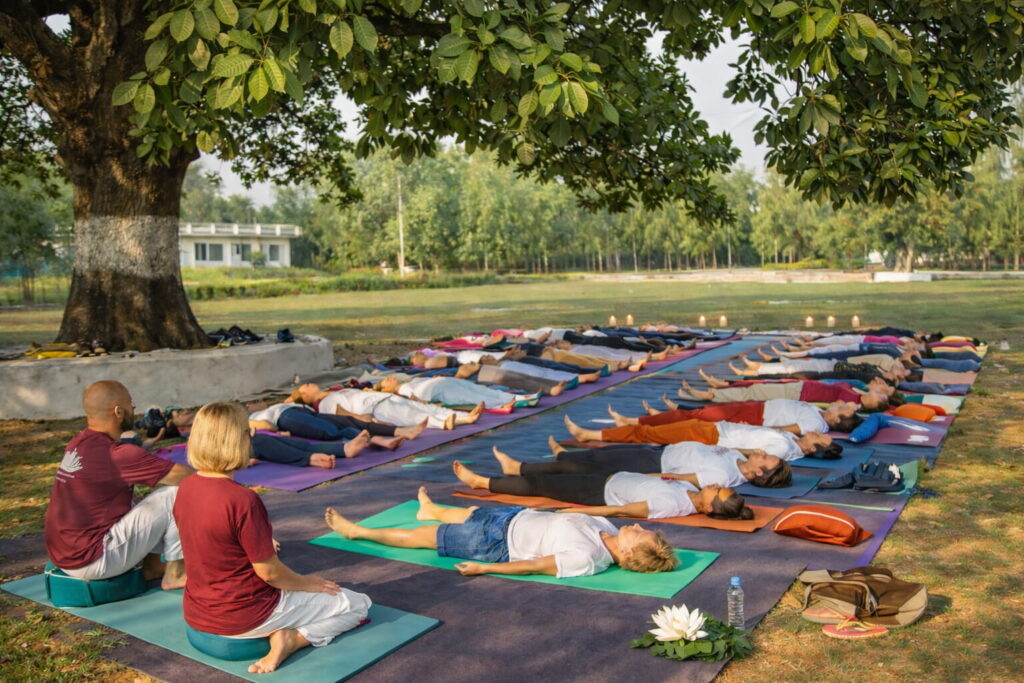
Notice the shape of it. Study when your mind is fresh, practise when your body is warm, sleep early enough to do it again. Three weeks of that rhythm builds more discipline than a year of good intentions.
Curious how this compares to studying online or part-time? Here’s a clear-eyed comparison of online vs residential vs hybrid yoga teacher training.
Your Teachers
Ask one question of any yoga teacher training in Europe before you compare anything else: who actually teaches it? Venues photograph well. Teachers determine what you learn.

Omkar Jain (E-RYT 500)
- Lead Teacher
Omkar Jain (E-RYT 500), Lead Teacher
Omkar Jain leads the training with more than 15 years of teaching experience. As an E-RYT 500, he holds Yoga Alliance’s experienced-teacher designation at the highest hour level. You’ll spend most of your teaching-practice hours under his direct feedback.
-
Teaching since 2009, teaching experience of over 18,000 hours
-
E-RYT 500 and Yoga Alliance Continuing Education Provider
-
5 generations of yoga heritage in a Jain family

Dr. Ram Jain, PhD (Yoga)
- Founder & Course Creator
Dr. Ram Jain (PhD), Program Guide
Dr. Ram Jain founded Arhanta Yoga and guides the program with over 25 years of experience. He wrote Hatha Yoga for Teachers & Practitioners, published by Human Kinetics, with 20,000+ copies sold in four languages.
The school behind them carries a 5-generation yoga heritage, and that continuity is rare in Europe, where many trainings assemble a visiting faculty per season. Here, the school that certifies you also built the curriculum, refined it across 24,000+ graduates and answers for its results.
-
34 years on the path of yoga, teaching for over 23 years
-
E-RYT 500 and Yoga Alliance Continuing Education Provider
-
5 generations of yoga heritage in a Jain family
-
Author of a Hatha Yoga book sold worldwide in 4 languages
-
24,000+ students trained across 90+ countries worldwide
- Certificate of Completion
Certification: What You Receive
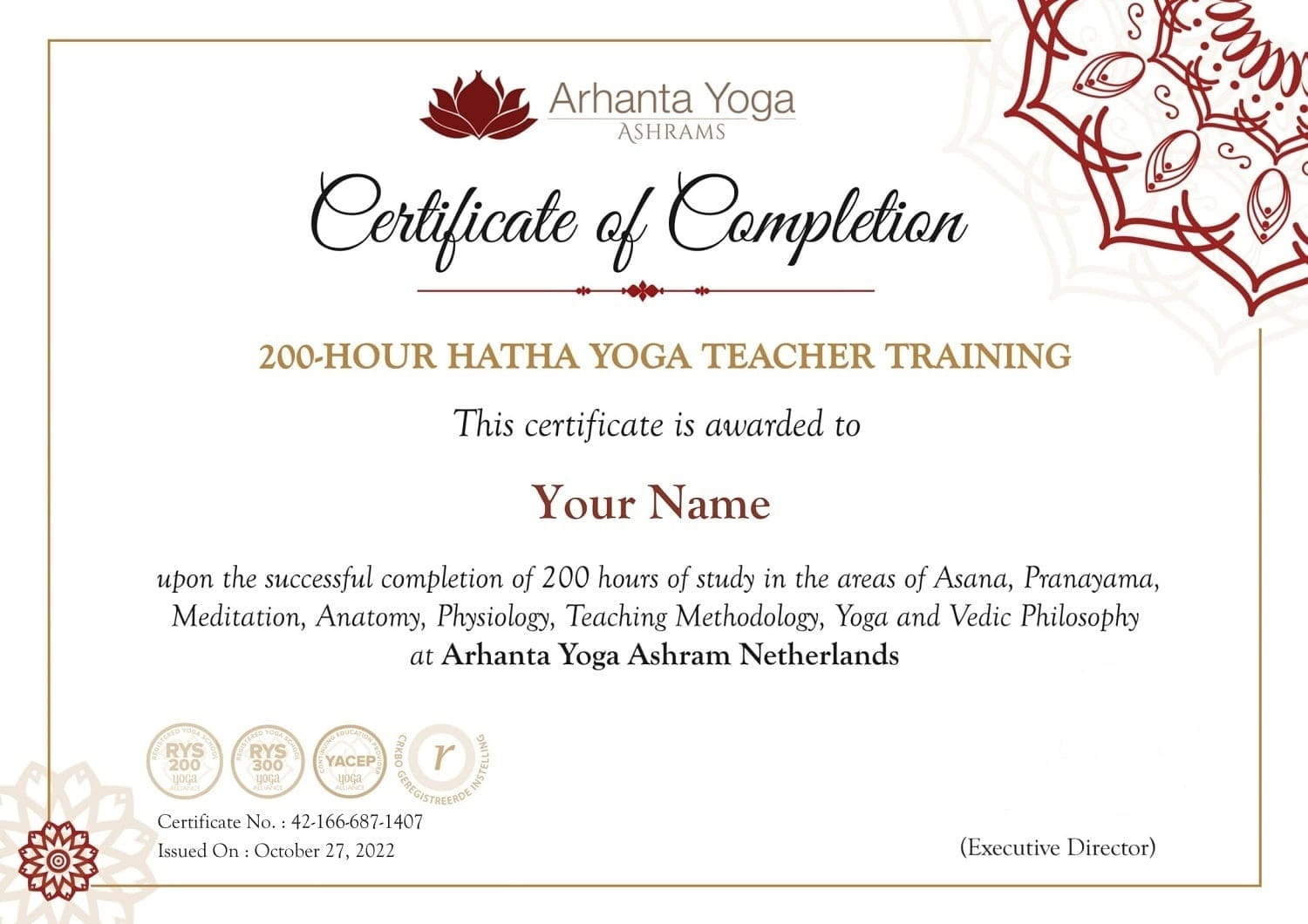
Graduate and you hold a 200-hour hatha yoga teacher training certificate you can use to register and teach internationally.
Recognition matters for a practical reason: it’s what studios, gyms and insurers check before they let you teach. A certificate from an unrecognised school might represent real learning, but it won’t open doors. This one does, on three separate registers.
Yoga Alliance, IYA and CRKBO Recognition
The training is recognised by Yoga Alliance, the International Yoga Association (IYA) and CRKBO, and Arhanta is a FIYM member.
The CRKBO listing deserves a special mention because almost no other European yoga school talks about it. CRKBO is the Dutch Central Register for Short Vocational Education.
Registered institutions must comply with the Dutch Quality Code for Short Vocational Education Institutions. It’s an extra, independent quality check on top of the yoga-world accreditations.
Yoga Alliance registers schools as RYS (Registered Yoga Schools) and teachers as RYT (Registered Yoga Teachers). After graduating, you can register with Yoga Alliance as an RYT 200. According to Yoga Alliance, registration costs a one-time $50 application fee plus $65 annual membership (2026 figures).
RYT 200 Registration
Register as a Registered Yoga Teacher 200 with Yoga Alliance after course completion.
Post Course Support
Contact our teachers directly via Skype, phone, or email about any queries.



Is 200 Hours Enough to Teach?
Yes. A 200-hour certificate from a recognised school is the standard entry qualification to teach yoga worldwide, and studios accept it as such. What varies is confidence, which depends on how much supervised teaching practice your course actually gave you.
That’s why this training makes you teach daily instead of watching demonstrations. And when you’re ready to go deeper, the 200 vs 300 vs 500-hour training levels build on this foundation in a clear sequence.
- Dates & Schedule
Upcoming Trainings Netherlands
Choose the course date that works best for you. You can ask questions and check availability before applying or paying anything.
After your application is accepted, your place is confirmed with a €200 deposit.
29 Mar – 18 Apr, 2027
Location: Netherlands | Status: Available
17 May – 6 Jun, 2027
Location: Netherlands | Status: Available
2 Aug – 22 Aug, 2027
Location: Netherlands | Status: Available
30 Aug – 19 Sep, 2027
Location: Netherlands | Status: Available
Daily Schedule
- Your Investment
Fees & Accommodation
Dormitory
Shared accommodation with 4 to 7 students
€ 3550 / 3250*
* Early Booking Rate
Double Shared
Shared accommodation with another student
€ 3950 / 3650*
* Early Booking Rate
Single Room
Private accommodation for your entire stay
€ 4450 / 4150*
* Early Booking Rate
Your course fee includes:
-
All tuition, classes and assessments
-
Accommodation for the full course
-
Three vegetarian meals per day
-
Two sets of uniforms
-
Course manual and study materials
-
Post-course support and guidance
-
One guided group cultural tour with lunch
*Flights, visa, insurance, personal expenses, and optional treatments are not included.
* Save €300 with the Early Booking Rate
The Early Booking Rate is available for the first 10 confirmed students on each course date. Early Booking places are limited separately for each course date. Please check availability before applying.
- Sinderen, The Netherlands
The Location: Arhanta Yoga Ashram, Netherlands
The ashram sits in the Netherlands, purpose-run for residential training rather than tourism. No beach bars next door, no distractions engineered to sell you excursions, just the conditions for three focused weeks.
Getting There
The ashram is well connected by train to Schiphol Airport, one of Europe’s biggest hubs. Fly in from nearly any European city, take a train, and you’re there. Students from outside Europe use the same simple route: one international flight into Amsterdam, one train, done.
Compare that with the retreat islands. Reaching a Greek island venue often means a flight, a connection and a ferry. Lovely for a holiday, less lovely with three weeks of luggage and a course start time.

Arhanta Yoga Ashram Netherlands
Rooms and Meals
You’ll stay on-site in comfortable rooms: dormitory, double shared or single, depending on the option you book. The kitchen serves three vegetarian or vegan meals a day, every day, included in your fee.
Living where you study matters more than people expect. No commute, no cooking, no decisions. Your only job for 21 days is to learn.
The food follows the practice, too. Meals are vegetarian or vegan by design, in line with traditional ashram training, and they’re built to fuel long physical days rather than to impress on Instagram. Students with plant-based diets don’t need to plan around anything; it’s the default here, not an accommodation.
How to Choose a Yoga Teacher Training in Europe
Hundreds of European schools want your money. Use this checklist to sort them quickly:
Check the accreditations
Yoga Alliance registration is the baseline. Additional independent recognition, like CRKBO in the Netherlands, signals a school held to educational standards beyond the yoga world.
Research the actual teachers
Who leads the training, what are their credentials (look for E-RYT designations), and how many years have they taught? A pretty venue can’t fix an inexperienced lead teacher.
Count the teaching practice hours
Ask how often you’ll teach real students under supervision. Daily practice builds teachers; weekly demos build spectators.
Confirm what the price includes
All-inclusive with room and meals, or tuition only? Get it in writing.
Read reviews on independent platforms
Look for comments about teaching confidence after graduation, not just how nice the food was.
Check the school's track record
Years operating and total graduates tell you whether the curriculum has survived contact with thousands of students. Arhanta has trained 24,000+ graduates since 2008.
Living where you study matters more than people expect. No commute, no cooking, no decisions. Your only job for 21 days is to learn.
Where in Europe Can You Train? Popular Countries Compared
Yoga teacher training in Europe concentrates in a handful of countries, each with a distinct character. Here’s how the map looks, using listing counts from BookYogaRetreats, one of the largest training directories, as of July 2026:
| Country | Trainings listed | What it's known for |
|---|---|---|
| Spain | 75 | Retreat-style courses on the coast and islands |
| Greece | 34 | Island settings, multi-style programs |
| Portugal | 27 | Affordable coastal and eco-retreat trainings |
| France | 23 | Rural, small-group courses |
| Italy | 19 | Countryside venues, culture-and-cuisine appeal |
| Netherlands | Arhanta's ashram | Residential ashram model, CRKBO-registered education |
Spain, Greece and Portugal dominate the volume, and they’re lovely places to spend three weeks. Most courses there follow a retreat format: a rented villa or hotel, a visiting teacher team, yoga in the morning and beach in the afternoon.
The Netherlands offers something structurally different. Arhanta’s course runs at a permanent ashram, not a rented venue. The school is registered with CRKBO, the Dutch register for professional education, and the teachers are the school’s own rather than seasonal hires.
Neither model is wrong. If your priority is a holiday setting, the Mediterranean delivers. If your priority is walking out able to teach, pick the format built around teaching practice and ask any school, in any country, how many supervised teaching hours you'll log.
One practical note that surprises people: for most of Europe, the Netherlands is also the easiest of these destinations to reach. Schiphol is a major hub with direct flights from nearly everywhere, and the ashram is connected to it by train.
What Happens After You Graduate?
You leave with a certificate, but more usefully, you leave able to plan, sequence and teach a complete hatha yoga class.
Graduates use the certification in different ways. Some teach part-time at local studios while keeping their day job, and some build toward full-time teaching. Others take it purely for depth of personal practice, which is a legitimate reason nobody should talk you out of.
Career Paths That Open Up
The common routes Arhanta graduates take:
-
Studio teaching: regular weekly classes at established studios, the classic first step.
-
Freelance teaching: corporate classes, private students and community sessions on your own schedule. This guide to becoming a freelance yoga teacher maps that route step by step.
-
Online teaching: live-streamed or recorded classes that scale past your local area.
-
Deepening specialisation: further certifications in specific styles or populations, built on the 200-hour base.

If income matters to your decision, read the yoga teacher salary guide before you train, so your expectations are set by data instead of Instagram.
Support After the Certificate
Support doesn’t end when the course does. Arhanta provides post-course support to its graduates, and with 24,000+ alumni trained since 2008, the community you join is large, international and active.
The 200-hour certificate is also the standard prerequisite for advanced study later. When you’re ready, continuing education for yoga teachers explains the options, from short specialised courses to the full 300-hour level.
Preparing for Your Training
You’ve booked. Now what? Three weeks of ashram training goes better with a little preparation, and none of it involves buying expensive gear.
Keep a steady practice going
You don’t need to get “good enough” before you arrive; the course starts from the foundation. A regular practice in the weeks before, even 20 minutes a day, simply makes the physical rhythm easier to absorb.
Arrive rested
The schedule starts at 6:00 am on day one and holds that line for three weeks. Students who arrive already exhausted spend the first week catching up. Clear your work backlog before you travel, not from your dorm bed.
Set expectations with people at home
Evenings end at 9:30 pm lights out. Warn your family and colleagues that you’ll be less reachable, and treat that as a feature of the training rather than a cost.
Read ahead if you like, but don't cram
The curriculum is taught from zero. If you want a head start on the mindset instead, the survival guide for yoga teacher training students is the most useful thing you can read before arriving.
How to Book Your Spot
Booking takes minutes. Here’s the process:
Pick your 2027 date
29 Mar – 18 Apr, 2027 or 10 May – 30 May, 2027
Choose your room type
Dormitory, double shared or single.
Register early for the discount
The €300 early bird price applies to the first 10 registrations per course.
Have a question first?
Call or WhatsApp + 31 618 504823, or email ttc@arhantayoga.org. The team answers before you commit, not after.
“I came to deepen my practice and left with the confidence to teach.”
Aanika
200-Hour Graduate Netherlands
“The structure gave me clarity I had not found in other trainings.”

Andrea Fischer
Bodai Yoga Studio Owner
“Arhanta helped us turn yoga into a real professional path.”
Seth & Pleunie
Founders of YOGADNA
- Our Yoga Ashram
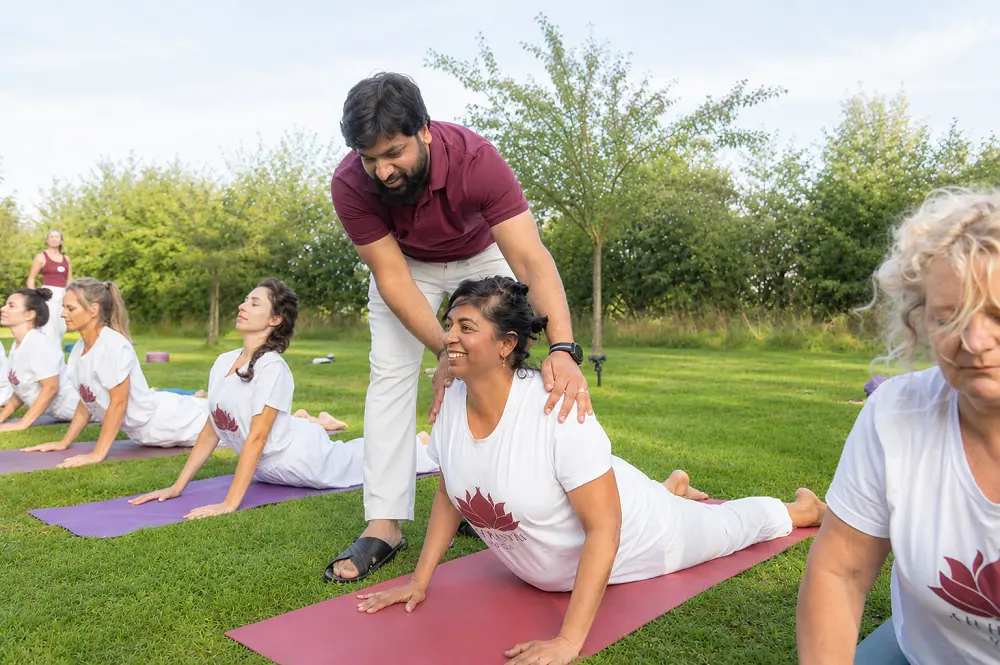
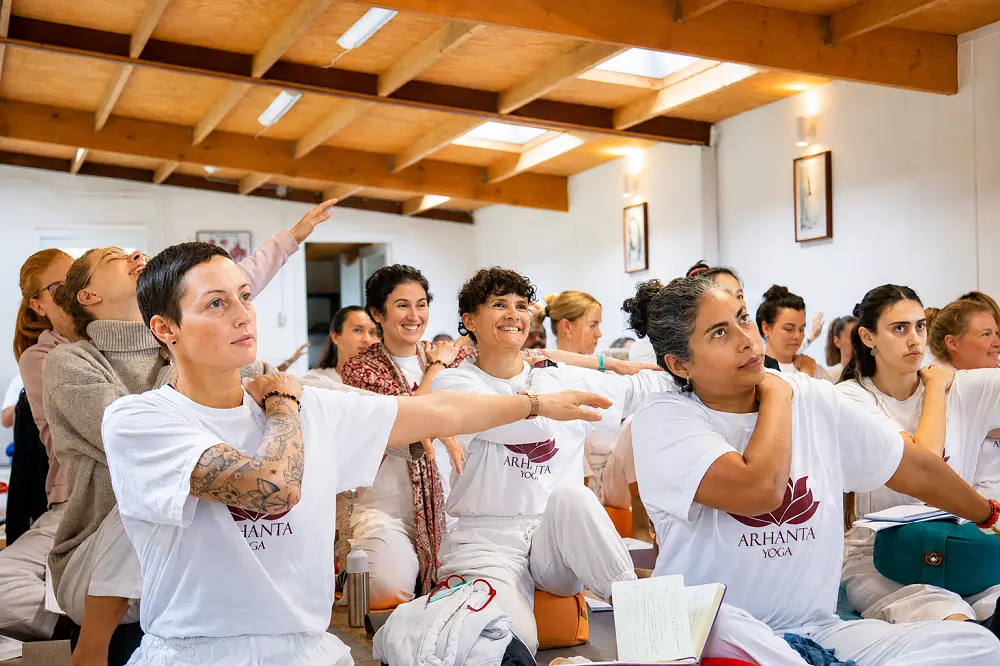
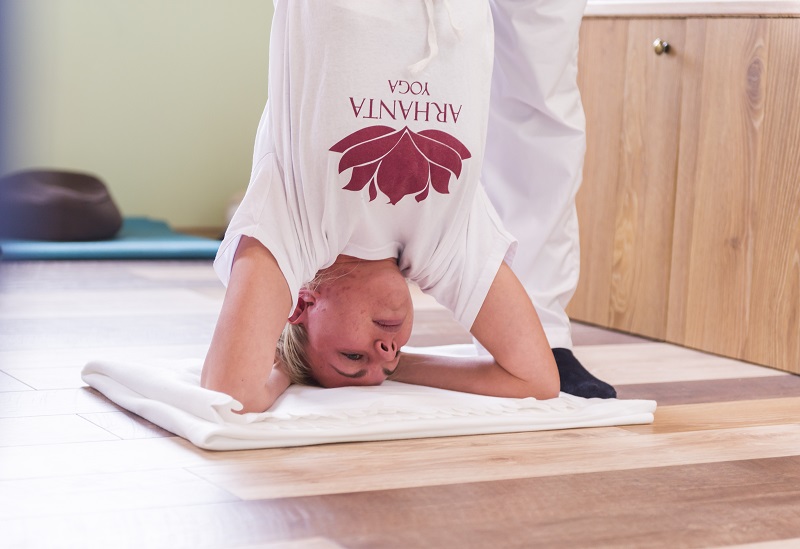
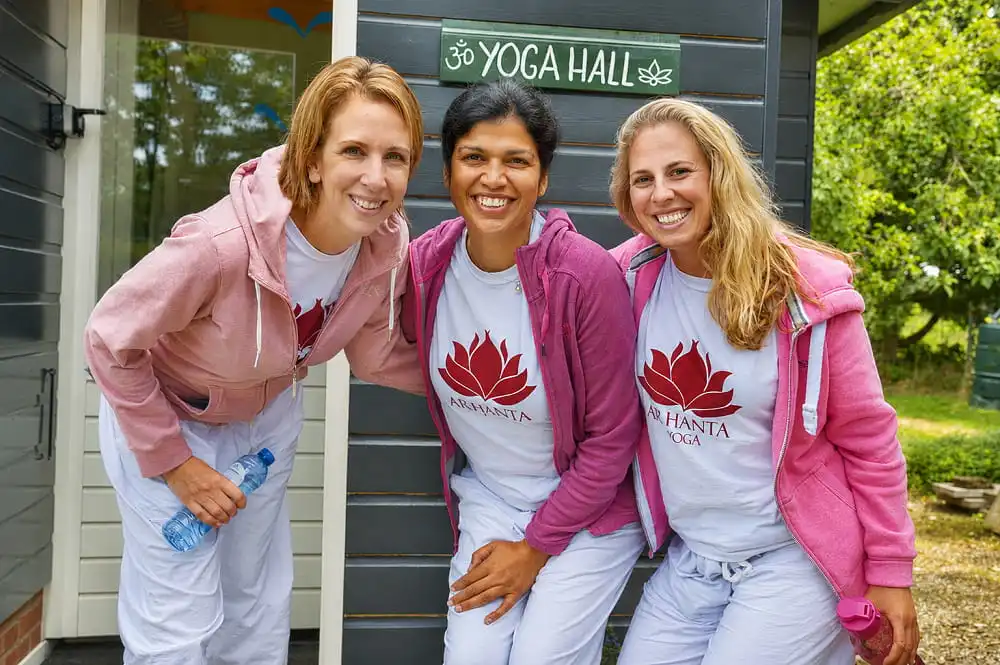
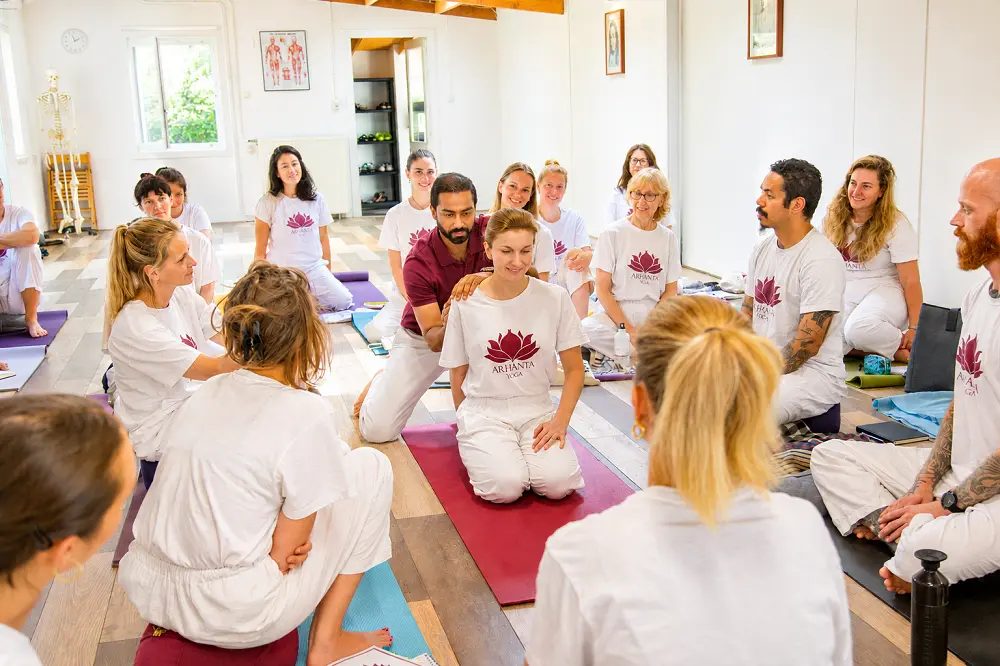
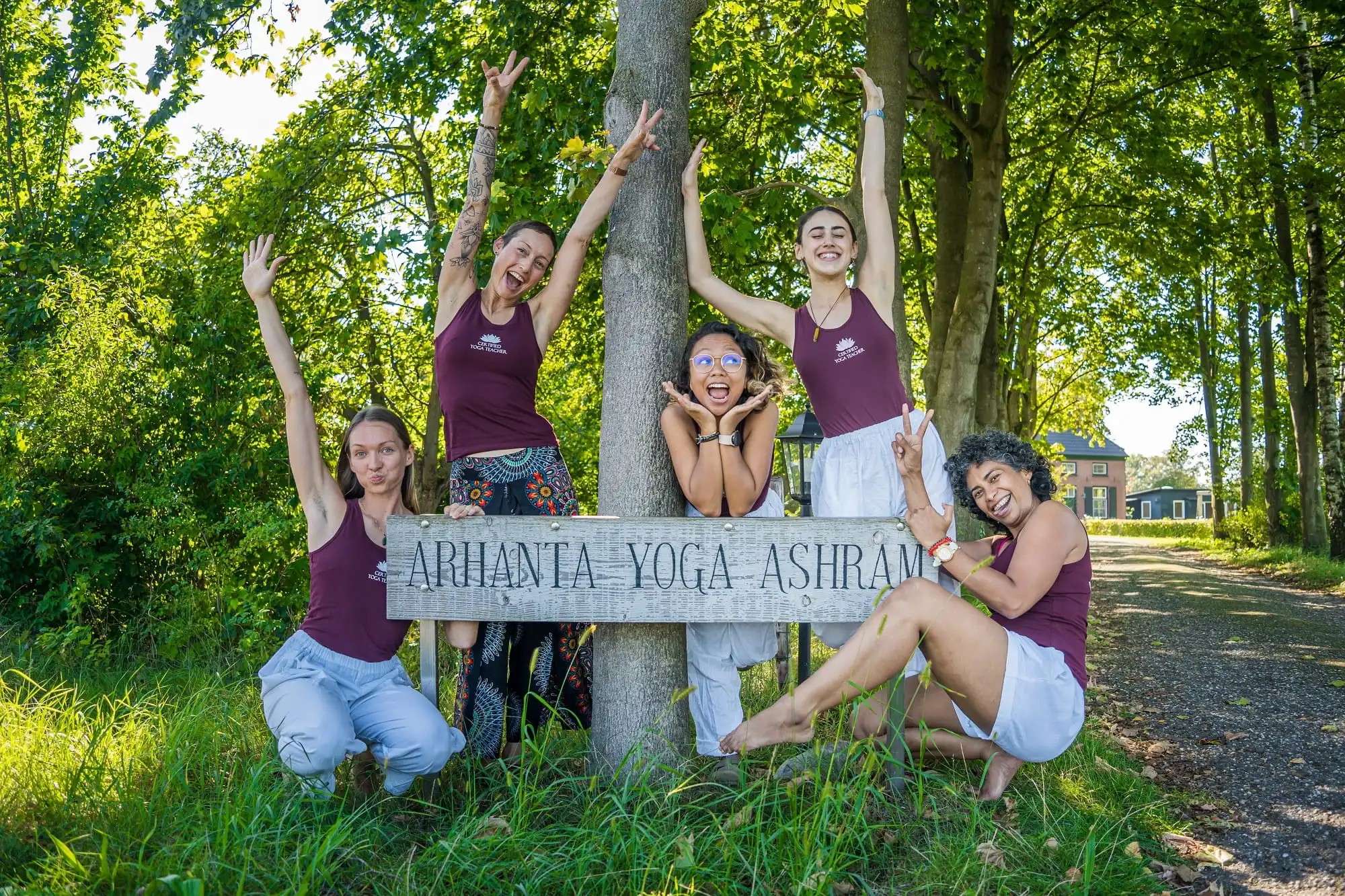
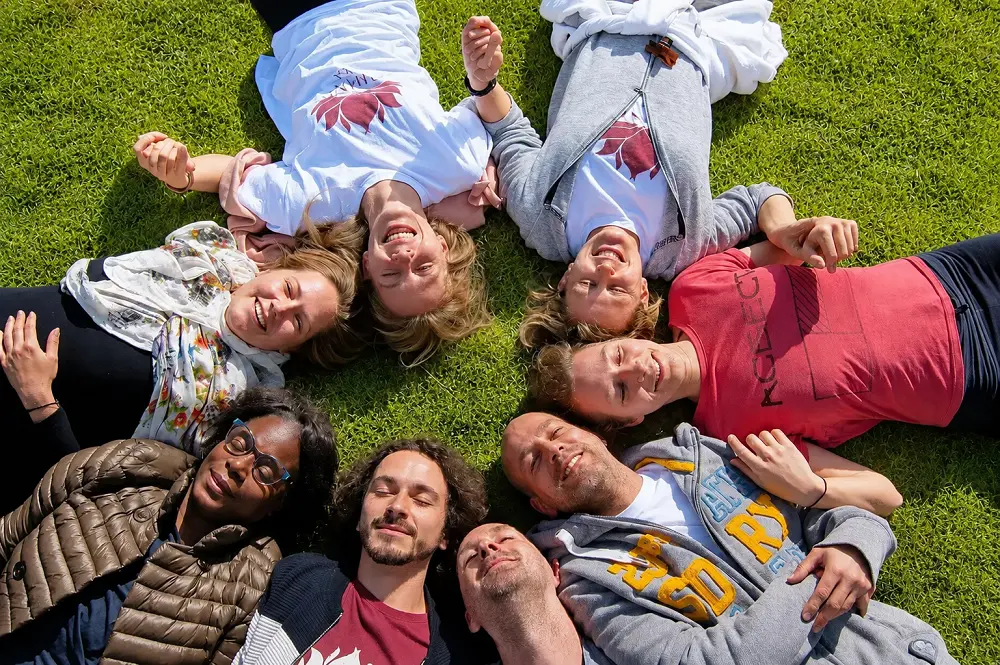
Life at Arhanta Yoga Netherlands
Discover what life is truly like during our 200-hour Yoga Teacher Training at our Yoga Ashram in the Netherlands.

- FAQ
Frequently Asked Questions
Still unsure? Message us on WhatsApp and we’ll guide you personally – honestly – to determine whether this training is the right fit for you.
Europe, location and travel
Why choose a yoga teacher training in Europe instead of India or Bali?
You earn the same internationally recognised 200-hour certification without long-haul flights, visa applications or jet lag. Total costs are often comparable once travel is added, and Arhanta teaches the same Indian curriculum in the Netherlands that it developed at its ashram in India.
Which European country is best for yoga teacher training?
It depends on what you want around the training. Spain, Greece and Portugal offer retreat settings by the sea. The Netherlands offers a residential ashram model, CRKBO educational registration and the continent’s easiest access through Schiphol Airport, which suits students who want focus over holiday.
Do I need a visa to attend a training in the Netherlands?
EU and EEA residents don’t need any visa. Most other nationalities can use the Schengen area’s short-stay rules, which comfortably cover a 21-day course. Check the current requirements for your nationality with the Dutch authorities before booking flights.
Is this training right for you?
Is this yoga teacher training suitable for beginners?
Yes: you need commitment and a sincere practice, not years of experience. The 21-day structure teaches everything from the foundation up. If you’re unsure whether you’re ready, this guide to 200-hour training for beginners covers exactly what preparation helps.
Do I need to be flexible to join?
No: flexibility is trained, not required. Teaching yoga depends on understanding technique, sequencing and safe instruction far more than on touching your toes. Here’s a detailed look at flexibility requirements for yoga teacher training if this worry is holding you back.
My English is basic. Can I follow the training?
Yes: the course is taught in clear, accessible English, and students from many countries complete it successfully every year. If you can follow this page comfortably, you can follow the training. Teachers explain concepts in plain language, and the daily repetition of terms makes the vocabulary familiar within the first week.
Is this course a retreat or a professional training?
A professional training. Days are structured from 6:00 am meditation to 9:30 pm lights out, with teaching practice, philosophy and anatomy classes six days a week. You’ll rest and recharge, but you’re here to become a teacher, not to holiday.
The course and the teaching
What style of yoga is taught in this course?
Classical hatha yoga. It’s the foundational style behind most modern forms, including vinyasa, ashtanga and yin, which makes it the strongest base for a new teacher. Master hatha and you can branch into any of those styles later from solid ground.
Who teaches the course?
Omkar Jain (E-RYT 500), with more than 15 years of experience, leads the training. Dr. Ram Jain (PhD), Arhanta’s founder with over 25 years of experience and author of Hatha Yoga for Teachers & Practitioners, guides the program.
Will I get enough teaching practice?
Yes. Teaching practice is a dedicated daily block in the schedule, separate from your own asana practice in the afternoon. You’ll plan, deliver and refine real classes under supervision throughout the course, instead of teaching once at the end, so confidence builds through repetition rather than theory.
Is 200 hours enough to start teaching yoga?
Yes. A 200-hour certificate from a recognised school is the global entry standard for teaching yoga, and it’s the qualification studios ask for. Daily supervised teaching practice during the course is what turns the certificate into real classroom confidence.
Cost, certification and support
How much does yoga teacher training in Europe cost?
Typical European 200-hour trainings run from roughly €1,500 to €4,000, and inclusions vary widely. Arhanta’s 21-day residential training costs €3250 to €4150 all-inclusive, covering tuition, accommodation and three daily meals, with a €300 early bird discount for the first 10 registrations.
Is the certification internationally recognised?
Yes. The training is recognised by Yoga Alliance, the International Yoga Association (IYA) and CRKBO, and Arhanta is a FIYM member. After graduating you can register with Yoga Alliance as an RYT 200 and teach internationally with a credential studios recognise.
Is there support after the course ends?
Yes. Arhanta provides post-course support to its graduates, so questions that come up in your first teaching months don’t go unanswered. With 24,000+ alumni trained since 2008, you also join an established international community of teachers rather than leaving with a certificate and silence.
- Start Your Journey
Start Your Yoga Teacher Training in Europe
The best yoga teacher training in Europe is the one that makes you a confident teacher, not just a certified one. This 21-day, 200-hour residential course at Arhanta Yoga Ashram in the Netherlands has done exactly that for graduates since 2008, with Yoga Alliance, IYA and CRKBO recognition behind the certificate.
You’ve now seen the full picture: what the course covers, who teaches it, what it costs and how it compares with every alternative on the continent. The remaining question isn’t really about the training. It’s whether you’re ready to stop practising other people’s classes and start teaching your own.
Questions before you commit? Call or WhatsApp + 31 618 504823, or email ttc@arhantayoga.org.
- Yoga Alliance, IYA, IYF and CRKBO accredited
- 24,000+ graduates · 5-generation yoga heritage
- All-inclusive: tuition, room and three meals daily


