Hatha yoga flow is a modern yoga style that combines the steady pace of traditional Hatha yoga with gentle, breath-led transitions between poses. It offers a balanced practice that builds strength, improves mobility, and develops mindfulness without the intensity of a fast-paced Vinyasa class. Whether you’re new to yoga or exploring different styles, this guide will help you understand Hatha Yoga Flow, its unique approach, and how to practice it with confidence.
What Is Hatha Yoga Flow?
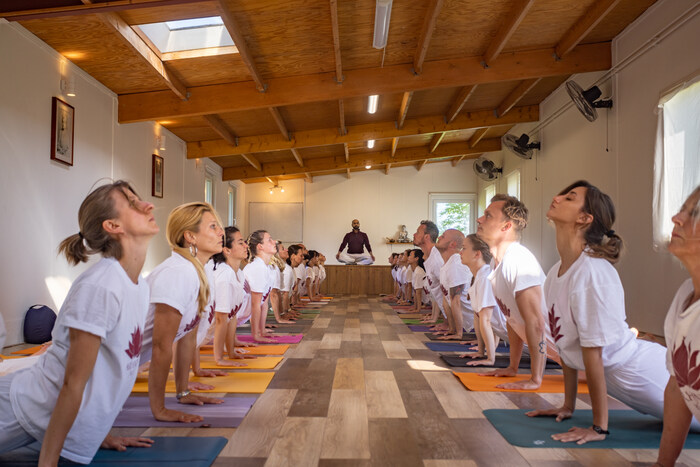
Hatha Yoga Flow is a contemporary style of yoga that combines the alignment-focused approach of traditional Hatha yoga with smooth, breath-synchronized transitions between postures. Rather than holding every pose for a long period, you move from one posture to the next in a calm, deliberate rhythm.
Unlike traditional Hatha classes, where you may stay in a pose for several breaths before resting, Hatha Yoga Flow encourages continuous movement without feeling rushed. The pace is moderate. You still have time to notice your alignment, refine your breathing, and become aware of how your body responds.
In my teaching experience, this is often where students begin to understand what “moving with the breath” really means. At first, many people try to keep up with the teacher. After a few classes, they stop chasing the next pose and begin following their own inhale and exhale instead. That’s when the practice starts to feel surprisingly different.
One of the biggest misconceptions is that Hatha Yoga Flow is simply a slower version of Vinyasa Yoga. But it isn’t. The intention is different.
Traditional Hatha Yoga places great emphasis on stability, posture, breath awareness, and mindful observation.
While Hatha Yoga Flow keeps these principles but introduces gentle sequencing so the body can transition naturally from one posture to another. The focus remains on quality of movement rather than quantity of poses.
Although the name sounds traditional, Hatha Yoga Flow is largely a modern evolution of yoga teaching. Classical texts such as the Hatha Yoga Pradipika describe Hatha Yoga as a practice centered on asana, pranayama, mudra, and meditation rather than flowing sequences. The flowing style developed much later as contemporary teachers explored ways to make yoga more accessible while preserving the emphasis on mindful movement.
Hatha Yoga Flow vs Traditional Hatha Yoga
Both styles share the same roots, but they create very different experiences on the mat. Understanding these differences can help you choose the practice that best supports your goals.
This doesn’t mean one style is “better.” It simply depends on what you need.
If you’re looking to improve your understanding of yoga postures, build a solid foundation, or enjoy a practice that feels calm without becoming static, Hatha Yoga Flow is often the better choice.
If you decide that Vinyasa Yoga is a better fit for your goals, our guide on how to sequence a Vinyasa Yoga class walks you through the essential steps for creating a safe, balanced, and effective practice.
If you enjoy continuous movement, faster transitions, and a more physically demanding practice, you may prefer Vinyasa Yoga.
Many experienced yogis practice both.
At our ashram, we often encourage students to first develop stability before increasing speed. When your alignment and breathing become second nature, flowing between postures feels natural rather than rushed. Ironically, slowing down first often leads to smoother movement later.
Why Practice Hatha Yoga Flow? Benefits for Body and Mind
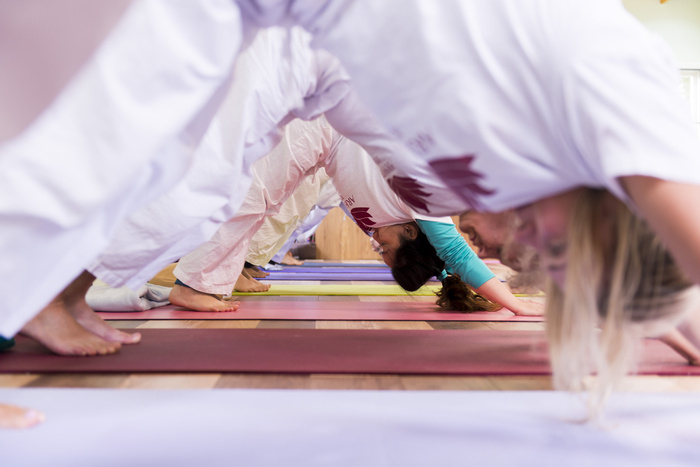
Hatha Yoga Flow offers more than physical exercise. It develops strength, mobility, balance, and breath awareness while encouraging a calm, focused state of mind. Because the pace is steady rather than hurried, many practitioners find it easier to stay present throughout the practice.
The benefits also tend to build gradually.
You may notice improved flexibility after a few weeks. Better posture becomes apparent a little later. Then one day you realize you’re breathing more calmly during a stressful meeting or standing with less tension in your shoulders.
1. Builds Functional Strength
Unlike workouts that isolate individual muscles, Hatha Yoga Flow develops strength through coordinated, whole-body movement.
- Engages multiple muscle groups at the same time instead of isolating one area.
- Standing postures, balances, and mindful transitions improve overall stability and control.
- Builds strength gradually through consistent, breath-led practice rather than force.
I’ve often seen students become stronger without even realizing it. A pose that once felt shaky suddenly feels steady a few weeks later because regular practice has gradually built the strength they needed.
2. Improves Mobility
Moving smoothly between postures helps your joints move through a healthy range of motion while gently stretching the surrounding muscles and connective tissues.
- Reduces stiffness and improves everyday movement.
- Supports flexibility without forcing deep stretches.
- Builds strength and mobility together for more balanced movement.
Over time, you may notice simple activities, like climbing stairs, sitting at a desk, or reaching overhead, start to feel easier.
3. Develops Breath Awareness
One of the defining features of Hatha Yoga Flow is the connection between breath and movement.
- Encourages every movement to follow a steady inhale or exhale.
- Helps regulate the nervous system through slow, conscious breathing.
- May improve heart rate variability and support stress regulation, according to research on yogic breathing.
And perhaps that’s one of the most valuable lessons yoga offers. When the breath becomes steady, the mind often follows.
4. Improves Balance and Coordination
Balance isn’t just about standing on one leg. It comes from strength, body awareness, coordination, and concentration working together.
- Strengthens the muscles that support stability.
- Improves coordination through mindful transitions between poses.
- Develops greater body awareness with regular practice.
Many students believe they simply have “poor balance.” In reality, balance is a skill that improves with consistent practice and a little patience.
5. Supports Stress Relief
A Hatha Yoga Flow practice creates space to step away from constant notifications, deadlines, and mental clutter.
- Combines movement with slow, conscious breathing to encourage relaxation.
- Helps calm the mind while releasing physical tension.
- Regular yoga practice has been shown to reduce perceived stress and support overall psychological well-being.
You simply give your mind something quieter to focus on.
6. Encourages Mind-Body Awareness
This benefit is difficult to measure, yet it’s often the one students remember long after class.
- Helps you notice unnecessary tension in the body.
- Increases awareness of your breathing and movement patterns.
- Encourages you to recognize when it’s time to slow down or modify your practice.
That’s one of the reasons this practice continues to resonate with so many people.
It isn’t only about moving better. It’s about paying attention better.
60-Minute Hatha Yoga Flow Class
A typical Hatha Yoga Flow class moves at a steady, unhurried pace. You’ll flow from one posture to the next, but there is always enough time to refine your alignment, reconnect with your breath, and notice how your body feels.
Rather than rushing through as many poses as possible, the sequence is designed to create balance, building strength, improving mobility, and leaving you feeling grounded by the end of the practice.
Every teacher sequences classes differently but after teaching for many years, I’ve found that the most effective classes have a clear rhythm. They gradually prepare the body, build towards a peak, and then gently guide students back to stillness.
Here’s what a balanced 60-minute Hatha Yoga Flow class might look like.
Sample Hatha Yoga Flow Sequence
A beginner-friendly sequence might include the following postures:
- Easy Pose with mindful breathing
- Cat-Cow Pose
- Downward-Facing Dog
- Low Lunge
- Warrior I
- Warrior II
- Extended Side Angle
- Triangle Pose
- Tree Pose
- Standing Forward Fold
- Bridge Pose
- Supine Twist
- Happy Baby Pose
- Savasana
Each posture should naturally prepare you for the next while allowing your breathing to remain smooth and relaxed. If your breath becomes rushed, it’s usually a sign that the pace is too fast or the sequence is asking more than your body is ready to give that day.
Common Mistakes in Hatha Yoga Flow
Because Hatha Yoga Flow feels gentle and accessible, it’s easy to assume there’s little that can go wrong. But I’ve noticed that beginners and sometimes experienced practitioners too, often repeat the same habits without realizing it.
The good part is that they’re all easy to correct once you become aware of them.
1. Moving Faster Than Your Breath
Your breath should set the pace of your movement, not the other way around.
Many students become so focused on following the teacher that they begin rushing from one posture to the next. Before long, their breathing becomes shallow and the practice starts to feel hurried.
If you ever have to catch your breath during class, simply slow down. It’s perfectly fine to move one breath behind everyone else if that allows you to stay present.
2. Treating It Like a Cardio Workout
Hatha Yoga Flow certainly raises your heart rate, but that isn’t its primary purpose.
The goal isn’t to burn through as many calories as possible or move as quickly as you can. It’s to create steady, mindful movement supported by conscious breathing.
Ironically, students often experience a deeper physical challenge when they slow down and move with greater control.
3. Rushing Through Transitions
The transition between two postures is part of the practice, not just something to get through.
Notice how you step forward and shift your weight. Notice what your hands, feet, and breath are doing in those small in-between moments.
Some of the most valuable learning happens there.
4. Skipping Savasana
It’s tempting to roll up your mat as soon as the “hard part” is over.
But Savasana is where your body begins integrating everything you’ve practiced. Your heart rate settles, your breathing slows naturally, and your nervous system has an opportunity to rest.
Even five quiet minutes can change how you leave the room.
In many ways, Savasana isn’t the end of the class. It’s the part that allows the rest of the practice to truly sink in.
Tips for a Safe and Enjoyable Hatha Yoga Flow Practice
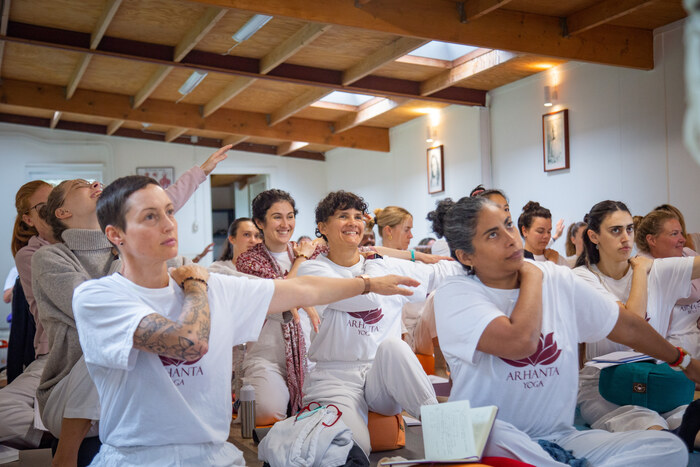
A good Hatha Yoga Flow practice shouldn’t leave you feeling exhausted or discouraged. It should leave you feeling more connected to your breath, body, and mind.
That doesn’t happen by pushing harder. It happens by practicing a little more intelligently.
Whether you’re stepping onto the mat for the first time or returning after a break, these simple habits can make your practice safer, more enjoyable, and far more sustainable.
1. Move With Your Breath, Not the Teacher
Every class has its own rhythm, but your breathing should always come first.
- Let your breath set the pace of your movement.
- Don’t rush to keep up with the instructor if you’re not ready.
- Finish your inhale or exhale before transitioning into the next pose.
One thing I often tell beginners is this: no one remembers who moved first or last in class. But your body will remember if you ignored what it was trying to tell you.
2. Build a Strong Foundation Before Going Deeper
It’s natural to want to achieve the fullest expression of a pose. But depth isn’t the goal, stability is.
- Prioritize proper alignment over how deep you can go.
- Build a steady foundation before increasing the intensity of a posture.
- Let flexibility develop naturally through consistent practice.
A shorter stance in Warrior II with steady alignment is far more beneficial than a wider stance that leaves you wobbling. The same applies to forward folds, twists, and balancing postures.
3. Use Props Without Hesitation
Blocks, straps, blankets, and bolsters aren’t signs that you’re “less advanced.” They’re teaching tools.
- Improve alignment and posture safely.
- Reduce unnecessary strain on joints and muscles.
- Help you experience the intended benefits of each pose.
At our ashram, props are never viewed as shortcuts. They’re simply another way of helping the body learn.
4. Listen to Your Body Every Day
Your body isn’t the same every morning, and that’s completely normal.
- Adjust your practice based on how you feel that day.
- Modify postures when your body feels tight or fatigued.
- Focus on awareness instead of comparing one practice with another.
Yoga isn’t about repeating the exact same performance every time you step onto the mat. It’s about responding to what’s in front of you with awareness.
5. Finish With Rest
It can be tempting to skip Savasana when you’re short on time.
- Allow your breathing to settle naturally.
- Give your muscles and nervous system time to recover.
- Let your body fully absorb the benefits of the practice.
Sometimes the stillest part of the class is also the most transformative.
Conclusion: The Beauty of Moving Mindfully
Hatha Yoga Flow offers the best of both worlds, the stability of traditional Hatha Yoga and the gentle rhythm of breath-led movement. Whether you’re looking to build strength, improve mobility, or simply develop a more mindful practice, it provides a balanced approach that’s accessible to almost everyone.
If you’re inspired to take your practice further and learn how to teach with confidence, Arhanta Yoga’s 200-Hour Hatha Yoga Teacher Training offers in-depth structured training in traditional Hatha Yoga, alignment, anatomy, sequencing, philosophy, and teaching methodology. You’ll gain the knowledge and practical skills to guide safe, meaningful classes while staying true to the authentic principles of yoga.
Frequently Asked Questions
Is Hatha Yoga Flow good for beginners?
Yes. Hatha Yoga Flow is one of the most beginner-friendly yoga styles because it combines mindful movement with a manageable pace. Most classes offer enough time to understand each posture while gradually introducing smooth transitions between poses. If you’re completely new to yoga, don’t hesitate to use props or modify postures when needed.
Is Hatha Yoga Flow difficult?
Generally, Hatha Yoga Flow is considered easier than a typical Vinyasa class but more dynamic than traditional Hatha Yoga. The difficulty depends largely on the sequence and your experience level. Many classes provide modifications, making the practice suitable for a wide range of abilities.
Is Hatha Yoga Flow good for weight loss?
Hatha Yoga Flow can support weight loss as part of a healthy lifestyle. The continuous movement increases energy expenditure while helping build strength and improve mobility. Combined with balanced nutrition and regular practice, it can contribute to long-term fitness and overall well-being.
How many times a week should you practice Hatha Yoga Flow?
For most people, practicing two to four times a week provides a good balance between consistency and recovery. If you’re new to yoga, even one or two classes each week can make a noticeable difference in strength, flexibility, and body awareness.
What should you wear to a Hatha Yoga Flow class?
Choose comfortable clothing that allows you to move freely without restricting your breathing. Fitted but flexible clothing often works best because it stays in place during forward folds and inversions. Yoga is typically practiced barefoot to improve stability and connection with the mat.
Can you teach Hatha Yoga Flow after completing a 200-hour YTT?
Yes. Provided your training includes strong foundations in alignment, sequencing, anatomy, and teaching methodology. A quality 200-hour Yoga Teacher Training equips you with the skills to adapt sequences, offer modifications, and guide students safely through breath-led movement. Just as importantly, it teaches you why a sequence works, not simply what comes next. That understanding is what allows you to teach with confidence rather than relying on memorized routines.