Are you wondering whether Breathwork for Stress really works? Yes, it can. Intentional breathing may calm yout nervous system, ease anxiety, and support a healthier stress response. Discover what science says and which pranayama techniques may help you feel calmer.
Breathwork for Stress: Understanding Pranayama in Yoga
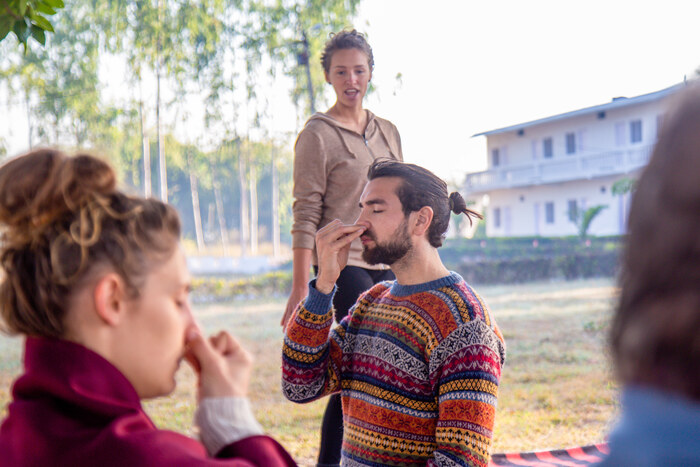
In yoga, breathwork is popularly known as pranayama. This term combines two Sanskrit words: prana (life force or vital energy) and ayama (to expand or regulate).
Pranayama is the conscious regulation of breath. It is not about breathing more, but about breathing with awareness. It changes how you inhale, exhale, and pause. Each of these phases shapes your nervous system’s response.
In yogic understanding, breath is linked to our energy. When the breath is shallow, your mind becomes unsettled. When the breath is steady, your mind feels calm and focused.
From a physiological perspective, breath is one of the few functions you can control directly through certain breathwork techniques.
This is why Pranayama is often described as a bridge between your body and mind, closely connected to what is mindfulness in yoga. Because through breath, you can calm down both your body and mind, making breathwork for stress significantly useful.
You do not need complex techniques for Pranayama. Simple changes in breath can noticeably shift how you feel.
How Stress Affects the Body (Scientific Overview)
Stress is not just something you feel mentally. It is a measurable physiological process that affects multiple systems in your body.
When you experience stress, the body activates the sympathetic nervous system. This is primarily known as “fight or flight” response. This is a built-in survival mechanism. In during fight or flight stage, your heart rate might increase, you breathe becomes quicker, your muscles silently experience tension and prepare for action. At the same time, your body starts to releases hormones like cortisol (Stress Hormone) which helps mobilize energy and maintain alertness.
In short-term situations, this response is useful. It allows you to react quickly and handle immediate challenges. However, the body is designed to return to balance through the parasympathetic nervous system, the “rest and restore” state. This is when the heart rate slows, breathing becomes normal again, and the body begins repair and recovery.
The issue arises when this recovery phase is delayed or disrupted.
In modern lifestyles, stress is often persistent rather than occasional. Work pressure, tight deadlines, constant digital stimulation, and ongoing mental engagement can keep the sympathetic system active for longer than it should be. As a result, cortisol levels remain higher instead of returning to normal.
Over time, this ongoing activation begins to affect your overall health. Your sleep pattern may become disturbed or less restorative. Mood regulation can weaken, leading to increased irritability, anxiety, or fatigue. The body may also remain in a low-level inflammatory state, which is now widely associated with various chronic health concerns.
From a physiological perspective, chronic stress is less about you being tensed about a situation and more about the lack of recovery between stress responses. Understanding this imbalance is important. It explains why simply “relaxing” is often not enough and why people sometimes turn to deeper healing approaches, like a digital detox in India, to reset their system more effectively.
How Breathwork Influences the Nervous System
Breathwork is calming not just because it “feels good,” but because it works through physiological pathways that influence your nervous system.
Activating the Vagus Nerve Through Breath
Many might be unaware that The Vagus nerve plays a significant role in shifting the body into a relaxed state. It connects the brain to major organs, such as the heart, lungs, and digestive system. When you slow down your breathing, especially the exhale, you stimulate this nerve. This signals the brain that your body is safe.
As a result, the parasympathetic nervous system becomes more active. Heart rate begins to slow again. Muscle tension starts to reduce. And finally, your body shifts from “alert mode” to “recovery mode.” This is one of the primary reasons breathwork is effective for stress regulation.
Regulates Heart Rate with Slow Breathing
Your breath and heart rate are closely linked. When breathing is rapid and shallow, the heart rate tends to stay fast. When breathing becomes slow and steady, the heart rate gradually becomes normal. This process is part of the relaxation response.
With consistent slow breathing:
- The heart’s rhythm becomes more stable.
- Blood pressure may start to return to normal over time
- The overall stress load on the body gradually reduces.
Even a few minutes of controlled breathing can begin to create this shift.
Helps Maintain Oxygen–Carbon Dioxide Balance
Breathing is not only about inhaling Oxygen. It also requires you to maintain a stable balance between inhaling Oxygen (O₂) and exhaling Carbon dioxide (CO₂). Fast, shallow breathing can disrupt this balance. It may lower CO₂ levels too quickly, which can make you feel restless or lightheaded.
Slow, controlled breathing helps maintain this balance and allows the body to use oxygen more efficiently.
This supports:
- Better cellular function
- More stable energy levels
- A calmer, more regulated internal state
What Research Says About Breathwork & Stress
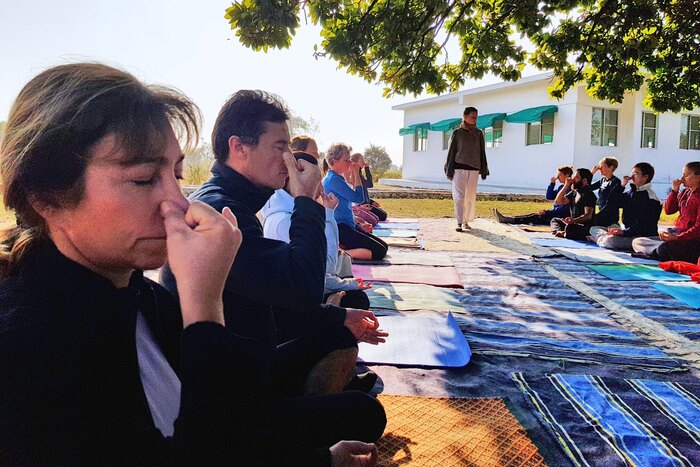
Over the past few years, scientific research on breathwork has grown significantly. What was once explained through experience is now being examined through measurable physiological and neurological changes, such as:
Breathwork and Cortisol Reduction
Cortisol hormone (Stress hormone) is one of the main reasons why we feel restless, vulnerable, and mentally agitated sometimes. When Cortisol levels remain high for a long time, they can significantly impact your sleep, mood, and overall health.
Research suggests that regular breathwork practices, even for 10 minutes, can help reduce cortisol levels. Studies on slow breathing and pranayama-based interventions have shown that consistent pranayama practice can lead to a measurable decrease in cortisol levels.
This effect is likely linked to reduced sympathetic activation and increased parasympathetic activity. In simple terms, as the body shifts out of “stress mode,” cortisol production begins to decrease again, putting us in a relaxed state.
Impact on Heart Rate Variability (HRV)
Heart Rate Variability (HRV) refers to constant fluctuations in time between heartbeats. It is considered a key marker of how well your body can adapt to stress. Higher HRV is associated with better resilience and recovery. Lower HRV is often linked to chronic stress and fatigue.
Recent Studies indicate that slow, controlled breathing can improve HRV. This happens because breathwork enhances vagal function, the activity of the vagus nerve. As HRV improves, the body becomes more stable in responding to stress rather than staying stuck in an overly restless state.
Effects on Anxiety and Mood
Many research journals have already revealed the effects of breathwork in reducing anxiety. Clinical trials, including several randomized controlled studies, have shown that structured breathing practices can reduce symptoms of anxiety and perceived stress.
After consistent breathwork practice, participants often report improved calmness, better emotional control, and reduced mental agitation. While breathwork is not a replacement for clinical treatment when needed, research suggests it can be a valuable complementary practice.
Brain and Emotional Regulation
Breathwork also influences how the brain responds to stress and emotional events. Numerous studies using brain imaging have shown that controlled breathing can significantly affect brain regions such as the prefrontal cortex and the amygdala.
The prefrontal cortex plays a significant role in decision-making and emotional regulation.
The amygdala is associated with fear and threat detection. Research suggests that slow, steady breathing may reduce amygdala overactivity while supporting more balanced prefrontal cortex activity. This shows that a person practicing Pranayama may be able to respond to a stressful situation more calmly and logically.
Simple Breathwork Practices for Stress Relief
You don’t need long or intense sessions to begin breathwork practice. Even a few minutes of structured breathing, when practiced with awareness and clarity, can gradually shift the body out of stress and into balance.
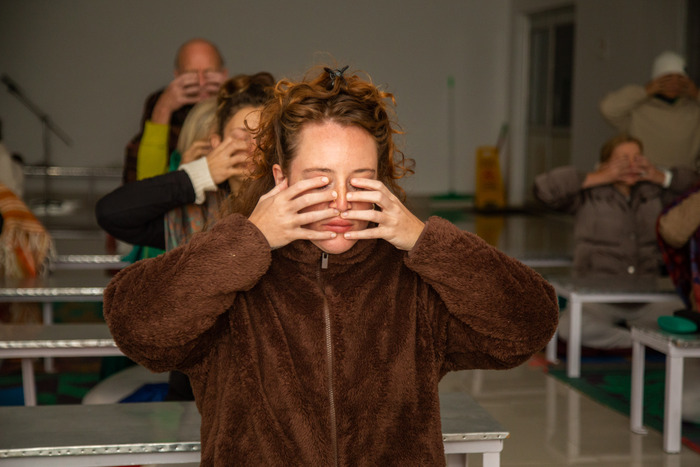
Bhramari (Humming Breath)
What it does?
Bhramari can calm your mind and reduce mental restlessness. The extended exhalation you perform in this breathwork reduces sympathetic activity and supports parasympathetic activation.
How to practice:
- Sit in a comfortable, upright position.
- Close your eyes and relax your facial muscles.
- Inhale slowly through the nose.
- As you exhale, produce a soft, steady humming sound.
- Let the exhalation be longer than the inhalation.
When to practice:
The best time to practice Bhramari Breathwork is in the evening, or when you look for a wind-down session after a busy, hectic day. This breathwork is also useful before meditation or sleep, as it calms the mind and may help you fall asleep faster.
Duration:
5–10 rounds are a good start for a beginner. Gradually, you can extend up to 5 minutes.
To learn Bhramari Pranayama step-by-step, watch our video