With so many Hatha yoga books out there, picking the right one can be overwhelming. However, that one right book can literally change how you see your practice and help you go deeper than just learning poses. If you’re a student, a good hatha yoga book can help you build your practice and learn more about yoga philosophy. For teachers, a good book is a great way to explore alignment, anatomy, and teaching techniques.
Best Hatha Yoga Books for Serious Practice and Teaching
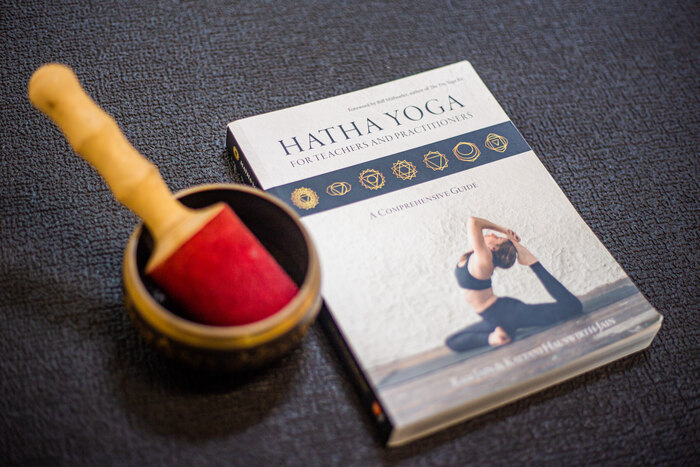
Hatha Yoga for Teachers and Practitioners: A Comprehensive Guide by Dr. Ram Jain & Kalyani Hauswirth-Jain
If you want one Hatha yoga book that helps you understand how each yoga pose affects your inner body, Hatha Yoga for Teachers and Practitioners: A Comprehensive Guide is a strong choice. Written by Dr. Ram Jain and Kalyani Hauswirth-Jain, this book covers more than 200 asanas. It explains how to build a safe, effective yoga practice that goes beyond simply describing poses.
The book combines asana alignment, teaching methods, and basic yoga philosophy. It helps readers learn how to do each posture and how to teach it clearly to others.
Its explanations help readers understand the purpose behind different asanas rather than simply memorizing their names and instructions. This makes it a useful reference when planning yoga sequences, refining personal practice, or preparing to guide students through a class.
Another valuable aspect is its focus on teaching. Readers can develop a better understanding of how to communicate posture instructions, recognise common alignment mistakes, and make yoga practices more accessible to people with different levels of experience.
Best for: TTC students, yoga teachers, and dedicated practitioners who want to develop a clear and structured understanding of Hatha Yoga.
Light on Yoga by B.K.S. Iyengar
Light on Yoga by B.K.S. Iyengar is a well-known book, ideal for practitioners who want to study asanas with greater precision. First published in 1966, the book combines detailed instructions with photographs and systematic descriptions of a wide range of postures.
The most notable aspect of the book is its focus on alignment, technique, and discipline; for each posture Iyengar gives particular points to note, which makes the book helpful for seeing how minor adjustments in positioning can have an effect on the practice.
Best for: Practitioners developing discipline and students or teachers who want to study asana alignment in greater detail.
Hatha Yoga Pradipika, Translated by Swami Muktibodhananda
The Hatha Yoga Pradipika is a classical Hatha Yoga book traditionally attributed to Svatmarama. Later, Swami Muktibodhananda translated it and made it accessible to readers. Swami Muktibodhananda’s translation and commentary explain its valuable lessons on asanas, pranayama, mudras, bandhas, nadis, and kundalini, giving readers a deeper look at Hatha Yoga beyond physical postures.
Best for: Those interested in yoga philosophy and advanced practitioners.
The Heart of Yoga by T.K.V. Desikachar
The Heart of Yoga perceives yoga as a practice that should respond to the individual rather than follow a fixed formula that applies for everyone. In this book, T.K.V. Desikachar explains how breath, movement, meditation, and yoga philosophy can work together, while also drawing on teachings from his father, T. Krishnamacharya.
The book is particularly useful for understanding how to adapt yoga practices to a person’s specific needs, abilities, and circumstances. It also includes discussions of the Yoga Sutras of Patanjali, making it valuable for both personal study and teaching.
Best for: Thoughtful practitioners and teachers who want to learn how to adapt yoga to different students.
Yoga Anatomy by Leslie Kaminoff and Amy Matthews
Yoga Anatomy explains what happens inside the body when you practice yoga. Through this book, Leslie Kaminoff and Amy Matthews explain breathing mechanics, the musculoskeletal system, and how different body structures respond to yoga postures, supported by detailed anatomical illustrations.
For anyone looking for a good Hatha yoga book to improve teaching skills, this is particularly useful because it connects anatomical concepts with practical yoga instruction. This book can also help teachers understand why a posture feels different from one student to another.
Best for: Yoga teachers and practitioners who want to better understand anatomy and teach with more confidence and safety.
The Key Muscles of Yoga by Ray Long
The Key Muscles of Yoga by Ray Long uses detailed 3D anatomical illustrations to show how our muscles work during different yoga poses. Rather than simply naming muscles, the book helps readers see which muscles contract, stretch, or stabilize the body in each posture. For a Hatha yoga book collection, it is particularly useful when you want to understand the physical mechanics behind asanas.
Best for: Visual learners, yoga teachers, and anyone who wants to improve their alignment and learn how muscles work during yoga.
Asana Pranayama Mudra Bandha by Swami Satyananda Saraswati
Asana Pranayama Mudra Bandha is a comprehensive practical manual from the Bihar School of Yoga tradition. Originally collected from teachings given during teacher-training and sannyasa courses, the book covers asanas, pranayama, mudras, bandhas, and shatkarmas, with instructions that help you progress from introductory to more advanced practices.
With clear explanations, helpful illustrations, and practical tips, this book is a great reference for both yoga students and teachers. It’s especially useful if you want a Hatha yoga book that covers more than just physical poses and explores the wider tradition.
Best for: Dedicated students, yoga teachers, and anyone interested in traditional Hatha Yoga.
The Yoga Sutras of Patanjali Translated by Swami Satchidananda
Swami Satchidananda’s translation of The Yoga Sutras of Patanjali guides readers through Patanjali’s teachings with the original Sanskrit, English translation, and commentary. The book is divided into four main parts: Samadhi Pada, Sadhana Pada, Vibhuti Pada, and Kaivalya Pada, which cover meditation, practice, discipline, and liberation.
Instead of only focusing on asana instruction, this book explores the mind, meditation, the eight limbs of yoga, obstacles to practice, concentration, and spiritual development. Satchidananda’s commentary also connects the sutras with practical situations, making the text easier to relate to your everyday practice.
Best for: Yoga students, teachers, and practitioners who want to understand the philosophical foundation behind their physical practice.
Also See: Best Yoga Books: A Guide for Every Stage of Your Journey
How to Choose the Right Hatha Yoga Book
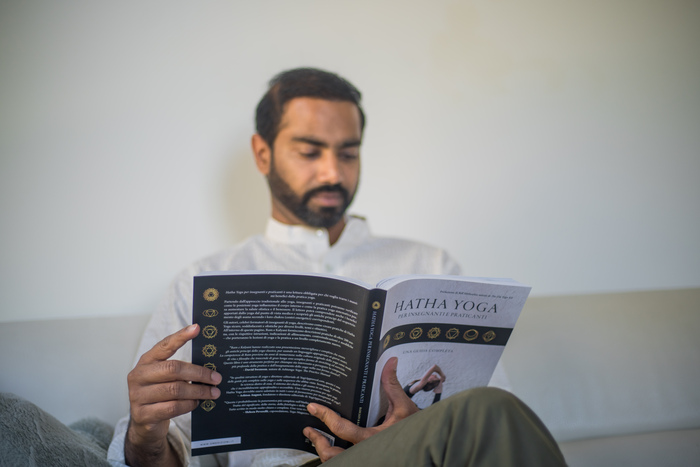
Every year, beginners often ask me, “Which Hatha yoga book should I start with?” I always tell my students to pick a book that fits their experience and learning goals. If you are just starting, look for clear instructions on basic poses. If you are a teacher, you might want a book that covers anatomy, alignment, or philosophy in more depth.
Choose According to Your Level
If you are new to Hatha Yoga, start with a book that explains postures clearly and does not overwhelm you with advanced practices or complex philosophical concepts. Once you understand the basics, you can move towards classical texts and more detailed study.
If you are a TTC student or a teacher, look for books that help you study alignment, teaching methods, anatomy, and the reasons behind each practice. At this stage, a book that makes you think and deepens your understanding is more helpful than another basic guide.
Choose According to What You Want to Learn
Your purpose should also determine your choice:
- For beginners, TTC students, and teachers: Start with Hatha Yoga for Teachers and Practitioners: A Comprehensive Guide by Dr. Ram Jain & Kalyani Hauswirth-Jain. It gives you proper knowledge of asana alignment, teaching methodology, and foundational yoga principles in one structured resource.
- For asana practice and alignment: Choose a detailed posture reference such as Light on Yoga.
- For anatomy: The Yoga Anatomy book we have listed above can help you understand how the body responds during different postures.
- For traditional Hatha Yoga: Hatha Yoga Pradipika explores practices such as asana, pranayama, mudra, and bandha in detail.
- For yoga philosophy: The Yoga Sutras of Patanjali offer a deeper study of the philosophical and mental dimensions of yoga.
- For teaching: Choose a Hatha yoga book that combines practical instruction with alignment, methodology, and foundational principles.
So, you see, the best choice is therefore not necessarily the most comprehensive book. Choose the book that answers the questions you are currently asking in your practice.
To go deeper into this, read: Hatha Yoga Pradipika Explained: Guide to the Ancient Text That Shaped Modern Yoga
How to Study from a Hatha Yoga Book
Reading a Hatha Yoga book is undoubtedly useful, but the real learning happens when you connect what you read with your own practice. Treat a Hatha yoga book as a study resource, not something you read once and put back on the shelf.
Practice Alongside Your Reading
When a book explains an asana, don’t stop at understanding the instructions. If it is appropriate for your level, practice the posture and notice your alignment, breathing, balance, and areas of tension. This helps you understand details that can be difficult to understand from text alone.
Revisit Important Chapters
You will understand a hatha yoga book differently as your practice develops. Try to return to chapters on alignment, anatomy, pranayama, or philosophy after gaining more experience. A point or concept that seemed abstract during your first reading may become much clearer after you revisit those chapters.
Apply What You Learn
Don’t collect information without using it. If you learn about proper alignment, apply it in your next practice session. If you study teaching methodology, try explaining a posture in your own words. If you read about yoga philosophy, consider how the principle affects your approach to practice.
Related: How Often Should You Practice Yoga? A Complete Guide for All Levels & Lifestyles
Frequently Asked Questions
1. Which Hatha yoga book is best for beginners?
Hatha Yoga for Teachers and Practitioners: A Comprehensive Guide by Dr. Ram Jain and Kalyani Hauswirth-Jain is a useful starting point for beginners because it combines asana practice, alignment, teaching methodology, and foundational yoga knowledge in one structured resource.
2. Which Hatha yoga book is best for yoga teachers?
For teachers, Hatha Yoga for Teachers and Practitioners: A Comprehensive Guide is a strong choice for revisiting alignment, teaching methodology, and fundamental principles. Yoga Anatomy is another useful reference for understanding the body during practice.
3. What should I look for in a Hatha yoga book?
Look for a book that matches your experience and purpose. Beginners may need clear asana guidance, while teachers may benefit more from books covering alignment, anatomy, teaching methodology, or traditional yoga philosophy.
4. Is Hatha Yoga Pradipika suitable for beginners?
Beginners can read it, but its traditional teachings and discussion of practices such as pranayama, mudra, and bandha may be easier to understand after gaining some practical experience. It works particularly well as a deeper study text.
5. Which Hatha yoga book is best for learning anatomy?
Yoga Anatomy by Leslie Kaminoff and Amy Matthews is a useful choice for studying how breathing and the musculoskeletal system relate to yoga practice. The Key Muscles of Yoga by Ray Long is another option, particularly for readers who prefer detailed anatomical illustrations.
6. Can reading a Hatha yoga book replace learning from a teacher?
No. Books can explain concepts and provide valuable references, but they cannot observe your alignment, correct your technique, or adapt instruction to your body in real time. Practical guidance remains important, particularly for beginners.
7. How should I study a Hatha yoga book effectively?
Read a section, apply what it teaches in your practice when appropriate, and return to important chapters later. Taking notes and comparing what you read with your experience can turn passive reading into useful study.
Final Thoughts
One good Hatha yoga book can stay with you for years, giving you something new to study as your practice develops. However, books can teach you principles, techniques, anatomy, and philosophy, but they cannot replace the experience of practicing under an experienced teacher. Seeing a posture, feeling a correction, and learning how to adapt it to different bodies adds a level of understanding that reading alone cannot provide.
If you want to learn traditional Hatha Yoga in a structured environment with guidance from experienced teachers, explore our 200-Hour Hatha Yoga Teacher Training to take your practice and teaching knowledge further.




