Jalandhara Bandha, traditionally known as the throat lock, is one of Hatha Yoga’s primary bandhas. It is mainly used during specific pranayama and breath-retention practices to regulate the breath and support internal control, rather than functioning as a simple physical movement of the neck.
What Is Jalandhara Bandha and What Is It For?
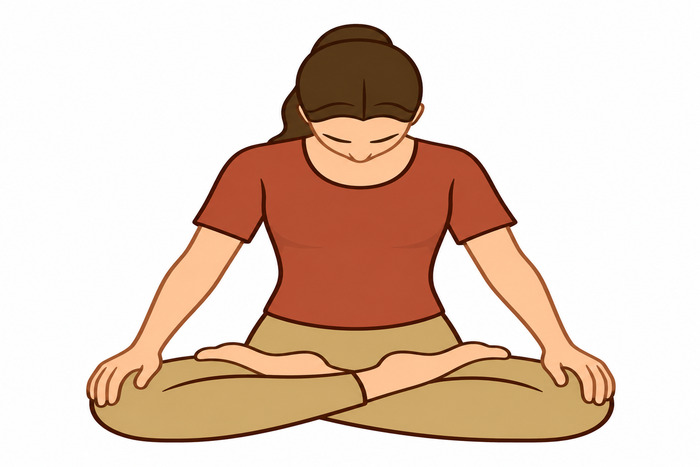
Jalandhara Bandha is a classic Hatha Yoga technique where you position your head, neck, and chin in a certain way to create an internal lock. The word bandha means “lock” or “binding,” and it refers to ways of containing and guiding prana during yoga.
Jalandhara Bandha is commonly called the throat lock because its action involves the throat and neck region. It is one of the three major Hatha Yoga bandhas, together with Mula Bandha (root lock) and Uddiyana Bandha (abdominal lock).
Traditionally, people use Jalandhara Bandha during certain breathing and breath-holding practices. The goal is not just to stretch or press the neck, but to help with steady breathing and the flow of prana.
The practice is sometimes described as Jalandhar Bandh or Jalandhar Bandha in English-language yoga texts. These refer to the same traditional practice, although Jalandhara Bandha is the preferred Sanskrit form.
The Classical Source and Purpose
Jalandhara Bandha has its roots in traditional Hatha Yoga, where it is presented as part of a larger system of yoga practices for working with breath, prana, and the subtle body. One of its well-known classical descriptions appears in the Hatha Yoga Pradipika, alongside teachings on pranayama and the other major bandhas.
What the Classical Texts Say About Jalandhara Bandha
In the Hatha Yoga Pradipika, Jalandhara Bandha is described through throat positioning and contraction. The text associates this action with regulating vayu and the movement of prana within the body. It also connects the practice with nadis and the traditional yogic concept of amrita, often translated as nectar.
These explanations are part of the traditional Hatha Yoga system. They show what the practice is meant to achieve in that context.
Jalandhara Bandha, Pranayama, and Kumbhaka
Jalandhara Bandha is closely associated with pranayama, particularly practices that include kumbhaka, or breath retention. In traditional Hatha Yoga, the bandha is not treated as an isolated neck exercise. Its physical position is combined with controlled breathing to support prana regulation.
Understanding this background is important when learning Jalandhara Bandha. Lowering your chin to your chest alone does not capture the full practice described in traditional Hatha Yoga. The position, breath, timing, and purpose all matter.
Traditional Yoga and Modern Physiology
Classical explanations of Jalandhara Bandha use ideas like prana, nadis, vayu, and amrita. These are part of the traditional yogic view of the body and should not be seen as direct matches for nerves, blood vessels, hormones, or other body parts.
Modern physiology can examine the physical aspects of the practice, for example neck position, breathing technique, and the situation that arises when one holds one’s breath. While these findings help to explain the physical effects of Jalandhara Bandha, they do not prove the notions concerning the subtle body found in classical Hatha Yoga.
By keeping these views separate, we can respect the classical background of Jalandhara Bandha while staying clear about what modern science can confirm.
How to Practice Jalandhara Bandha Correctly
It’s best to learn Jalandhara Bandha without forcing either the neck or the breath. The sequence below gradually introduces the basic technique.
- Sit down in a comfortable position. Keep your back straight, and let your shoulders, jaw, and face relax. Take some natural breaths before you start.
- Inhale to roughly two-thirds of your comfortable lung capacity. Continue breathing if you don’t feel any strain.
- Bring your chin toward the chest while gently lifting the sternum. Rather than collapsing the upper body, create a sense of length through the spine as your chin moves downward. Once you’ve established the position, release the breath as instructed.
- Use swallowing as a sensory cue. If you naturally swallow your saliva, notice the sensation in the throat and neck. This can help you become more aware of the area involved in the bandha.
- Inhale for four counts with the tongue resting gently against the roof of your mouth. Keep the rest of the body relaxed and avoid tightening the throat or shoulders.
- Release the position gradually. Return the chin to its natural position before allowing the breath to settle into a comfortable rhythm.
- Complete the exhalation and release Jalandhara Bandha. Do not rush the release or force the neck back into position.
For Beginners
If you are learning Jalandhara Bandha as a beginner, keep the first few practices simple and focus on coordination.
- Begin in a stable, comfortable seated position with your spine upright.
- Take a few natural breaths before introducing the bandha.
- Practice the chin-and-sternum movement gently; do not force the chin down.
- Keep your shoulders, jaw, and facial muscles relaxed.
- Learn to coordinate the position with the prescribed breathing pattern before adding longer breath retention.
- Start with short, comfortable holds rather than trying to maintain the bandhas for as long as possible.
- If you feel neck pain, dizziness, pressure, or difficulty breathing, release the bandha and return to normal breathing.
- For beginners, it’s best to learn the technique from a qualified yoga teacher who can observe your alignment and breathing.
To learn more Bandhas, read our complete blog, What Are the Bandhas? A Guide to Yoga’s 4 Energy Locks
Reported Benefits and What to Expect
In traditional yoga, the main benefits of jalandhara bandha are linked to pranayama and breath retention.
Supports Pranayama and Kumbhaka
Jalandhara Bandha is traditionally practiced alongside specific pranayama techniques and kumbhaka, or breath retention. The bandha helps structure the practice by coordinating the position of your head, neck, chest, and breath. In Hatha Yoga, this coordination is also associated with regulating prana.
Develops Breath Awareness and Control
Maintaining the Jalandhara Bandha requires you to pay attention to the breath, throat, neck, and chest simultaneously. This makes you more aware of how your breath and how you respond during controlled breathing and retention. With consistent practice, this awareness can support greater precision during pranayama sessions.
Encourages Steadiness and Concentration
The technique requires the practitioner to remain physically still while maintaining a specific position and breathing pattern. This combination can encourage focused attention and steadiness during practice. However, we often hear our students say they have heard somewhere that Jalandhara Bandha can cure anxiety. But we always advise our students not to treat this as a direct treatment for stress or anxiety. Rather, we advise them to treat it as a quality that may develop through disciplined pranayama practice.
Traditionally Associated with Pranic Regulation
Classical Hatha Yoga texts describe Jalandhara Bandha in relation to prana, vayu, and the nadis. Within this traditional framework, the bandha is used to regulate and contain the movement of prana during particular practices.
These are traditional yogic explanations, not established descriptions of modern anatomy or physiology. Terms such as prana and nadis should therefore be understood within their original context.
May Influence Breathing Mechanics
From a physiological perspective, Jalandhara Bandha combines a particular head-and-neck position with controlled breathing and, in some practices, breath retention. These factors can influence breathing mechanics and pressure changes within the body. It may help you breathe more calmly and with awareness.
However, research on these physical effects should not be used to support unrelated claims about Jalandhara Bandha. There is not enough scientific proof to say it treats thyroid problems, hormonal imbalance, high blood pressure, or works as a way to “detoxify” the body.
Here, the most reasonable expectation is not a remarkable therapeutic effect, but rather greater awareness of one’s breathing, posture, and control from a structured pranayama practice.
Also See: Complete Guide to Mudras: Benefits and Use in Yoga, Meditation & Chakra Balancing
Common Mistakes and Safety Notes
Forcing the Chin Down
When we teach beginners, we often notice them pushing their chin down too hard to get a stronger stretch. While this might seem impressive, it usually causes strain or poor alignment. We always pause to show our students the right way. Do not push your chin forcefully toward your chest to go deeper. Forcing the movement can cause tension in your neck.
What to do instead: Move your chin only as far as you can comfortably, keeping your spine long and your throat relaxed.
Compressing the Neck
We often see many beginners trying to create a strong sensation in the throat because they believe this can lead to excessive compression or muscular effort around the cervical region.
What to do instead: Do not compress your neck too much. Let the movement come from careful positioning, not from squeezing. If you feel pain or discomfort, stop and release the bandha.
Rounding the Spine
When you lower your chin, you might accidentally let your upper chest collapse and your back round. This changes your alignment and can strain your back.
What to do instead: Keep your spine upright and gently lift your chest as you bring your chin toward it.
Raising the Shoulders
Shoulder tension often appears when practitioners concentrate too intensely on the throat or breath. We often see many beginners raising their shoulders unnecessarily to intensify the bandha.
What to do instead: Keep your shoulders relaxed and away from your ears. Check for tension before you start the bandha and while you hold it.
Clenching the Jaw
Tightening the jaw or facial muscles can create unnecessary strain and make your throat feel more restricted than necessary.
What to do instead: Keep your jaw relaxed and let your tongue rest comfortably, following the technique you are practicing.
Holding the Breath Too Long
Jalandhara Bandha is often practiced alongside breath retention, but a longer retention does not automatically make the practice more effective. Pushing beyond your comfortable capacity can lead to strain, dizziness, or an uncontrolled release of the breath.
What to do instead: Use only the retention appropriate to your level and the pranayama being practiced. Never compete with a prescribed duration at the expense of comfortable breathing.
Treating It as a Neck Stretch
Jalandhara Bandha may look like a neck-flexion exercise, but stretching the neck is not its primary purpose. We often see practitioners treating it as an intense neck stretch, trying to deepen the position for a stronger stretch. But they often don’t realize this is creating unnecessary pressure on their neck.
What to do instead: See this movement as part of your bandha and pranayama practice, not as a way to stretch your neck.
Practicing Without Understanding the Pranayama
Learning the chin position without understanding the breathing pattern can reduce Jalandhara Bandha to a purely mechanical movement. This is particularly important for beginners because the practice may involve kumbhaka, or breath retention.
What to do instead: First understand the pranayama in which you will introduce this bandha. Beginners should learn the technique progressively and, where possible, under the guidance of a qualified yoga teacher.
Safety note: Stop the practice if you experience neck pain, dizziness, unusual pressure, or difficulty breathing. Never force Jalandhara Bandha to achieve a deeper position or longer breath.
Who Should Avoid Jalandhara Bandha
Existing Neck Pain or Cervical Problems
If you have neck pain, stiffness, a cervical spine issue, or a past neck injury, do not practice Jalandhara Bandha unless a professional guides you. This position can put extra pressure on an already sensitive area.
If you feel any discomfort during practice, take it as a sign to stop. Do not push through neck pain just to reach the traditional position.
Cardiovascular Conditions or Uncontrolled Blood Pressure
You can practice Jalandhara Bandha with kumbhaka. But remember, this can change the normal breathing pattern and affect pressure within your body. People with cardiovascular conditions or uncontrolled blood pressure must therefore seek medical advice before attempting practices that involve breath retention.
When Breath Retention Is Not Appropriate
Not everyone should practice pranayama involving prolonged or deliberate breath retention. If you have a medical condition that affects your breathing or makes breath retention unsuitable, do not add Jalandhara Bandha to the practice without guidance from a qualified professional.
Beginners do not need to add long breath holds just because the physical position feels easy.
Recent Surgery or Significant Injury
If you are recovering from neck, chest, or upper-body surgery, wait for your doctor’s approval before practicing. The same goes for major injuries—let the area heal instead of testing it with the bandha.
When to Stop the Practice
The best safety advice is to listen to your body. Stop Jalandhara Bandha and breathe normally if you notice any of the following:
- Neck or throat pain
- Dizziness or light-headedness
- Unusual pressure
- Difficulty breathing
- Sudden discomfort that does not settle
Also See: Yoga Cues: Teacher Dos & Don’ts for a Safe & Functional Class
The Role of Jalandhara Bandha in Hatha Yoga
Jalandhara Bandha is traditionally taught as part of a larger Hatha Yoga system, particularly in relation to pranayama and breath retention.
Jalandhara Bandha and Pranayama
Jalandhara Bandha is closely linked to pranayama, especially when you control your breath on purpose. In this practice, you move your head, neck, and chest in sync with your breath, not as a separate neck exercise.
In pranayama classes, teachers often help students find a steady breath and a comfortable seat before adding the bandha. This way, students learn the technique as part of breathing practice, not just as a chin position.
Its Role in Kumbhaka
Traditional hatha yoga resources have clearly mentioned the link between Jalandhara Bandha and kumbhaka, or breath retention. During kumbhaka, Jalandhara Bandha becomes part of a coordinated practice involving the breath, body position, and internal attention.
This difference is important for beginners. Just because you can hold the position does not mean you are ready for long breath holds. Build up your breath control slowly and wait before trying more advanced practices.
Jalandhara Bandha, Mula Bandha, and Uddiyana Bandha
Jalandhara Bandha is one of the three primary bandhas in Hatha Yoga:
- Mula Bandha: associated with the root or pelvic region.
- Uddiyana Bandha: associated with the abdominal region.
- Jalandhara Bandha: associated with the throat and neck region.
When these three bandhas are applied together in appropriate advanced practices, they are traditionally known as Maha Bandha, or the great lock.
Building the Foundation Before Advanced Practice
Beginners should first work on sitting comfortably, breathing easily, and learning basic pranayama. These basics help you add a bandha without tensing your shoulders, jaw, neck, or breath.
When teaching, we often notice students get the chin position right but then tense their shoulders or strain their breath during breath retention. In these cases, it is better to focus on breath awareness and stability instead of trying to hold the bandha longer.
Jalandhara Bandha is therefore best understood as one tool within Hatha Yoga, not as an isolated exercise. Learning its physical position is important, but understanding its relationship with breath, pranayama, other bandhas, and the practitioner’s level gives the technique its real purpose.
Frequently Asked Questions
What is Jalandhara Bandha?
Jalandhara Bandha is a traditional Hatha Yoga technique commonly known as the throat lock. It is primarily used within pranayama and kumbhaka practices, where the physical lock is coordinated with controlled breathing.
What is Jalandhara Bandha used for?
Traditionally, Jalandhara Bandha supports certain pranayama and kumbhaka practices. In Hatha Yoga, it helps regulate prana and maintain control while holding the breath.
How do you do Jalandhara Bandha?
To practice Jalandhara Bandha, sit comfortably, establish the required breath pattern, and gently lower the chin while keeping the spine upright and the sternum lifted. Keep the movement controlled and coordinated with the breath, without creating neck tension.
What are the benefits of Jalandhara Bandha?
Jalandhara Bandha can help you become more aware of your breath and improve control during pranayama. In Hatha Yoga, it is linked to regulating prana and encourages good neck alignment and steady breathing.
Is Jalandhara Bandha suitable for beginners?
Beginners should learn Jalandhara Bandha with a qualified yoga teacher. Start slowly and avoid holding your breath for too long. First, focus on sitting comfortably and breathing easily to help you learn the technique without tension.
Is Jalandhar Bandh the same as Jalandhara Bandha?
Yes, Jalandhar Bandh is a commonly used spelling variation of Jalandhara Bandha. Jalandhara Bandha is the more precise Sanskrit-based form, while variations such as Jalandhar Bandh appear frequently in English-language yoga books.
When should Jalandhara Bandha be practiced?
Jalandhara Bandha is usually practiced as part of certain pranayama techniques, especially those with breath retention. Use it as needed for your breathing practice, not as a separate neck exercise.
Who should avoid Jalandhara Bandha?
People with significant neck problems, existing neck pain, certain cardiovascular conditions, uncontrolled blood pressure, or conditions that make breath retention unsuitable should seek appropriate professional guidance before practicing. Also, if you experience any pain, dizziness, unusual pressure, or difficulty breathing, release the bandha and return to normal breathing.
Final Thoughts
In traditional Hatha Yoga, Jalandhara Bandha is known as a technique used with specific breathing practices, requiring attention to posture, breath, and internal awareness.
Learning the position is just one step. Good posture, steady breathing, and taking your time help you practice this bandha safely. It also makes more sense when you learn it together with pranayama, kumbhaka, and other Hatha Yoga bandhas, not on its own.
If you want to study traditional Hatha Yoga step by step and establish a solid foundation in its practices, you may find out more about our 200-Hour Hatha Yoga Teacher Training in India. For more information, you can contact us directly; we would be pleased to assist you.




