Pawanmuktasana: Technique, Benefits and Common Mistakes
Pawanmuktasana is a supine yoga posture. To perform Pawanmuktasana, first you have to lie on your back, and then draw one or your both knees toward the chest. When practiced with controlled breathing and proper alignment, it encourages abdominal awareness and gentle movement of the hips and spine while traditionally supporting digestive function.
What Is Pawanmuktasana and Where Does It Come From?
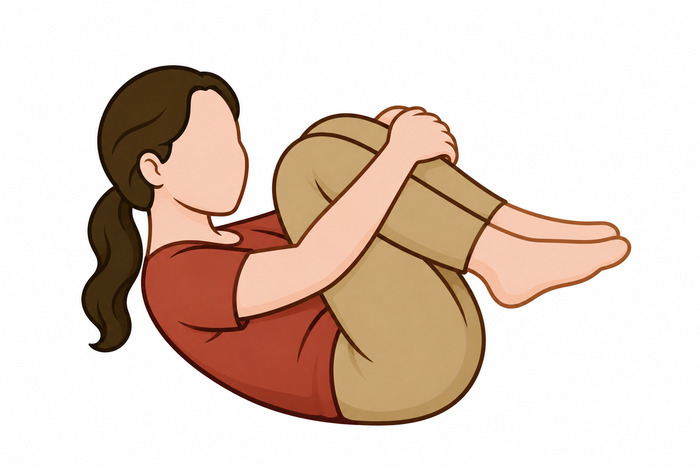
The word Pawanmuktasana comes from Sanskrit: pavana or pawan means “wind” or “air,” mukta means “released” or “freed,” and asana means “posture.” The name reflects that this pose is traditionally linked to releasing wind from the body.
Physically, Pawanmuktasana is a supine posture in which you bring one or both knees toward your chest. This movement involves hip and knee flexion and can create gentle compression around the abdomen. Depending on the variation, the practitioner may keep the head and shoulders grounded or lift them toward the knees.
Pawanmuktasana is commonly taught in Hatha Yoga as part of practices that develop body awareness and prepare the body for further asana practice. It is also traditionally associated with the abdominal and digestive functions.
How to Do Pawanmuktasana: Step-by-Step.
Starting Position
- Begin by lying comfortably on your back, with both legs extended and relaxed on the mat
- Keep your feet together or slightly apart, whichever allows your legs to relax naturally.
- Let your arms relax next to your body, with the palms facing either up or down.
- Relax your shoulders and allow the back of your head to rest comfortably on the floor.
- Keep the spine in a comfortable neutral position. Avoid forcefully pressing the lower back into the mat.
- Take a few slow breaths and allow the body to settle before beginning.
Step-by-Step Techniques
- Fold the right leg and bring the knee toward your belly while allowing the left leg to remain extended.
- Draw the right knee toward the chest only as far as you can move it comfortably. Avoid using force to increase the range of movement.
- Hold the leg with your hands. You can hold around the shin or knee if that feels comfortable. If reaching the lower leg feels difficult, you can simply hold behind the thigh instead.
- Keep the left leg grounded and extended if your mobility allows. Avoid allowing the extended leg to lift or rotate excessively as you bring the other knee inward.
- Coordinate the movement with your breath.
- Stay in the position without pulling the knee forcefully. Your hands provide support; they don’t need to drag the thigh closer to the abdomen. Keep your shoulders, jaw, and neck relaxed.
- Release your leg slowly. Let go of the hold and extend your right leg back to the starting position with control.
- Repeat on the opposite side. Bend the left knee and repeat the same sequence while keeping the right leg extended and stable.
Breathing in Pawanmuktasana
Breathing instructions can vary between yoga traditions and teaching lineages, so there is no single correct pattern.
For a controlled practice:
- Breathe smoothly through the nose unless your teacher has given you a different instruction.
- Avoid holding the breath while drawing the knee toward the abdomen or maintaining the posture.
- Let the abdomen and lower ribs move naturally with the breath, rather than forcing abdominal compression.
- Keep the breath quiet and even throughout the hold.
- When practicing dynamically, coordinate the movement with the inhalation and exhalation according to the specific method being taught.
In a traditional Hatha Yoga setting, the breath supports awareness and control, not forcing the body deeper into the posture.
How Long Should You Hold Pawanmuktasana?
There is no single holding time that is appropriate for every practitioner. The duration should depend on the variation, the practitioner’s experience, and the purpose of the practice.
- Beginners: Start with a few comfortable breaths on each side rather than aiming for a long hold.
- Regular practitioners: Gradually increase the duration while keeping the breathing smooth and the body relaxed.
- Experienced practitioners: Use a longer hold if you feel comfortable; make sure there is no unnecessary strain or loss of breathing control.
- Bilateral variation: Begin with a shorter hold because bringing both thighs toward the abdomen increases abdominal compression.
Also See: Yoga Exercises – Yoga Asana Guide
Pawanmuktasana Benefits: What Does the Practice Do?
1. Improves Hip and Knee Mobility
Pawanmuktasana involves your hip and knee flexion as your thigh moves toward the abdomen. Practicing this posture slowly helps a practitioner explore these joints through a controlled range of motion.
Here, the intent of this movement is not to force the knee closer to the chest. The available range will differ from person to person, depending on one’s hip mobility, muscle flexibility, joint structure, and pelvic position.
For beginners, this makes Pawanmuktasana a useful posture for learning how to move the hip and knee while keeping the rest of the body relatively stable.
2. Creates Gentle Movement in the Lower Spine
As your thigh moves toward the abdomen, your pelvis and lower back can respond to the movement. Depending on the variation and individual anatomy, this may lead to a small amount of lumbar and spinal flexion.
The key point is that the practitioner does not need to round the entire spine to make the posture intense forcefully. Remember, excessive pulling can create unnecessary tension, particularly around your lower back and neck.
A controlled movement within a comfortable range is more appropriate rather than trying to achieve maximum intensity.
3. Engages the Abdominal and Trunk Muscles
Pawanmuktasana also involves the muscles of your trunk. Bringing the thigh toward the abdomen changes the relationship between the pelvis, abdominal wall, and spine, requiring muscular control.
But remember, the amount of effort you use varies depending on the variation you are practicing. A single-leg version generally allows the practitioner to focus on one side at a time, while bringing both knees toward the chest changes the demands on the trunk and increases the sensation of abdominal compression. This is one reason why the posture should not be treated simply as a passive stretch.
4. Increases Awareness of the Abdominal Region
One of the more useful aspects of Pawanmuktasana is the awareness it creates around the abdomen.
As the thigh moves toward the trunk, the practitioner becomes more aware of sensations in the abdominal area. Adding slow breathing gives another layer of awareness, as the movement of the abdomen can be observed rather than ignored.
While training beginners, we often notice that they focus mostly on whether they can bring the knee closer to the chest. But after guiding them to notice the breath, abdominal movement, and physical sensations, they report their quality of practice has improved.
5. Helps Develop Breathing Awareness
When practicing Pawanmuktasana, observe how the abdomen, ribs, and trunk respond to each inhalation and exhalation.
This does not mean that Pawanmuktasana automatically improves breathing capacity. Rather, the posture provides you an opportunity to observe the relationship between physical position and respiration.
For beginners, this can be particularly valuable because it introduces breath awareness while the body remains in a relatively stable position.
6. May Support Abdominal and Digestive Awareness
In traditional yoga practice, Pawanmuktasana is commonly associated with releasing abdominal wind and supporting digestive function. The Sanskrit name is often described as pawan or vayu (wind/air) and mukta (release).
From an anatomical perspective, the posture brings the thighs toward the abdomen and creates gentle pressure and movement around the abdominal region. This may help explain why some practitioners report changes in abdominal sensations after practicing it.
However, this should not be presented as proof that Pawanmuktasana treats digestive disorders.
It is more accurate to say that:
- Traditional yoga associates the posture with the regulation or release of vayu.
- The physical position creates movement and pressure around the abdominal region.
- Some practitioners may experience changes in abdominal comfort or the sensation of gas.
- Evidence is not sufficient to describe Pawanmuktasana as a treatment for constipation, bloating, gas, or other digestive disorders.
7. Prepares the Body for Further Practice
Pawanmuktasana can also be used as part of a long yoga sequence. This simple movement allows practitioners to bring awareness to the hips, knees, spine, abdomen, and breath before moving into more demanding postures.
For example, a teacher may include this posture early in a supine sequence before introducing stronger hip, core, or spinal movements.
Its value here is not to warm up every muscle, but to provide a controlled movement through which the practitioner can begin establishing coordination between movement, breathing, and bodily awareness.
8. Develops Awareness of Bodily Sensations
Traditional yoga places importance on observing the body rather than constantly reacting to every sensation. Pawanmuktasana offers a simple setting to practice this.
You may notice:
- Stretching around the hip
- Pressure around the abdomen
- Movement in the lower back
- Changes in breathing
- Differences between the right and left sides
The purpose here is not to eliminate every sensation or push through discomfort. Instead, the practitioner learns how to differentiate between a normal sensation associated with movement and a signal that the posture needs to be modified or released.
Does Pawanmuktasana Help with Gas or Digestion?
Pawanmuktasana is traditionally associated with releasing abdominal wind and supporting digestive function, but it should not be described as a treatment for gas or digestive disorders.
The posture draws the thighs toward the abdomen, creating gentle abdominal compression. This may influence sensations in the abdominal region, and some practitioners reported that they experienced significant relief from gas or abdominal discomfort after the practice.
However, traditional association, anatomical plausibility, and clinical evidence are never the same thing.
Related: The Yoga Squat: A Complete Guide to Malasana
Common Mistakes in Pawanmuktasana and How to Correct Them
The following are some of the most common mistakes seen in Pawanmuktasana and practical ways to correct them.
|
Common mistake
|
What can go wrong
|
How to fix it
|
|---|---|---|
|
Pulling the knee forcefully toward the chest
|
Excessive pulling can create unnecessary tension around your hip, abdomen, or lower back.
|
Hold the leg firmly but gently. Let the knee move only as far as your body allows comfortably.
|
|
Allowing the opposite leg to lift
|
The extended leg may become unstable, changing the position of the pelvis and reducing control.
|
Keep the opposite leg extended and grounded when your mobility allows. If it naturally lifts, reduce the range of the bent leg rather than forcing the extended leg down.
|
|
Holding the breath
|
Breath retention can create unnecessary tension and makes it harder for you to assess whether the posture is comfortable.
|
Keep the breath steady and unforced throughout the movement and hold.
|
|
Pulling the head toward the knee
|
Lifting the head can create unnecessary neck tension and may also change the actual purpose of the posture.
|
Keep the head and shoulders relaxed on the floor unless a particular variation specifically calls for lifting them.
|
|
Rounding the spine excessively
|
Forcing the spine into a deep curl can create unnecessary strain, particularly when you combine it with aggressive pulling.
|
Allow only the amount of spinal movement that occurs naturally. There is no need to make the forehead touch the knee.
|
|
Trying to compress the thigh tightly against the abdomen
|
Chasing maximum compression can turn a controlled posture into a forceful one.
|
Work with your available range. Your knee does not need to reach the chest for the posture to be practiced correctly.
|
|
Gripping the leg too tightly
|
A strong grip can create tension in your hands, shoulders, and arms without improving the posture.
|
Use the hands for support rather than leverage. Hold the leg securely but keep the shoulders relaxed.
|
|
Lifting or twisting the pelvis unnecessarily
|
The pelvis may shift as the practitioner tries to bring the knee closer, reducing stability and control.
|
Keep the pelvis as stable as possible, reduce the range if you need to rotate or lift it to maintain the position.
|
|
Rushing into or out of the posture
|
Fast movements reduce control and make it harder to notice tension or discomfort.
|
Bend, hold, and extend the leg deliberately. Give equal attention to entering and releasing the posture.
|
|
Treating depth as the goal
|
Trying to achieve a particular shape can make students ignore their breathing and physical feedback.
|
Prioritize controlled movement, comfortable breathing, and awareness over how close the knee comes to the chest.
|
How Teachers Guide Students Towards Better Alignment in Pawanmuktasana
A teacher’s role in Pawanmuktasana is not simply to help a student bring the knee closer to the chest. It is to help them find a position where the movement remains controlled, the breathing stays steady, and one can avoid unnecessary tension in the body.
When teaching beginners, observe whether the student is pulling the knee with the arms, lifting the opposite leg, tightening the shoulders, or changing the spine position to gain more range. These are often signs that the student is trying to achieve the ideal shape rather than working within their available mobility.
Give useful cues, such as: Â
- “Bring the thigh towards the abdomen without forcing it.”
- “Keep the extended leg steady.”
- “Let the shoulders remain relaxed.”
- “Keep your breathing smooth.”
- “Stay within the range where you can maintain control.”
Pawanmuktasana for Beginners: Modifications, Props and Variations
Start With the Single-Leg Variation
- Lie on your back with both legs extended.
- Bend one knee and bring the thigh toward the abdomen.
- Keep the opposite leg extended and grounded when comfortable.
- Rest your head and shoulders on the mat.
- Gently hold the leg and breathe steadily.
- Repeat on the other side.
Note: Practicing one leg at a time makes it easier to observe each hip and control the movement.
Adjust the Hold to Your Mobility
Your hand position can change according to your range of movement.
- Hold the shin if you can reach it without straining.
- Hold around the knee if this feels more stable.
- Hold behind the thigh if reaching the lower leg feels difficult.
- Reduce the range if bringing the knee closer causes tension or changes your pelvis position.
Keep the Upper Body Quiet
As the knee moves toward the abdomen:
- Keep the head and shoulders relaxed.
- Avoid pulling the chin toward the knee.
- Do not deliberately round the spine to gain more depth.
- Keep the opposite leg steady where possible.
- Maintain smooth breathing.
Use Props to Solve a Specific Limitation
Yoga strap: Use a yoga strap if reaching the leg feels difficult. Hold the strap gently rather than pulling the knee closer.
Folded blanket: Use a folded blanket to support the head if lying flat creates neck discomfort.
Bolster: Use a bolster for additional support in a gentler or restorative variation, if needed.
Progress From Single-Leg to Bilateral Practice
Once the single-leg version feels comfortable, you may try bringing both knees toward the abdomen.
- Keep the head and shoulders relaxed.
- Hold the legs without pulling forcefully.
- Continue breathing comfortably.
- Reduce the position if the abdomen feels excessively compressed or breathing becomes restricted.
When Should You Avoid Pawanmuktasana?
Pregnancy: The standard form of Pawanmuktasana, particularly the bilateral variation, may create abdominal pressure and is not appropriate to practice during pregnancy without pregnancy-specific guidance. A qualified prenatal yoga teacher or healthcare professional can advise on suitable alternatives.
Recent abdominal surgery: Allowing the thighs to move toward the abdomen can place pressure or tension around the surgical area. If you have recently undergone abdominal surgery, do not practice this posture for a while. Wait for appropriate medical clearance before returning to the posture.
Hernia or significant abdominal conditions: Because the posture can increase pressure around the abdomen, it may not be appropriate for everyone with a hernia or abdominal condition.
Acute lower-back or neck problems: Pawanmuktasana does not need to be completely avoided by everyone with a history of back or neck problems. The appropriate approach depends on the condition, symptoms, and the variation you are practicing. In some cases, reducing the range or keeping the head and shoulders supported may help you practice safely.
Recent hip or knee injury: Bringing the thigh toward the abdomen involves both hip and knee movement. Practicing too soon after an injury may interfere with recovery, so follow your healthcare professional’s advice.
Any condition where abdominal compression has been restricted: Do not assume that a posture is suitable simply because it is commonly taught in beginner yoga. If you have been specifically advised to avoid abdominal pressure or certain joint movements, obtain individual guidance first.
Related: 7 Beginner Yoga Mistakes I See as a Teacher (And How to Fix Them)
Frequently Asked Questions
What is Pawanmuktasana?
Pawanmuktasana is a supine yoga posture where one or both knees are drawn toward the abdomen region. It involves the hips, knees, trunk, and abdominal region. Traditionally, it is associated with abdominal awareness, breathing, and the release of vayu, or wind.
What are the main Pawanmuktasana benefits?
Pawanmuktasana benefits include gentle hip and knee movement, abdominal awareness, trunk engagement, and greater awareness of breathing. Traditionally, it is also associated with digestive function and the release of abdominal wind, although it should not be presented as a treatment for digestive disorders.
How do you do Pawanmuktasana correctly?
Lie on your back with your legs extended. Bend one knee and bring the thigh toward the abdomen, supporting the leg with your hands without pulling forcefully. Keep the head and shoulders relaxed, breathe steadily, and release slowly. Repeat on the other side before trying the bilateral variation.
Is Pawanmuktasana suitable for beginners?
Yes. For beginners, it’s ideal to start Pawanmuktasana one leg at a time. Keep the head and shoulders on the floor and hold behind the thigh if reaching the shin is difficult. Use a smaller range if bringing the knee closer creates tension or affects your breathing.
How long should you hold Pawanmuktasana?
Beginners can start with a few comfortable breaths on each side. More experienced practitioners may hold it longer if they can maintain steady breathing without strain. There is no fixed duration; the quality and control of the practice matter more than holding the posture for longer.
Can Pawanmuktasana help with gas and bloating?
Traditionally, Pawanmuktasana is associated with the release of vayu, or abdominal wind. Its position also creates gentle pressure around the abdomen, which may alter abdominal sensations. However, there is not enough scientific evidence to claim that it treats gas, bloating, or digestive disorders.
Can I practice Pawanmuktasana every day?
Many healthy practitioners can include Pawanmuktasana regularly in their practice if it causes no pain or excessive strain. Daily practice is not essential, however. Consistent practice with controlled movement and comfortable breathing matters more than practicing the posture as often as possible.
Who should avoid Pawanmuktasana?
People who are pregnant, recovering from abdominal surgery, or dealing with certain hernias, abdominal conditions, or recent hip or knee injuries may need to avoid or modify the posture. Those with acute back or neck problems should seek individual guidance. Also, stop practicing immediately if you experience sharp, intense, or worsening pain.
What is the difference between Pawanmuktasana and the Pawanmuktasana series?
The term “Pawanmuktasana” alone indicates the individual knee-to-chest posture, while the Pawanmuktasana series refers to a broader sequence of movements taught in some yoga systems. Because terminology varies between traditions, check how a particular teacher or school defines the practice.
Final Thoughts
Pawanmuktasana is a simple posture, but its effectiveness depends on how it is practiced, not how deeply it is performed. Controlled movement, steady breathing, and appropriate alignment matter more than pulling the knees closer to the chest.
For beginners, starting with one leg at a time and adapting the posture to individual mobility can make the practice more effective. Its traditional association with the abdominal region also makes it a useful posture to explore alongside breath and body awareness.
Want to learn asanas along with alignment, breathing, sequencing, and traditional yoga principles? Explore our 200-hour Hatha Yoga Teacher Training program in India, designed to build a solid foundation in classical hatha yoga and help you become a confident yoga teacher.
Holistic Hatha Sequencing for Practitioners & Teachers
Get 17 primary asanas and key principles for a balanced practice sent straight to you.
