Ashram Style Training vs Luxury Yoga Schools: What’s the Real Difference?

Confused between Ashram Style Yoga Teacher Training vs Luxury Yoga Schools? It’s simple. If your goal is gaining real knowledge, discipline, and teaching skills, choose ashram-style training; if you prefer comfort, flexibility, and a relaxed experience, luxury yoga schools may suit you better.

Ashram Style Yoga Teacher Training vs Luxury Yoga Schools: What Is Ashram Style Training?
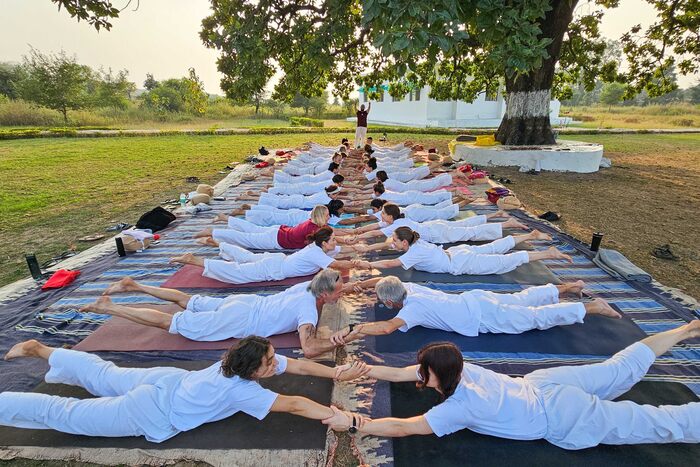
Group yoga practice during ashram YTT days at Arhanta yoga Ashram

For thousands of years, yoga was passed down in gurukuls and ashrams, where students immersed themselves fully in the teacher’s presence, absorbing knowledge through disciplined routines, close observation, and dedicated practice. This immersive tradition forms the core of ashram-style training today.

Ashram-style training is a structured, immersive way of learning yoga where your entire day is organized around practice, study, and observation. It’s not about just attending classes; it’s about making yoga a part of your living.

A Structured Daily Routine That Builds Discipline

In most authentic yoga teacher training programs in India, the day starts early, often before sunrise. Mornings begin with silence, breathwork, or meditation, followed by asana practice. The rest of the day moves through theory classes, alignment sessions, and teaching practice.

There is very little flexibility in timing. Meals, classes, and even rest periods follow a fixed rhythm. At first, this can feel a little restrictive. But within a few days, you may notice significant improvements: your focus improves, and your mind becomes quieter; you find the real meaning of yoga that extends beyond poses.

Learning Beyond Postures

If you’re exploring what ashram-style yoga training is, the biggest difference lies in what you will be taught there.

  • Philosophy: You will engage with yogic concepts that explain the purpose behind the practice. This brings depth that is often missing in a typical luxury yoga teacher training experience.
  • Alignment: Here, Postures will be broken down step by step. Corrections will be repeated daily until they become instinctive.
  • Teaching Methodology: You will not just learn for yourself. Here, you will learn how to guide others and make yoga accessible to others. Very early, you will be asked to observe others, give cues, and stand in front of a group.

These learning modules define the benefits of ashram yoga teacher training. Here, experienced yoga teachers train you to understand yoga, not just perform poses.

Minimal Distractions, Maximum Awareness

Unlike modern yoga retreats, where the environment often includes travel, comfort, and social experiences, ashram settings are intentionally simple.

Rooms are basic and facilities are limited. Life is simple. Schedules are full. And most importantly, external stimulation is purposefully limited.

This simplicity is not a limitation; it is a tool. When distractions reduce, your attention naturally turns inward. You start to notice small details in breath, posture, and your thoughts. This offers more clarity and helps you cultivate more awareness.

Real Insight from the Training Space

A common moment many students remember: being asked to teach within the first week.

There is hesitation at first, like uncertainty about what to say, how to guide, or whether they are ready. But this is where the difference becomes clear when comparing Ashram Style Yoga Teacher Training vs Luxury Yoga Schools. In an Ashram setting, you will constantly receive real teaching insights from experienced teachers.

Furthermore, in an ashram, the real goal is not comfort or relaxation. Here, you are gradually pushed into applying what you learn. This might feel a little overwhelming at first; however, it might turn out to be one of the most rewarding learning experiences.

For clearer ideas, explore: Ashram Life in India: What It Really Means to Live Spiritually.

Ashram Style Yoga Teacher Training vs Luxury Yoga Schools: What Defines Luxury Yoga Schools
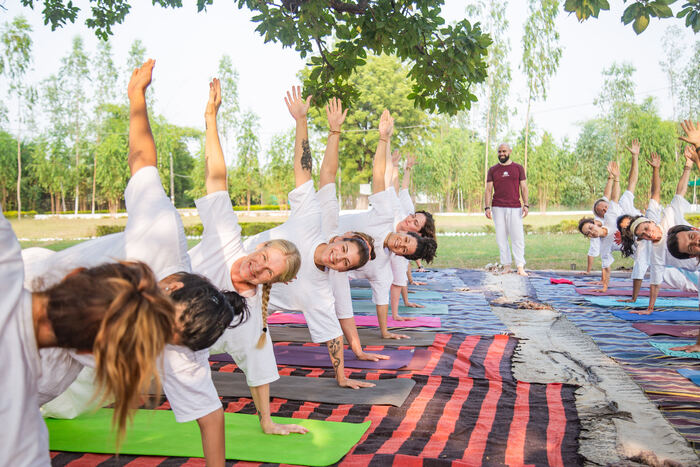
A group of yoga practitioners enjoying outdoor yoga practice, doing the side plank together

Luxury yoga schools primarily focus on comfort, environment, and overall experience. In the broader comparison of Ashram Style Yoga Teacher Training vs Luxury Yoga Schools, this model shifts the focus from discipline-driven learning to how the training feels day to day.

Comfortable Living and Scenic Environments

One of the first things students notice in a luxury yoga teacher training experience is the setting. These luxury schools are usually located in stunning places. For example: beaches, mountains, or quiet countryside places are best suited for such luxury yoga schools. Furthermore, in a luxury yoga school, you might receive private or semi-private accommodations. Some of these luxury yoga schools even come with luxury amenities like air conditioning, high-end bedding, ayurvedic treatments, massages, sauna, or steam rooms.

This environment is relaxing, making it easier for you to settle in. This is especially beneficial for those new to longer training programs. Good sleep, appealing surroundings, and physical comfort reduce initial resistance and help students stay consistent with practice.

Focus on Experience, Relaxation, and Lifestyle

Unlike traditional Ashram-style yoga training, luxury schools often blend yoga with a broader wellness lifestyle.

  • Experience: Classes are designed to be engaging and accessible rather than intense or repetitive.
  • Relaxation: Time is intentionally left open for rest, spa treatments, or exploring the surroundings.
  • Wellness Lifestyle: Nutrition, mindfulness sessions, and optional activities become part of the overall experience.

This approach works well for students who want to deepen their practice without stepping into a highly disciplined or restrictive routine.

Flexible Schedules That Adapt to You

Flexibility is a defining trait in these luxury yoga schools. Schedules may start later in the morning so that you don’t rush yourself to wake up early. They also include longer breaks and allow for optional participation in certain sessions.

For many, this creates a sense of ease. However, it also means the structure depends more on personal motivation; here, you are not always bound to follow a strict routine, and that’s a key contrast between Ashram Style Yoga Teacher Training and Luxury Yoga Schools.

Relaxed Training Environment

A common pattern seen in luxury settings: students feel physically refreshed and mentally relaxed, but when asked to teach or break down a posture in detail, they often hesitate.

This isn’t a flaw; it reflects the intention of the program. Here, the goal is to introduce you to the calming benefits of yoga and to learn yoga comfortably. These luxury yoga schools usually don’t push you into teaching roles early on. Compared to ashram-style yoga training, where teaching application begins quickly, luxury programs often delay that transition.

Where Luxury Training Aligns Best?

Luxury schools align more closely with modern yoga retreats than with traditional, immersive systems. They offer space to unwind, reconnect, and enjoy the process without strict pressure.

For some, this balance creates a positive and memorable entry point into yoga. For others, especially those seeking the depth associated with authentic yoga teacher training in India, it may feel less effective.

Ashram Style Yoga Teacher Training vs Luxury Yoga Schools: Key Differences Explained
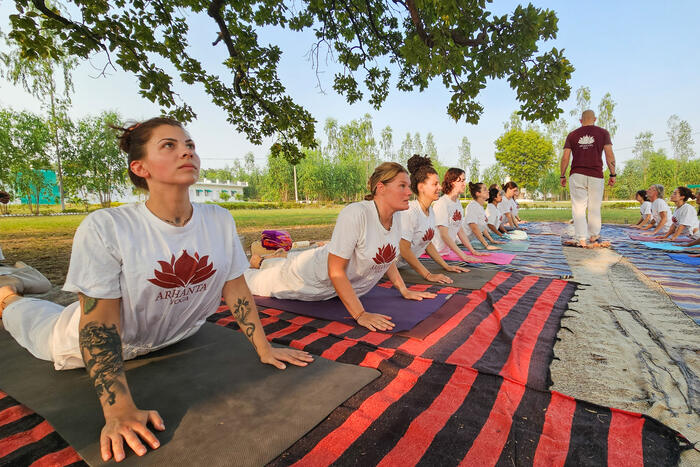
Yoga students practicing the cobra pose on the Ashram ground

Before diving deeper, here’s a clear side-by-side comparison to help you quickly understand how Ashram style yoga teacher training is different from luxury yoga schools.


Aspect
Ashram Style Training
Luxury Yoga Schools
Learning Approach
Structured, progressive, discipline-driven
Flexible, experience-based
Daily Routine
Fixed schedule, early start
Relaxed timing, adaptable
Focus of Training
Teaching skills, alignment, philosophy
Personal experience, relaxation
Environment
Simple, minimal, distraction-free
Comfortable, aesthetic, scenic
Outcome
Prepared to teach with clarity
Refreshed, inspired, less teaching-ready

1. Learning Approach: Discipline vs Experience

When the topic is Ashram Style Yoga Teacher Training vs Luxury Yoga Schools, the learning approach creates the biggest shift.

Ashram programs follow a progressive structure. You build knowledge step by step. You start with basics, learn alignments and anatomy, and gradually move into teaching. This method reflects ashram-style yoga training. It’s a structured and disciplined way to learn yoga from experienced teachers.

Here, luxury programs take a different route. They prioritize how you feel during the practice. Here, the classes often adapt to the group’s energy rather than following a strict routine. This aligns more with modern yoga retreats than traditional systems.

Students coming from luxury programs often say they “enjoyed every session,” but struggle to recall sequencing or cueing when asked to teach. On the other hand, Ashram-trained students may find the process intense, but they can usually structure a class with clarity.

2. Daily Routine: Fixed Structure vs Flexibility

Ashram schedules don’t usually change. Here, you wake up early, attend all sessions, and follow a disciplined routine. Over time, this repetition builds focus and stamina, one of the core ashram yoga teacher training benefits.

Luxury schools offer flexibility. Morning classes usually start later, and breaks are longer.  Here, you get enough time to rest, explore, or step back when needed.

This difference plays a key role in traditional yoga training vs modern yoga retreats. Ashram-based training focuses on building discipline and habits, while the flexibility you experience in a luxury school supports comfort.

3. Focus of Training: Teaching vs Personal Practice

Ashram training prepares you to teach. You study philosophy, practice alignment daily, and spend time on understanding teaching methodology. Here, you don’t just perform poses; you explain, adjust, and guide others.

Luxury programs focus more on personal experience. You deepen your own practice, but teaching often remains optional or lightly introduced.

In many luxury yoga teacher training experience settings, students leave feeling more connected to yoga, but not always confident enough to lead a class independently.

4. Environment: Minimal vs Comfort-Driven

Ashram environments are intentionally simple. It’s a shared space that includes basic rooms, and minimal distractions keep your attention on practice. This is common in almost every ashram-based yoga teacher training. Here, the focus strictly remains on simplicity, which later supports discipline and uninterrupted focus.

Luxury schools invest in comfort such as private rooms, designed interiors, and scenic locations. Here, the environment itself becomes a major part of the experience.

In simple ashram settings, students often spend their free time reviewing notes or practicing. In luxury environments, the same free time you may invest in spa, mindfulness, or social interaction.

5. Outcome: Skill Development vs Personal Renewal

By the end of an ashram program, most students can confidently structure and teach a class. The process may feel demanding, but it builds long-term capability.

Luxury training often leaves students feeling physically refreshed and mentally lighter. The experience inspires you to continue your practice, but teaching readiness depends on how much effort the student puts in beyond guided sessions.

Ashram Style Yoga Teacher Training vs Luxury Yoga Schools: Which One Is Right for You

Here, the right choice usually depends on what you want to gain; whether it’s the ability to teach with confidence or to experience yoga in a more relaxed setting.

Choose Ashram Style Yoga Teacher Training If

  • You want to become a teacher and feel confident leading a class.
  • You prefer a structured routine over a flexible schedule.
  • You value depth in philosophy, alignment, and methodology.
  • You are open to repetition, feedback, and gradual improvement.
  • You’re willing to step out of your comfort zone to grow.

Planning a Yoga Teacher Training in India? Read our complete blog: Best Time to Do a Yoga Teacher Training in India: Month-by-Month Guide.

Choose Luxury Yoga Schools If

  • You want a more relaxed and enjoyable training experience.
  • You are exploring yoga without immediate plans to teach.
  • You prefer flexible schedules and personal downtime.
  • You value comfort, surroundings, and overall experience.
  • You want to focus on how yoga feels rather than how it’s taught.

A luxury yoga teacher training experience offers space to slow down and engage with yoga without any pressure. It aligns more closely with modern yoga retreats than structured systems.

Can You Combine Ashram-Style Yoga Teacher Training vs Luxury Yoga Schools?

You don’t have to treat this as a strict either-or decision. There are some ways to combine the discipline of ashram-style yoga teacher training with the comfort and ease of a luxury yoga teacher training experience, depending on how you approach your training.

Start with a Retreat, Then Move into Structured Training

If you’re new or unsure about committing to an intensive schedule, begin with a retreat. Some schools, including Arhanta, offer retreats that introduce yoga without pushing you into teaching or deep theory.

This gives you exposure to practice in a format closer to modern yoga retreats. You understand the routine, the environment, and your own interest level before stepping into something more demanding. Through our retreats, we realized that students who start this way often feel less overwhelmed when they join full training later, as they already know what daily practice feels like.

Train in Ashram Style Within a Hybrid Program

Some yoga schools, including Arhanta, offer a Hybrid Yoga Teacher Training course. Here, you study the theories mostly at your own pace. The curriculum follows a structured path: alignment, philosophy, teaching methodology. And then once you complete this online phase, you enter the 12-day immersion phase. In this immersion phase, you get to experience the authentic ashram life.

You still wake up early. You still follow a schedule. You still practice and teach regularly.

The difference is that now you feel more familiar with the setup. This makes it easier to stay consistent, especially if you’re transitioning from a more flexible lifestyle.

Complete Structured Training, Then Join a Retreat

You can also reverse the order.

Finish your training in a disciplined setting first. Build your teaching skills and understanding. After that, attend a retreat to slow things down and reconnect with your personal practice.

This way, you can combine the long-term value of ashram yoga teacher training benefits with the ease and recovery offered by retreat-style programs.

Use Flexible Programs as a Transition Step

Some structured courses include short breaks, optional sessions, or slightly relaxed schedules. These don’t fully match traditional yoga training vs modern yoga retreats, but they sit somewhere in between.

They help you adjust without dropping the core structure that builds skill.

Related: Should You Try a Short Course Before YTT?

Frequently Asked Questions

1. Which is better for becoming a yoga teacher: ashram-style or luxury training?

If your goal is to teach, ashram-style training is usually the stronger choice. It focuses on alignment, sequencing, and teaching practice from early on. Luxury programs may introduce teaching, but often don’t emphasize it enough for beginners to feel confident right away.

2. Is ashram-style yoga teacher training too strict for beginners?

It can feel intense at first, especially with early mornings and fixed schedules. But many beginners adapt within a few days. The structure actually helps build consistency, which is one of the main benefits of ashram yoga teacher training.

3. Do luxury yoga schools provide enough knowledge to teach professionally?

They can provide a foundation, but depth depends on the program. A typical luxury yoga teacher training experience focuses more on personal practice. Many students choose additional structured training later to build confidence.

4. What is the main difference between traditional yoga training vs modern yoga retreats?

Traditional training follows a structured system: fixed routine, detailed study, and gradual skill-building. Modern retreats are more flexible and experience-based, with a focus on relaxation and personal well-being.

5. Can I start with a retreat before joining a full teacher training course?

Yes, and it’s a practical approach if you’re unsure. Some schools offer retreats that let you experience yoga without committing to a full program. This helps you decide whether you’re ready for a more structured path, like ashram-style yoga training.

6. How do I choose between ashram-style and luxury yoga schools?

It always comes down to your intention. If you want discipline, depth, and teaching skills, ashram-style training aligns better. If you’re looking for a comfortable setting to explore yoga at your own pace, luxury schools are a better fit.

Final Thoughts

When it comes to Ashram Style Yoga Teacher Training vs Luxury Yoga Schools, the real difference lies in what your goal is and what you will take with you after the course ends. If your goal is to understand yoga deeply and carry it forward, both in your own practice and in teaching, ashram-style training gives you that foundation.

If you’re looking to learn yoga in a traditional ashram-style setting, with structured training, disciplined practice, and a strong teaching foundation, explore our Yoga Teacher Training in India to see if it aligns with your path.

hatha-yoga-book

Holistic Hatha Sequencing for Practitioners & Teachers

Get 17 primary asanas and key principles for a balanced practice sent straight to you.

Dr. Ram Jain, PhD (Yoga)

Born into a Jain family where yoga has been the way of life for five generations, my formal yoga journey began at age of eight at a Vedic school in India. There I received a solid foundation in ancient scriptures, including Vedas, Upanishads, Bhagavad Gita, and Yoga Sutras (to name a few). In 2009, I founded Arhanta Yoga Ashrams. I see yoga as a way to master the five senses, so I named our ashrams ‘Arhanta Yoga,’ the yoga to master the five senses! In 2017, I also founded Arhanta Yoga Online Academy so that people who can not visit our ashrams can follow our courses remotely. At Arhanta, we don’t just teach yoga. We teach you how to reach your potential, deepen your knowledge, build your confidence, and take charge of your life.
  • About Us
  • Residential Trainings
  • Online Trainings