What It Actually Means to Practice Hatha Yoga Online
Not Just “Online Yoga”, It’s a Structured Practice
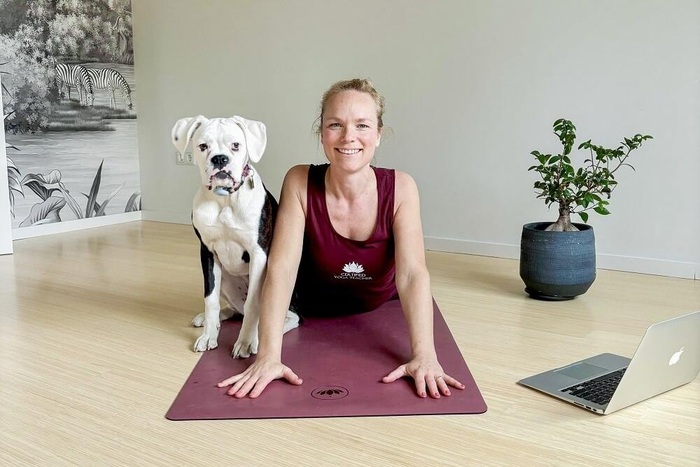
Practicing Hatha yoga online is not about casually following random yoga video tutorials. It is a structured practice guided by a skilled teacher, either through live classes or well-designed recorded sessions. Each session follows a clear sequence, helping you practice with proper alignment.
Guided by a Skilled Teacher, Even at Home
When it comes to practicing Hatha yoga online, your yoga teacher plays a significant role. Your teacher guides you through each posture with clear instructions, timing, and transitions. This guidance ensures that your practice stays safe, steady, and aligned with traditional principles, even without being in a physical studio.
Focus on Alignment, Breath, and Stillness
Unlike fast-moving routines, Hatha yoga always emphasizes how you practice, not how much you do, and it remains the same even if you practice online. Here, you learn to hold postures with stability, refine alignment, and coordinate movement with breath. In hatha yoga, stillness is not considered a break; it is as important as practicing a challenging pose. In hatha yoga, you develop awareness through stillness.
More Than Random Flows
Many online yoga options primarily focus on speed and variety. And while doing that, they often fail to mention the foundational details. Learning Hatha yoga online is a very different experience. It avoids random, unstructured flows and instead builds your practice step by step, allowing you to understand each posture properly.
Rooted in Tradition, Not Fitness Trends
Even if you learn Hatha yoga online, it always follows a traditional approach where the goal is awareness, balance, and discipline, not just flexibility or calorie burn. The practice is slower, more intentional, and designed to create long-term stability in both your body and mind.
Related: How to Do Yoga at Home Daily: A Guide for Beginners
How to Start Practicing Hatha Yoga Online (Step-by-Step)
Step 1: Set Up a Space That Supports Your Practice
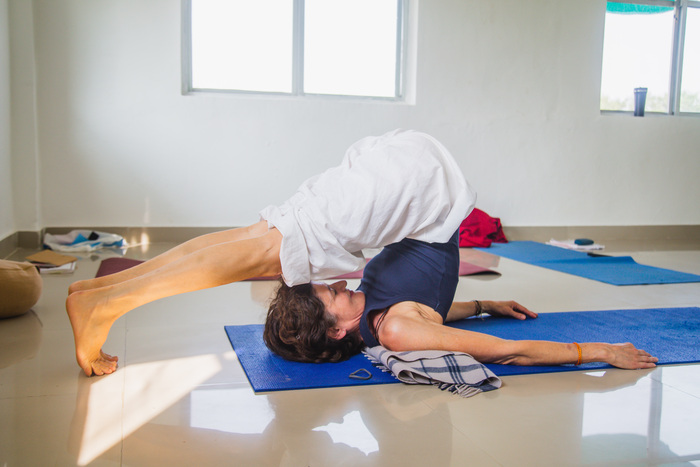
Your surroundings affect your practice a lot. Try to keep the space simple and quiet.
- Choose a quiet, clutter-free area where you won’t be interrupted.
- Use a slip-resistant yoga mat for stability and safety.
- Ensure a stable internet connection and device placement so you can follow instructions without much disruption.
- Keep the lighting comfortable and the room well-ventilated to help you stay relaxed and focused.
- Optional: keep props like blocks, a strap, or a cushion nearby for support.
For more details, read our complete blog: How to Create a Home Yoga Room That Supports Your Daily Practice.
Step 2: Choose the Right Hatha Yoga Online Class
The quality of guidance shapes your experience directly. Hence, choose your hatha yoga online class carefully.
- Look for certified teachers or traditional schools with structured teaching methods.
- Look for well-structured programs that offer certification, rather than picking random videos.
- Stick with one teacher or method for a while to build consistency.
Step 3: Begin with Foundational Practices
Begin with the basics. Make sure the online Hatha yoga class you pick covers the foundational practices well.
- Practice basic asanas that develop strength and stability.
- Pay attention to your breath right from the start.
- Start with short sessions, about 20 to 30 minutes, to help you stay consistent.
Step 4: Focus on Alignment Over Intensity
The way you practice is way more important than how long you practice.
- Move slowly and with control, rather than transitioning faster through poses.
- Hold postures steadily to understand their structure.
- Pay attention to alignment cues instead of pushing for depth.
Step 5: Build a Consistent Routine
Consistency turns practice into progress. Make sure you attend these Hatha yoga online classes daily to build consistency.
- Fix a specific time each day to build the routine.
- Start with 3–4 sessions per week, then increase this frequency gradually.
- Keep your routine realistic so you can follow it every day.
Step 6: Track Progress Mindfully
Tracking your progress might sound a little confusing; however, it’s possible.
- Notice improvements in breath control and stability
- Observe how your body feels during and after practice.
- Focus on comfort and awareness, not just flexibility.
To go deeper into this, explore: How to Create a Yogic Lifestyle at Home
Sample Beginner Hatha Yoga Routine at Home
A beginner Hatha yoga online routine should feel steady and manageable, not overwhelming.
Start with Centering and Breath (5–10 minutes)
Begin by settling your body and mind.
- Sit or lie down for about 5 minutes of initial relaxation
- Chant OM three times to stabilize breath and mind
Practice gentle pranayama:
- Kapalbhati (3 rounds, 40–60 strokes)
- Anulom Vilom (slow, controlled rhythm)
Take a short pause (30 seconds) to observe the effect
Warm Up Your Body Gently
Prepare your body before holding poses.
- Move through simple joint and spine movements
- Practice Sun Salutation (6 rounds) at a steady pace
- Pause for 30 seconds of relaxation before moving on
Build Strength with Foundational Postures
Focus on a few key postures rather than doing too many.
- Core activation: double leg raises (6 times)
- Shoulder and arm strength: dolphin pose (10 repetitions)
- Optional inversion practice: headstand up to 60 seconds, best done under a skilled teacher
- Rest briefly between each section
Move into Supported Backbends and Inversions
These postures build stability and gradually open up your body.
- Shoulderstand (hold up to 60 seconds)
- Half bridge (around 30 seconds)
- Gentle twisting or hip-opening stretches (30 seconds each side)
- Fish pose (30 seconds)
- Take a short pause (30 seconds) after this sequence
Release with Forward Bends and Seated Postures
Slow down the practice and lengthen the body.
- A seated hip-opening posture (about 60 seconds each side)
- Forward bend (60 seconds)
- Wide-legged forward bend (60 seconds)
- Crocodile pose (30 seconds) for rest
End with Gentle Backbend and Final Relaxation
End your practice calmly
- Cobra pose (30–60 seconds)
- Lie down for final relaxation and allow your breath to return to normal
Keep It Simple and Consistent
If this feels like too much, you can always reduce the number of postures. A beginner Hatha yoga online practice can be as simple as:
- Centering with breath
- A gentle warm-up
- 5–6 basic postures
- Short relaxation
Start your hatha yoga practice today: https://youtu.be/3QVHqp5FzQ4?si=BZgb23eTS24ngXNp