Hatha yoga poses are foundational postures practiced with steady breath and precise alignment to develop strength, flexibility, and body awareness. In this blog, we will share 10 essential yoga poses. You can practice these poses together to create a well-rounded practice that can improve stability, mobility, and control.
What Are Hatha Yoga Poses and How They Build a Strong Foundation
Hatha yoga poses focus on slowing things down so you can actually understand what your body is doing. Instead of moving quickly from one pose to another, you stay in each posture long enough to work on alignment, steady breathing, and muscle engagement. This approach helps you build real strength, improve flexibility in a controlled way, and develop a clearer sense of balance and body awareness. These skills are useful almost in every other style of yoga.
By practicing these hatha poses with proper alignment, you ensure your effort is evenly distributed, protect your joints, and develop the muscle strength needed to support your body effectively. Over time, this foundation leads to better balance, coordination, and overall posture.
Hatha yoga also follows a structured approach. Standing poses build strength and balance, seated poses improve flexibility and spinal alignment, while prone and supine positions strengthen your back and support controlled movements. Together, these categories ensure your body is trained in a balanced and systematic way.
10 Essential Hatha Yoga Poses with Clear Alignment Cues
Dolphin Pose (Ardha Pincha Mayurasana)
This is one of the most effective inversion poses. When practiced right, this can strengthen your shoulders and upper back while building the stability needed for Headstand.
How to do it:
- Bring your forearms to the mat while keeping your elbows aligned under your shoulders
- Interlock your fingers or keep palms flat and parallel.
- Press your toes into the mat and slowly lift your hips upward
- Walk your feet slightly closer to lengthen the spine.
- Press firmly through your forearms and keep shoulders lifted.
Headstand (Shirshasana)
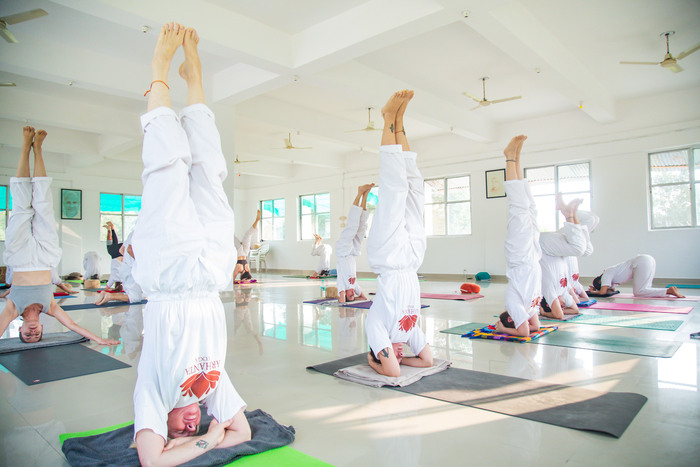
A classical inversion that helps you develop balance, focus, and controlled strength when practiced with proper support.
How to do it:
- Set your forearms down and lightly interlock your fingers for support
- Position the crown of your head lightly on the floor.
- Lift your shoulders and press strongly into your forearms.
- Walk your feet closer until hips stack over shoulders.
- Slowly lift your legs, keeping the body in one straight line.
Note: When practicing for the first time, it’s best to perform under an expert’s guidance.
Shoulderstand (Sarvangasana)
Primarily known as the “queen of asanas,” this pose strengthens your upper body and promotes full-body control.
How to do it:
- Lie down on your back and lift your legs to 90 degrees.
- Press your arms into the floor and slightly lift your hips.
- Support your lower back with your hands.
- Walk your elbows closer together.
- Lift your legs straight up, stacking hips over shoulders.
Half Bridge Pose (Ardha Setubandhasana)
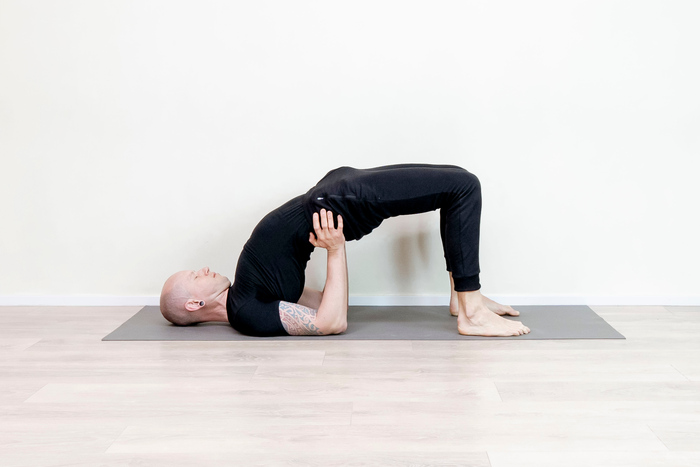
This foundational backbend can strengthen your glutes and lower back while opening the chest.
How to do it:
- Lie on your back and bend your knees, placing feet hip-width apart.
- Keep your feet close enough that fingertips can reach your heels.
- Press into your feet and lift your hips upward.
- Keep your knees aligned over your ankles.
- Lift your chest toward your chin without turning your head.
Womb Pose (Garbhasana)
A compact balancing posture that helps you develop core control and awareness of body positioning.
How to do it:
- Sit in Padmasana (Lotus Pose) if possible.
- Thread your arms through the gaps between thighs and calves.
- Lift your feet slightly off the ground.
- Try to balance on your sit bones while keeping your spine upright
- Keep your gaze steady and breath controlled.
Fish Pose (Matsyasana)
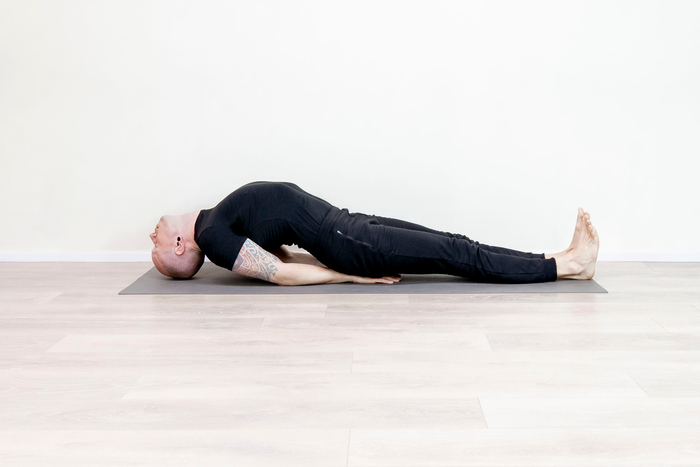
A counterpose to Shoulderstand that opens the chest, throat, and front body.
How to do it:
- Lie on your back with legs extended.
- Bring your hands under your hips and press your palms down for stability
- Press into your elbows and slowly lift your chest upward.
- Let the top of your head move lightly toward the mat
- Keep most of your weight in your elbows and torso.
Cow Face Pose (Gomukhasana)
A seated posture that’s ideal for stretching the shoulders and hips while improving posture.
How to do it:
- Sit and stack one knee directly over the other.
- Place your feet beside your hips.
- Slowly lift your one arm overhead and bend your elbow.
- Bring the other arm behind your back to clasp.
- Sit tall and keep your spine upright.
Standing Forward Bend (Uttanasana)
A fundamental forward fold that lengthens your hamstrings and releases tension in the back.
How to do it:
- Stand tall and hinge forward from your hips.
- Keep a slight bend in your knees if needed.
- Let your torso fold over your legs.
- Place your hands beside your feet or on your shins.
- Relax your head and neck completely.
Crocodile Pose (Makarasana)
This posture encourages deep relaxation and natural breathing.
How to do it:
- Lie on your stomach with legs slightly apart.
- Bend your arms and rest one hand over the other.
- Place your forehead or chin on your hands.
- Let your heels fall outward.
- Allow your whole body to relax with natural breathing.
Cobra Pose (Bhujangasana)
A controlled backbend that strengthens your spine and opens the chest.
How to do it:
- Come onto your stomach and set your hands just under your shoulders
- Keep your elbows close to your body.
- Press your pubic bone into the mat.
- Slowly Inhale and lift your chest using your back muscles.
- Keep your shoulders relaxed and away from your ears.
To begin your practice today, you can read our complete blog Yoga Exercises – Yoga Asana Guide
Common Mistakes in Hatha Yoga Practice
Rushing Through Poses
Hatha yoga practice is designed around steady holds, not quick transitions. Moving too fast reduces the time your muscles and joints need to adapt, and eventually the pose loses its purpose.
While leading classes, I often notice students entering and exiting poses quickly, as if they are somehow trying to get through the sequence. This usually leads to poor alignment, and you might not get the maximum benefits of these hatha poses if you rush through.
Ignoring Alignment Cues
Alignment is what makes each posture effective. When you overlook cues like joint stacking, spinal length, or weight distribution, your body compensates in ways that can create discomfort over time. This is why it is important to pay attention to how you place your hands, feet, and spine.
Overstretching
Pushing for depth instead of control is one of the most common mistakes people make during Hatha yoga practice. Stretching beyond your current capacity can strain your muscles and ligaments, especially in forward bends and hip openers.
Here, the best thing you can do is work at a range where you can still breathe steadily and maintain alignment.
Holding the Breath
Breath is often the first thing people lose when a pose becomes challenging. Unconsciously, holding your breath creates tension and reduces the body’s ability to relax.
Remember, each pose you practice should be supported by slow, even breathing.
Treating It as Passive Stretching
Hatha yoga is not just about “feeling a stretch.” Many poses require active engagement, for example, pressing into the mat, lifting through the spine, or relaxing the shoulders.
When your Hatha yoga practice becomes passive, you miss the strength-building aspect, which is one of the primary purposes of Hatha yoga.
Related: What Is Hatha Yoga? Meaning, History & Practice Explained
Who These Hatha Yoga Poses Are Best Suited For
Beginners Building a Strong Foundation
If you’re new to yoga, these Hatha poses give you a structured starting point to build strength, stability, and body awareness. Instead of focusing on how a pose looks, try to pay attention to how you enter it, how you hold it, and how your body is positioned throughout. Pay attention to where your weight is distributed, whether your spine stays aligned, and how steadily you can maintain the posture without strain.
In training sessions, we often see beginners trying to move too quickly into advanced shapes because they have seen those advanced shapes on social media. As a result, they often report experiencing shaky balance, poor alignment, and difficulty holding the pose with control. Remember, these poses might look impressive, but you should always start with the basics. When you spend time with these foundational Hatha poses, you develop the ability to hold postures with stability, breathe evenly, and understand proper alignment.
Those Resuming After an Inconsistent Practice
If your practice has been on and off due to personal or professional commitments, these simple Hatha yoga poses help you reset. They can bring you back to steady movement and clear alignment.
Aspiring Yoga Teachers Learning Alignment
If you are interested in enrolling in a yoga teacher training, these poses are essential. They allow you to understand how each posture is structured, not just how it looks.
In practice, we often notice that when trainees spend more time learning foundational poses, their ability to observe and correct others improves significantly.
Those Seeking a More Structured and Mindful Practice
If your current routine feels scattered or rushed, these Hatha yoga poses offer a more grounded approach. Each pose has a clear role, making the practice feel more effective.
This is extremely helpful for people who want to start their yoga journey with a structured routine.
Want to build a consistent yoga practice? Explore: How to Do Yoga at Home Daily: A Guide for Beginners
Who Should Avoid or Modify These Hatha Yoga Poses
People With Neck or Spine Injuries
Poses like Headstand (Shirshasana), Shoulderstand (Sarvangasana), and even Cobra (Bhujangasana) place pressure on the neck and spine.
If you have a history of cervical pain, slipped discs, or lower back issues, you shouldn’t practice these poses on your own. In such situations, you can only practice these poses under an expert’s supervision and modifications.
Those With High Blood Pressure or Heart Conditions
Inversions can affect blood flow and pressure regulation. Practicing them without proper safety precautions may lead to discomfort or dizziness.
It’s best to avoid or modify inversions unless you are practicing under a qualified professional.
Beginners Attempting Advanced Poses Without Guidance
While Hatha yoga builds a strong foundation, not every pose in this list is beginner friendly. In training, we often see students trying Headstand too early to look impressive. This often increases the risk of falling or straining the neck.
If you are at the beginner’s level, it’s best to start with simple poses like Dolphin. It will help you build the required stability first.
People Recovering from Recent Injuries or Surgery
If your body is still healing, especially around joints like shoulders, hips, or knees, certain poses may place unnecessary stress on those areas. In such a situation, do not rush through poses. Instead, choose a slower, modified approach until you are regaining your strength and mobility.
Those Experiencing Dizziness or Balance Issues
Balancing poses and inversions require a stable sense of orientation. If you frequently feel lightheaded, it’s safer to avoid upside-down or unstable positions and focus on grounded postures.
Medical Disclaimer: This information is for general educational purposes and is not a substitute for medical advice. If you have an injury, medical condition, or concerns about practising these poses, consult a qualified healthcare professional before starting or modifying your yoga practice.
To learn more about safe inversions, read our complete blog How to Practice Yoga Inversions Safely: Essential Guide to Getting Upside Down
Frequently Asked Questions About Hatha Yoga Poses
What are the basic Hatha yoga poses for beginners?
Basic Hatha yoga poses include simple postures like Standing Forward Bend, Cobra, Half Bridge, and Crocodile Pose. These help beginners learn alignment, balance, and steady breathing.
How long should you hold Hatha yoga poses?
Most Hatha yoga poses are held for 5–10 breaths. The focus is on maintaining proper alignment and smooth breathing, not holding for longer.
Is Hatha yoga suitable for daily practice?
Yes, Hatha yoga is suitable for daily practice. Its slower pace and focus on control make it easy to practice consistently without strain.
What is the difference between Hatha and Vinyasa yoga?
Hatha yoga focuses on holding poses and refining alignment, while Vinyasa links poses in a continuous, flowing sequence.
Can beginners do these 10 Hatha yoga poses safely?
Yes, beginners can practice most of these poses safely by starting slowly and focusing on alignment. But remember, advanced poses like Headstand may require an expert’s guidance.
Final Thoughts
These Hatha yoga poses are more than individual postures; they help you move with control, hold with stability, and stay aware in each position. When practiced consistently, they build a base that supports everything from flexibility to strength without relying on speed or intensity.
Instead of trying to master every pose at once, focus on doing a few well. Pay attention to how your body responds, how steady your breath remains, and how precisely you can hold each position. That’s where real progress happens.
If you want to learn more Hatha yoga poses in a traditional, ashram-like setup and deepen your understanding of alignment and practice, explore our 200-hour yoga teacher training.